
First Published: August 31, 2026 Last Update: August 31, 2026
A metal roof looks like one clean surface, but it’s really a kit of parts that each do one job. The panels get all the attention, and yet most leaks and callbacks happen at the other pieces: the trim, the flashing, and the fasteners around the edges. If you understand the parts of a metal roof and what each one is for, you’ll order the right materials, talk to a supplier or contractor with confidence, and know where to look when something goes wrong.
Here’s a plain-English tour of the parts of a metal roof, from the deck up.
The layers under the panels
Roof deck and framing
Everything starts with what the roof is fastened to. On a house that’s usually a solid plywood or OSB deck. On a barn or pole building it’s often purlins, horizontal members the panels screw into directly. The fastening plan changes depending on which one you have.
Underlayment
The layer between the deck and the panels. It’s a backup water barrier and it keeps the panels from sitting right on the deck. On a metal roof this matters more than people think, because condensation can form on the underside of the panel. Choosing it is its own small decision, covered in our metal roofing underlayment guide.
The panels
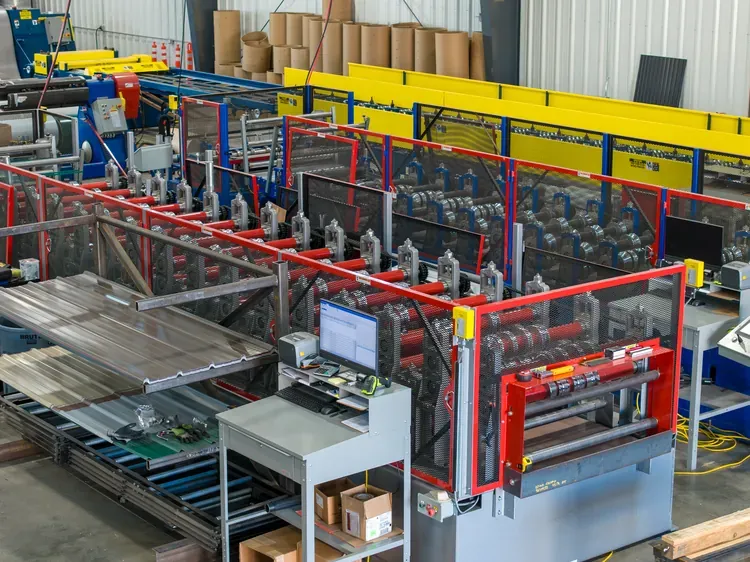
The field panels are the large sheets that cover most of the roof. They come in two big families: concealed-fastener standing seam, where the screws are hidden under the seams, and exposed-fastener panels like Tuff Rib and PBR, where the screws go through the face. That one choice drives the look, the price, and the maintenance. If you’re still weighing it, start with how to choose steel roof panels and the deeper standing seam vs exposed fastener comparison.
The trim: where roofs really leak
Trim, sometimes called flashing, covers every edge, corner, and transition the panels can’t. This is the part of the roof most likely to leak if it’s wrong, so it’s worth knowing the pieces by name. Our full metal trim guide walks through each one, but here are the main players.
- Ridge cap: the piece that caps the peak where two roof planes meet. It’s the last piece on and a common leak point. See the ridge cap guide for how vented and solid caps differ.
- Eave and rake trim: finishes the bottom edge (eave) and the sloped side edge (rake), and directs water off the roof cleanly.
- Drip edge: steers runoff away from the fascia and into the gutter instead of behind it.
- Valley: the metal channel where two roof slopes meet and funnel water down. High-volume, so it has to be sized and lapped right.
- Sidewall and headwall flashing: seals where the roof meets a wall.
- Pipe boots and penetration flashing: seals around vents, pipes, and anything poking through the panel.
Fasteners and closures
Fasteners
The screws that hold everything down. On exposed-fastener panels they also do the sealing, thanks to a rubber washer that compresses against the panel. Using the right screw and driving it to the right depth, not too loose, not crushed, is one of the most important details on the whole roof. We cover it in the metal roofing fasteners guide.
Closures
Foam or metal closure strips fill the gaps left by a panel’s ribs at the eave, ridge, and other edges. They block wind-driven rain, insects, and small animals from getting up under the panels.
Ventilation
Not strictly a roofing “part,” but a metal roof works best when the space beneath it can breathe. A ridge vent at the peak lets hot, moist air escape, and it only works if there’s intake down at the eave to feed it. Skipping ventilation is how you get condensation and a shorter roof life.
FAQ
What part of a metal roof leaks most often?
The trim and flashing, not the field panels. Ridge caps, valleys, and penetration flashing are the usual suspects, because they’re where water concentrates and where installation mistakes hide. Field panels rarely fail on their own.
Do I need all these parts on every roof?
Every roof needs panels, fasteners, and edge trim. Whether you need valleys, sidewall flashing, or extra penetration boots depends on the shape of your roof and what pokes through it. A simple gable roof needs fewer pieces than a complex one with dormers and pipes.
What’s the difference between trim and flashing?
In metal roofing the terms are used almost interchangeably. Both refer to the formed metal pieces that cover edges and transitions. “Flashing” tends to describe the pieces that seal against walls and penetrations; “trim” tends to describe the pieces that finish edges. Either way, it’s the metal that isn’t a field panel.
Bottom line
The parts of a metal roof break down into layers under the panels, the panels themselves, the trim and flashing at every edge and transition, and the fasteners and closures that lock it all down and seal it. The panels get the spotlight, but the trim is where roofs succeed or fail. If you’re speccing a roof and want help matching panels, trim, and fasteners into one order, give us a call or request free samples.
Get a Quote
Find the Best Panel for Your Next Project
Fill out the form below and our team will get back to you within 24 hours with pricing and availability.
E-mail
sales@metalamerica.com
Phone number
855-638-2587