
First Published: August 12, 2026 Last Update: August 12, 2026
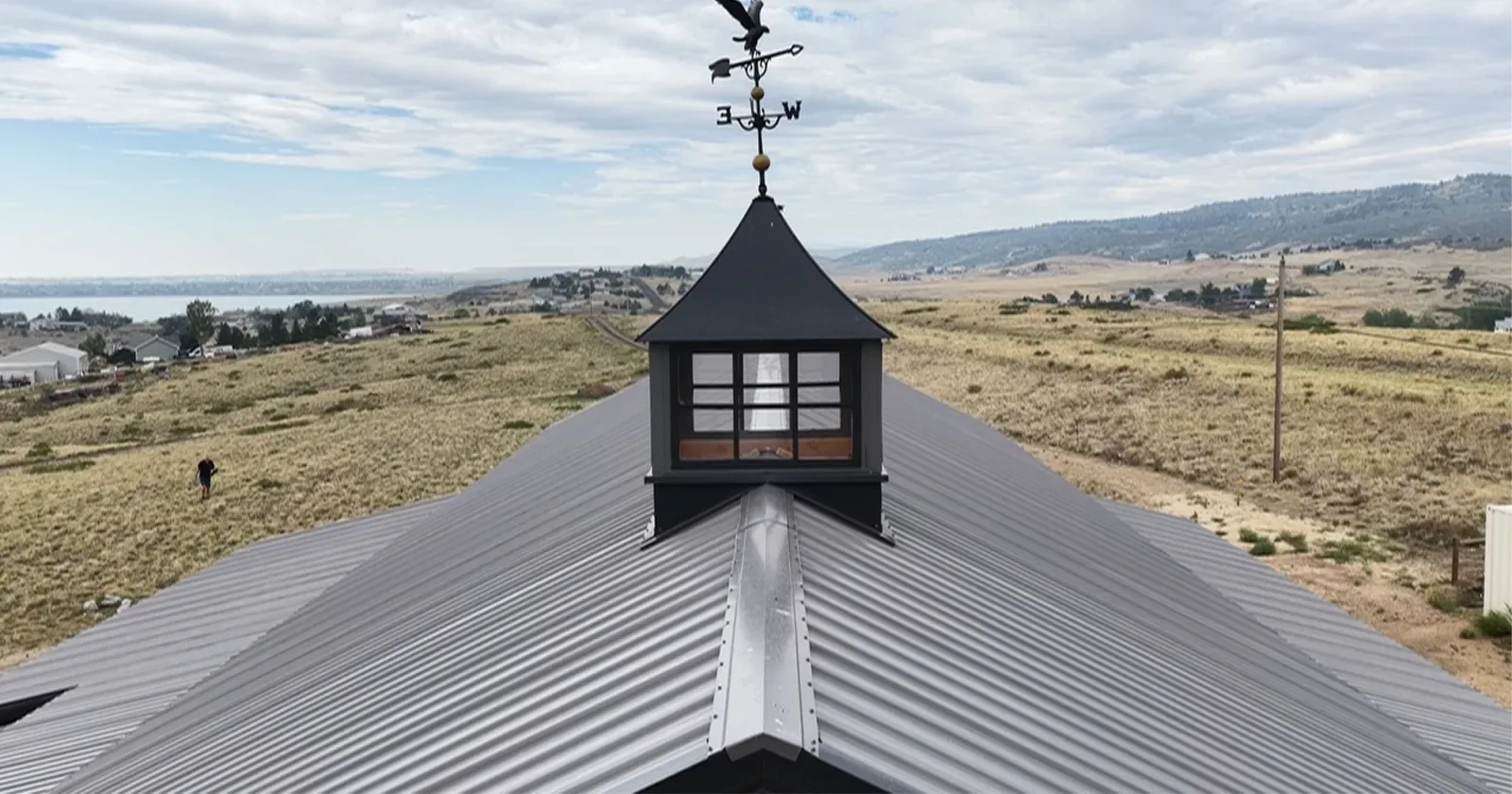
The ridge cap is the last piece to go on a metal roof and the one most likely to cause trouble if it’s wrong. A metal roofing ridge cap is the bent piece of steel that covers the peak where two panel runs meet, and its job is to shed water and block wind, snow, birds and insects from getting under the panels at the highest point on the building.
The honest answer on picking one: the cap itself is simple, but it only works with the right closure strips underneath and the right fastening pattern. Here’s how to get all three right.
What a metal roofing ridge cap does
Panels run up the slope and stop short of the peak. That leaves an open gap along the entire ridge line. The cap bridges it, overlapping both panel runs so water runs down and out rather than in.
The gap isn’t flat, though. Every panel profile has ribs or corrugations, so the underside of the cap sits on a wavy surface. That’s the part people underestimate. The cap seals the top; closure strips seal the profile of the panel underneath it.
Vented vs solid ridge caps
Both do the same weather job. The difference is what happens to air in the space below.
A solid cap closes the ridge completely. It’s the right call on an unvented assembly, on a building where the attic or truss space is sealed and insulated, and on most agricultural and storage buildings where the space below doesn’t need to breathe.
A vented cap pairs with a vent material along the ridge so warm, moist air can escape at the peak while intake air comes in low, usually at the soffit. If you’re roofing a conditioned space, a house, a shop with heat, or a finished barndominium, ridge ventilation is usually part of the design and it needs intake to work. A vented ridge with no soffit intake doesn’t move much air.
Check what your building plans call for before you order. Swapping a solid cap for a vented one later means pulling fasteners along the whole ridge.
Closure strips are not optional
Closure strips are the shaped foam or profiled filler that sits between the panel and the cap, matching the exact rib or corrugation shape of your panels. Outside closures go under the ridge cap. They’re inexpensive, and skipping them is one of the most common reasons a new metal roof leaks or drifts snow into the attic.
Two things to get right:
-
Match the closure to the panel profile. A closure cut for a 7/8″ Corrugated panel won’t seal against a Tuff Rib or PBR Panel, and the reverse is just as true.
-
Vented closures for vented ridges. If the assembly is designed to breathe, the closure has to let air through while still blocking water and pests.
Matching the cap to your panel profile
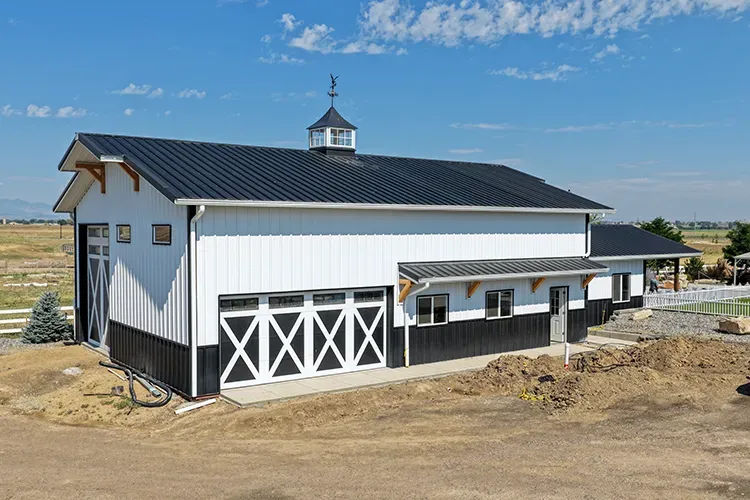
The ridge detail changes depending on whether your roof uses exposed fasteners or a concealed fastener standing seam system.
|
Panel type |
What the ridge detail involves |
|---|---|
|
Tuff Rib, PBR Panel, 7.2 Panel |
Cap fastens through the panel high ribs with gasketed screws, outside closures fill the rib profile underneath. |
|
7/8″ Corrugated |
Same approach, but closures have to match the corrugation, not a rib pattern. |
|
QuickLoc, 1.5″ Snap Lock, 1.75″ Snap Lock |
Concealed fastener system, so the ridge assembly uses cleats and a Z closure to keep fasteners out of the weather surface. |
|
Mechanically Seamed |
Usually a low slope application where the ridge and any transitions get the most scrutiny. Follow the system detail rather than improvising. |
If you’re piecing a roof together yourself, this is the point to slow down. Our standing seam metal roofing guide walks through how the concealed fastener systems differ, and the metal roofing installation guide covers the sequence the ridge fits into.
Gauge, color, and ordering
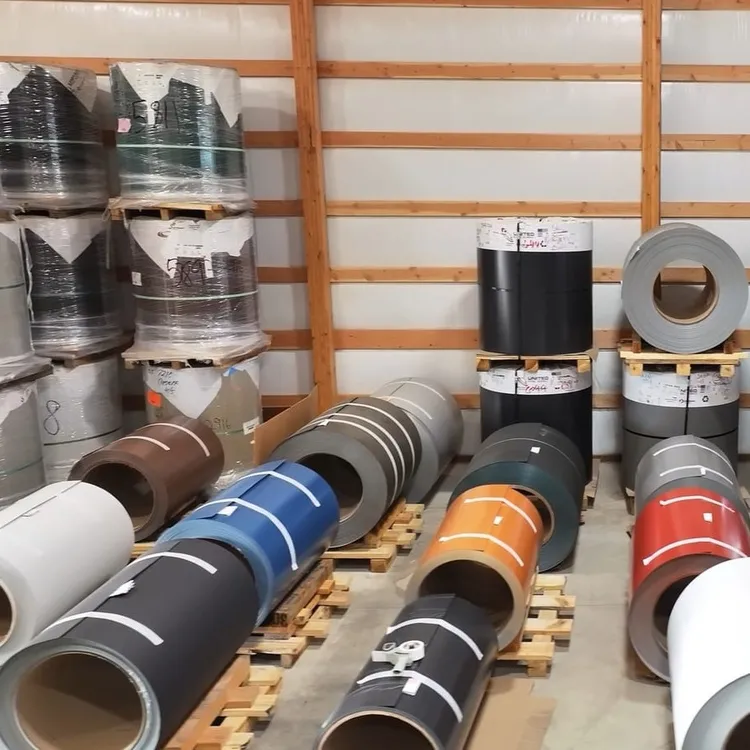
Trim gets roll-formed from the same painted coil as the panels, so the color and finish match rather than sitting a shade off. Order the cap in the same gauge family as your roof. Most residential and light commercial roofs land on 26 gauge, and 24 gauge gives you the best balance of strength and cost where snow load or span is a concern.
Measure the ridge length and add for the laps between cap pieces. Then confirm your fastener choice: the ridge is exposed to more wind uplift than anywhere else on the roof, and gasketed screws matter here. Our guide to metal roofing fasteners and screws covers what to use where.
Common questions
Can you install a metal ridge cap over an existing one?
It isn’t a good idea. The old closures are usually compressed or deteriorated, and layering a second cap over the first traps the original fastener holes underneath where you can’t inspect or reseal them. Pull the old cap, replace the closures, and set the new one.
How much should a ridge cap overlap?
Cap pieces lap each other along the ridge, and the cap laps down over both panel runs far enough to stay sealed under wind driven rain. The exact figures come from the panel system detail, so use the manufacturer’s detail for your profile rather than a rule of thumb.
Do I need a ridge cap on a single slope roof?
There’s no ridge on a single slope, so there’s no ridge cap. You’ll need a high side eave trim or a rake and transition detail instead. Our rundown of metal trim pieces covers what goes where.
Bottom line
A metal roofing ridge cap is a small part of the order and a big part of whether the roof stays dry. Decide vented or solid before you order, match your closures to the exact panel profile, and buy the cap in the same gauge and color as the panels. For the full picture on how the ridge fits with the rest of the edge details, see our complete guide to metal roof trim and ridge cap.
We roll-form panels and trim in Post Falls, Idaho and Spokane Valley, Washington, and ship across Idaho, Washington, Oregon and Montana. If you’re not sure which cap and closure combination fits your panel, give us a call or request a quote and we’ll match it to your profile. The Metal Construction Association is a good neutral source if you want to read further on assembly details.
Get a Quote
Find the Best Panel for Your Next Project
Fill out the form below and our team will get back to you within 24 hours with pricing and availability.
E-mail
sales@metalamerica.com
Phone number
855-638-2587