
First Published: June 2, 2026 Last Update: July 24, 2026
Ordering custom metal roofing panels is one of those parts of the job that looks simple until something goes wrong. A panel cut to the wrong length, a color that does not match what the client approved, a delivery that arrives a week after the crew is scheduled to install, or a trim package that was not included in the original order: any of these can stall a project and eat into margin fast.
This guide walks through the full process of ordering custom length metal roofing panels from a manufacturer like Metal America, covering what information you need to have ready, how the lead time process works, what to watch for when reviewing your order, and how to coordinate delivery so your job site is ready when the panels arrive.
Why Metal Panels Are Ordered Custom
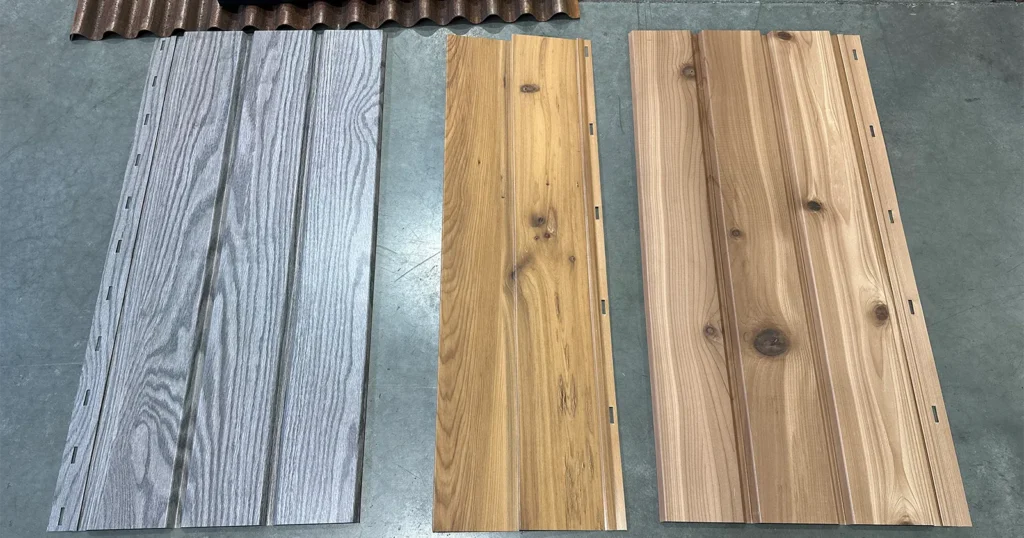
Unlike dimensional lumber or standard-size building materials, metal roofing panels are roll-formed to the specific lengths required for each project. This is a fundamental part of how the product works, and it is one of the things that makes metal roofing different from other materials to source.
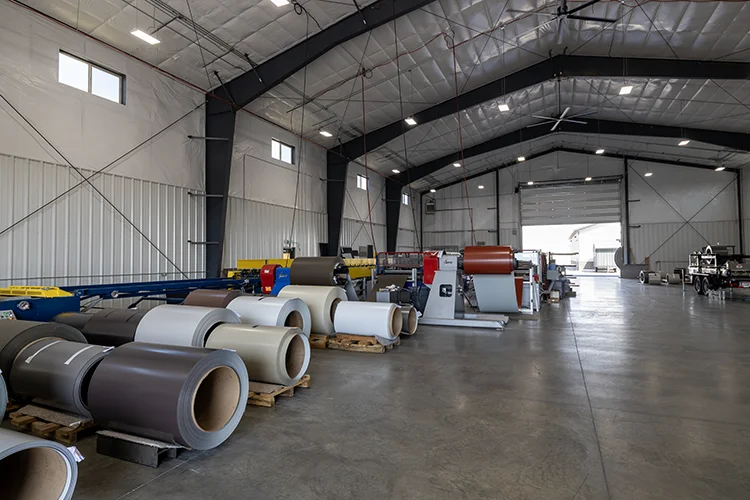
Roll forming produces panels from a coil of steel, running the material through a series of dies that shape the profile. The machine can be stopped at any point to cut the panel to length, which means panels can be made in virtually any length the project requires. This is a significant advantage: long panels run from eave to ridge without a field splice, which eliminates a seam and reduces leak risk. But it also means the manufacturer needs your exact panel lengths before production begins.
There are no standard stock lengths sitting on a shelf for most panel profiles. Your order triggers production, which is why understanding lead times is so important.
What You Need Before You Call to Place an Order
Having the right information ready before you contact your panel supplier saves time on both ends and reduces the chance of ordering errors. Here is what Metal America needs to generate a quote and process your order:
Panel Selection
- Panel profile (PBR, Tuff Rib, QuickLoc Standing Seam, 1.5″ Snap Lock, 1.75″ Snap Lock, Mechanically Seamed, 7/8″ Corrugated, Board and Batten, Shiplap, etc.)
- Gauge (22, 24, 26, or 29 gauge depending on the profile and project requirements)
- Substrate preference (Galvalume is standard for most roofing applications; G90 galvanized for some siding uses)
Panel Lengths
This is the most important piece of information in the order. Panel lengths are measured from the eave trim to the ridge cap, or from eave to any intermediate break in the panel run (such as a valley or a change in pitch).
- Measure each panel run separately. On roofs with multiple slopes, multiple pitches, or multiple sections, each run may have a different length.
- Account for overhang. If the panel should extend past the eave trim by a specific amount, include that in the length.
- Order in groups by length. If you have 40 panels at 18 feet 4 inches and 20 panels at 22 feet 7 inches, list them as separate line items with quantities.
- Be exact. Panel lengths are cut to the specified dimension. A panel that is 3 inches too short at the ridge requires a field fix; a panel that is 3 inches too long at the eave may overhang the gutter incorrectly.
Panel Quantities
Panel quantities are calculated based on the roof area divided by the panel coverage width, adjusted for any waste or edge panels. For most standard panel profiles, coverage width is 36 inches.
A basic panel quantity calculation:
- Measure the roof width (perpendicular to the panel run direction) in inches.
- Divide by the panel coverage width in inches (36 inches for most profiles).
- Round up to the nearest whole panel.
- Add 2 to 5 percent overage for cuts, waste, and edge adjustments on complex roofs.
For simple gable roofs this is straightforward. For complex commercial roofs with hips, valleys, dormers, or multiple pitches, a careful panel layout drawing is worth doing before finalizing quantities.
Color and Coating
- Color name and number from the Sherwin-Williams WeatherXL SMP color chart
- Confirm color approval with your client before ordering – color changes after production are not possible
- Note any special finish requirements (standard SMP, Galvalume natural, or specialty finishes)
Trim Package
Trim is a separate line item from panels and is one of the most commonly forgotten elements in initial orders. A complete trim package for a standing seam or exposed fastener roof typically includes:
- Ridge cap (with foam closure strips)
- Eave trim (or drip edge)
- Rake trim (gable trim)
- Valley flashing (for roofs with valleys)
- Wall flashing and Z-bar (for roofs adjacent to walls)
- Endwall and sidewall flashing (where applicable)
- Closure strips (open or closed cell foam, matched to your panel profile)
Order trim in the same color and coating as your panels. Metal America can supply a complete trim package matched to your panel order.
Fasteners and Accessories
Fasteners are typically ordered separately or sourced locally, but it is worth confirming what is included in your panel order versus what you need to source independently. For exposed fastener systems, you will need screws in the appropriate length and color to match the panel. For standing seam systems, clips and any specialized installation hardware should be confirmed with your supplier.
Delivery Information
- Job site address and access details (can a flatbed truck reach the delivery point?)
- Preferred delivery date or window
- Any site access restrictions (time of day, weight limits on access roads, etc.)
- Contact name and phone number on site for delivery coordination
The Metal America Ordering Process: Step by Step

Here is how the ordering process typically works when working with Metal America:
- Contact Metal America with your project specs. You can call, email, or use our website to initiate contact. Have your panel profile, lengths, quantities, gauge, color, and trim requirements ready.
- Receive a quote. Our team reviews your specs and generates a quote covering panels, trim, and any accessories. Review this carefully and confirm all line items match your takeoff before approving.
- Approve the quote and confirm color. Color approval is a critical step. Once you approve the order, panels go into production. Verify the color name and number with your client before signing off.
- Production begins. Your panels are roll-formed at our Post Falls, Idaho facility to the exact lengths specified in the order. Production time is part of the overall lead time.
- Delivery is scheduled. Once panels are complete, delivery is coordinated based on your requested date and site access. Metal America ships throughout the Pacific Northwest.
- Receive and inspect the order. On delivery, inspect the panels and trim for any shipping damage or discrepancies before the driver leaves. Note any issues on the delivery receipt.
Understanding Metal Roofing Lead Times
Lead time is the total time between when you place your order and when the panels arrive at your job site. For custom metal roofing panels, lead time is one of the most important scheduling factors to manage.
What Affects Lead Time
| Factor | Impact on Lead Time |
| Production queue | During busy seasons (spring and summer), production queues are longer. Off-season orders may have shorter lead times. |
| Panel profile | Standard profiles (PBR, Tuff Rib, standing seam) typically move through production faster than specialty or low-volume profiles. |
| Order volume | Large volume orders may require more production time than smaller orders. |
| Color availability | Standard colors are typically available for immediate production. Some specialty colors may require a coil order. |
| Delivery distance | Local Pacific Northwest deliveries are faster than longer hauls. Post Falls, Idaho is well positioned for Idaho, Washington, Oregon, and Montana delivery. |
Typical Lead Times to Plan For
As a general planning guideline, contractors working with Metal America should plan for roughly 2 to 4 weeks from order placement to delivery for most standard panel orders. Some orders move faster; complex orders, large volumes, or specialty specifications may take longer. The best practice is to discuss lead time with Metal America at the time of quoting rather than assuming a standard window.
The single most common mistake contractors make with metal roofing orders is placing the order too late. If your crew is scheduled to install in three weeks and you call to order panels today, you may be pushing the delivery very close to or past your installation window. Order early and build lead time into your project schedule as a non-negotiable step.
Planning Lead Time Into Your Project Schedule
A simple approach that works well in practice:
- Identify your target installation start date.
- Back-calculate at least 3 to 4 weeks from that date as your order placement deadline.
- Mark the order placement date on your project schedule with a reminder, not a hope.
- For large commercial projects or orders with specialty specifications, add additional buffer and confirm lead time with Metal America during the quoting process.
Common Ordering Mistakes and How to Avoid Them
| Mistake | What Goes Wrong | How to Avoid It |
| Ordering panels without confirming color with the client | Client rejects the color on delivery; panels cannot be returned or repainted | Get written color approval from the client before placing the order |
| Forgetting to order trim | Installation stalls waiting for trim; delivery of a second order adds cost and delays | Always review trim requirements at takeoff and include in the original order |
| Using nominal panel lengths instead of actual measured lengths | Panels are too short at ridge or too long at eave | Measure actual panel runs on the building, not from plans if field conditions vary |
| Ordering last-minute before the installation window | Panels arrive after the crew is already on site or installation is delayed | Build lead time into your schedule from the project kickoff |
| Not inspecting delivery on receipt | Damage or discrepancies are discovered after the driver leaves; harder to resolve after the fact | Inspect panels and trim at delivery and note any issues on the delivery receipt before signing |
| Mixing panel and trim suppliers | Color mismatch between panels and trim; coating compatibility issues | Order panels and trim from the same supplier in the same color run |
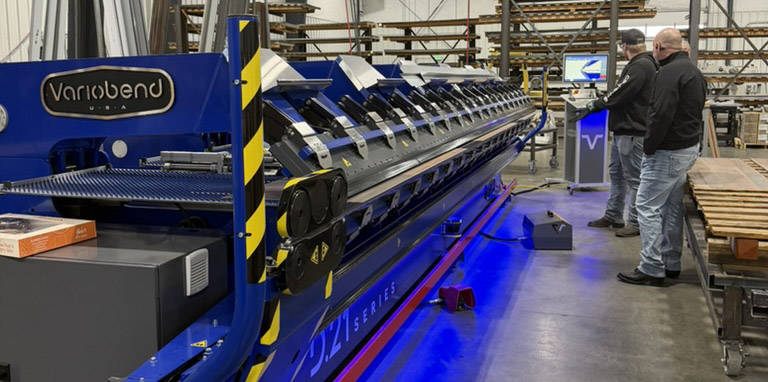
On-Site Roll Forming: An Alternative for Large Projects
For large commercial projects with very long panel runs, on-site roll forming is worth considering. Instead of manufacturing panels at the facility and transporting them to the job site, a portable roll former is brought directly to the project location and panels are formed in the field.
The advantages of on-site roll forming for large projects:
- Panels can be formed in continuous lengths without field splices, regardless of how long the run is.
- Transportation of long panels (which are awkward to handle and prone to transit damage) is eliminated.
- Production happens on demand, which can reduce storage requirements and staging area needs on busy job sites.
On-site roll forming requires planning and coordination with Metal America in advance. It is not a standard service for every order, but it is a valuable option for the right project. Contact us to discuss whether on-site forming makes sense for your job.
Ordering Metal Roofing Panels Through Metal America
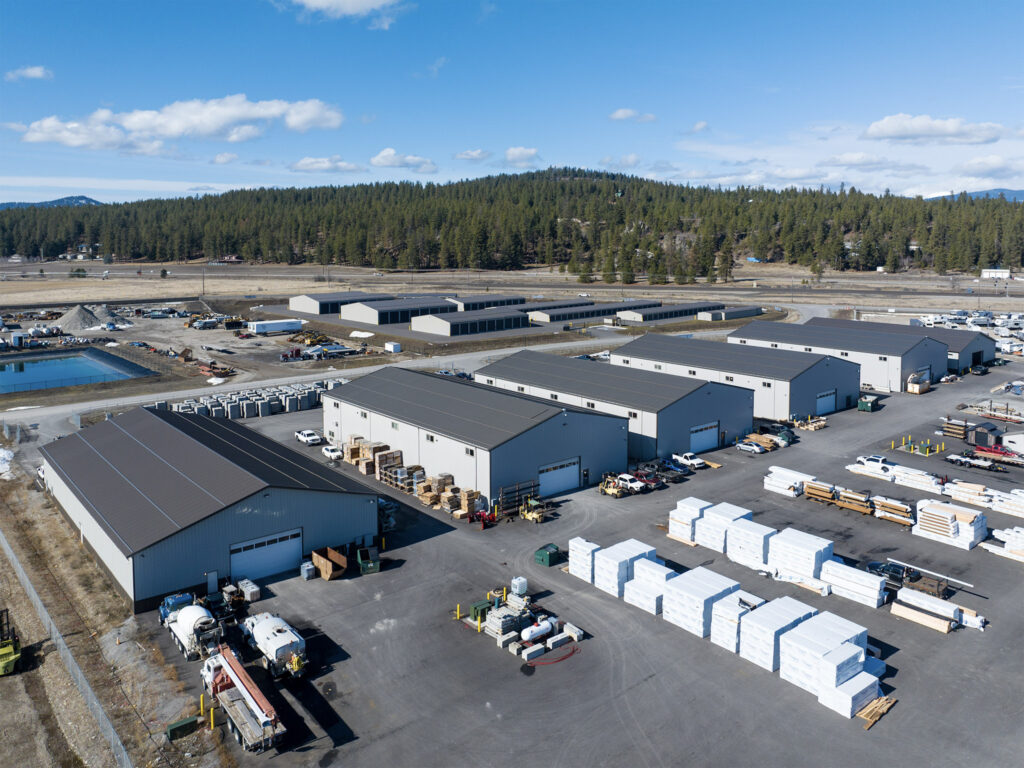
Metal America manufactures metal roofing and siding panels at our Post Falls, Idaho facility. We serve contractors throughout Idaho, Washington, Oregon, and Montana with custom-length panels, matching trim packages, and delivery to your job site.
Our team works directly with roofing contractors, general contractors, and commercial builders. We can help you build an accurate takeoff, review panel lengths before production, and coordinate delivery to fit your installation schedule.
To get started on a quote, discuss your project, or explore our wholesale pricing, contact Metal America directly. Have your panel profile, gauge, color preference, panel lengths, quantities, and delivery information ready and we can typically turn a quote around quickly.
Need more reasons to choose us? Read Metal Roofing Suppliers Near Me: How to Choose One
Frequently Asked Questions
Can I order panels in any length?
Yes. Metal America roll-forms panels to custom lengths for each order. There is a practical maximum length based on what can be safely transported by truck, which varies by panel profile. For very long runs where transport becomes impractical, on-site roll forming is an option. Contact us to discuss maximum lengths for the specific panel profile you are ordering.
What happens if I measure wrong and the panels are the wrong length?
Custom-cut panels are manufactured to your specified dimensions and cannot be returned or exchanged. A panel that is too short will require a field solution at the ridge or eave; a panel that is too long can be field-trimmed at the eave if needed. Double-checking your measurements before submitting the order is the best protection against this problem.
Can I add to my order after it is placed?
In some cases, yes. Contact Metal America as soon as you know you need to add to an order. If the original order has not yet entered production, additions can sometimes be incorporated. Once panels are in production, additions typically require a separate order with a separate lead time.
Do you offer contractor pricing?
Yes. Metal America works directly with roofing and general contractors and offers pricing structured for commercial volume purchasing. Contact us to discuss contractor accounts and pricing.
Can Metal America help with the takeoff?
Our team can help review takeoff information and flag potential issues before an order is placed. For larger or more complex projects, sharing your roof plan or panel layout drawing allows us to confirm quantities and lengths. Reach out to discuss your project and we can advise on what information is most useful to share.
Get a Quote
Find the Best Panel for Your Next Project
Fill out the form below and our team will get back to you within 24 hours with pricing and availability.
E-mail
sales@metalamerica.com
Phone number
855-638-2587