
First Published: August 3, 2026 Last Update: August 3, 2026
Fire barrier products fall into two groups that get confused constantly, and knowing which one you’re shopping for saves a lot of wasted time.
The first group is code fire barriers: rated interior assemblies that hold back fire inside a building for a measured period. The second is exterior fire protection barrier products, which keep a wildfire from reaching your structure in the first place. Different problems, different products.
Group one: code fire barriers
In the building code, a fire barrier is a specific thing. It’s a wall or floor assembly with a tested fire-resistance rating, usually 1, 2, 3 or 4 hours, used to separate occupancies, protect exit corridors and stairwells, or divide a large building into compartments.
Products in this category include:
- Type X and Type C gypsum board assemblies
- Mineral wool and other fire-rated insulation
- Firestop caulk, wraps and collars for penetrations
- Fire-rated doors, glazing and dampers
- Spray-applied fireproofing on structural steel
These are code-driven and specification-driven. If a plan reviewer flagged something, this is the aisle you’re in. The requirements live in the International Building Code, and your local jurisdiction may amend them.
Worth noting: a rated assembly isn’t the same as a non combustible material. A fire barrier can contain wood framing inside protective layers. We break down that distinction in our article on the meaning of non combustible.
Group two: exterior fire protection barrier products
This is what most people around here are searching for, and it’s a different set of products entirely. The goal isn’t to slow fire inside a building, it’s to keep embers and radiant heat from getting a foothold on the outside.
| Product | What it protects against |
|---|---|
| Non combustible fencing | Fire traveling along the fence line to the house |
| Steel siding | Ember ignition and radiant heat on walls |
| Metal roofing | Embers landing on the largest surface you own |
| Ember-resistant vents | Embers drawn into the attic and crawlspace |
| Non combustible decking and skirting | Fire under and around the structure |
| Defensible space | Fuel near the building, cleared |
None of these is a silver bullet. They work as a set, which is why NFPA’s wildfire program talks in terms of home hardening rather than any single product.
Why the fence line gets so much attention
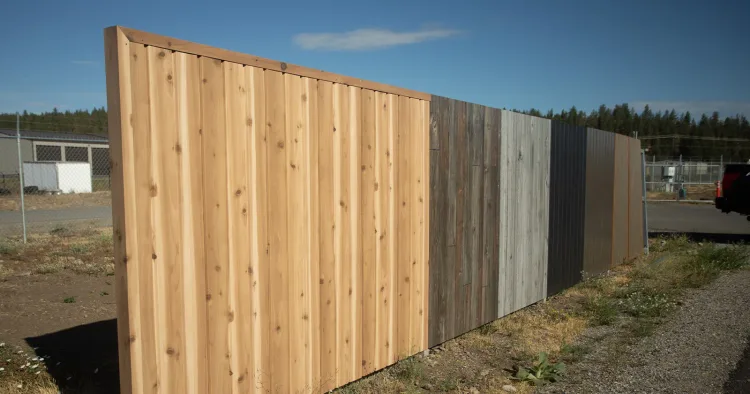
Of all the exterior fire barrier products, fencing is the one people underestimate. A wood fence is a continuous run of dry fuel that connects the far edge of your property to the wall of your house. It picks up an ember out at the property line and delivers flame to your siding.
Our fence panels are Class A rated and non combustible. Posts are 2.5 inch square tube steel, panels and trim are steel, and the wood grain finish is printed on both sides of the coil rather than applied as a veneer. There’s no fuel anywhere in the assembly. The full explanation is in our guide to non combustible fencing.
Roofing and siding do the heavy lifting
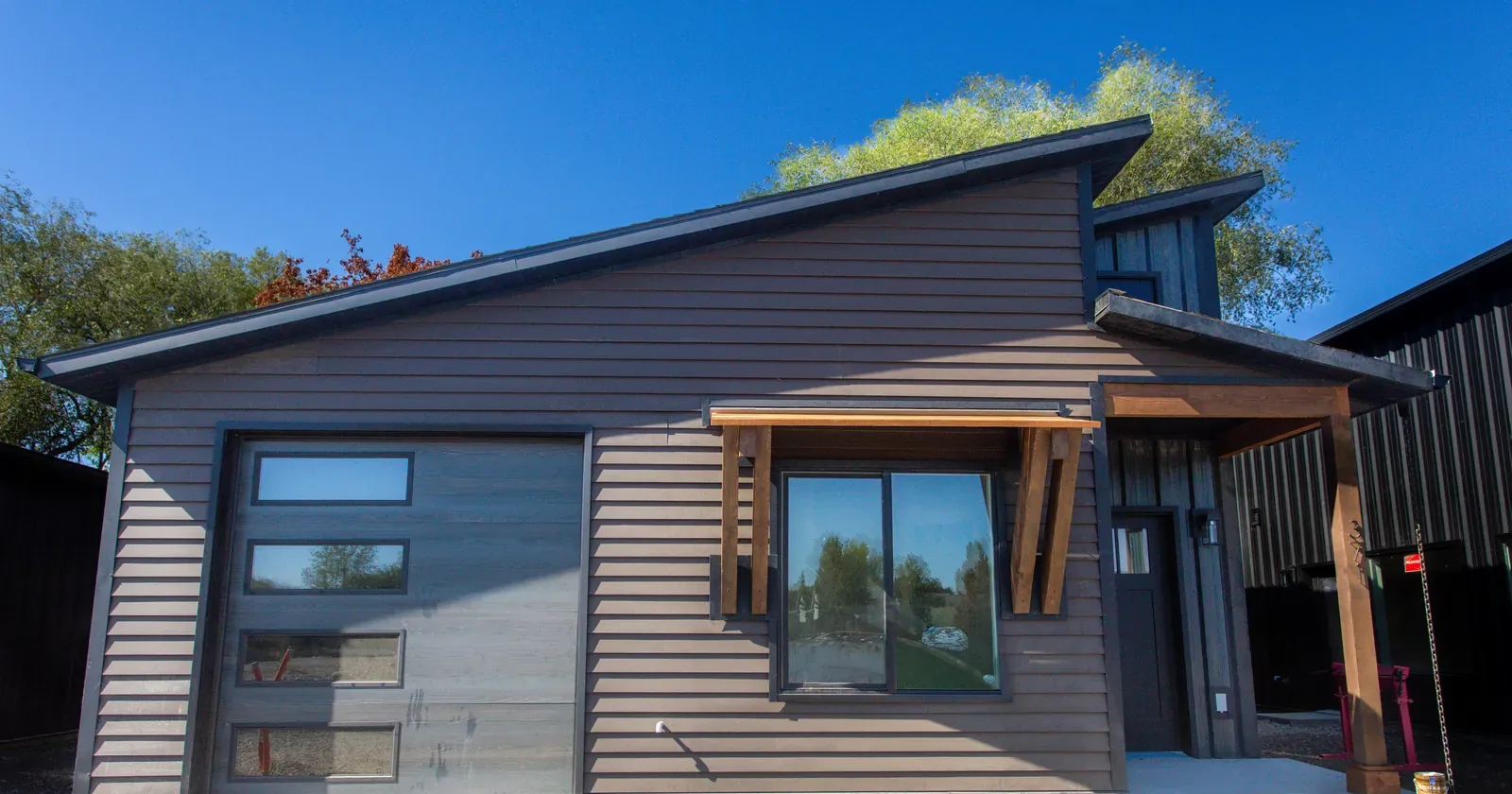
Your roof is the biggest horizontal ember target on the property, and your walls are the biggest vertical one. Steel handles both, since it doesn’t ignite at all.
We manufacture metal roofing panels in standing seam and exposed fastener profiles, plus the full wall panel range covered in our guide to non combustible siding. If you’re weighing a roof replacement, our metal roof and asphalt shingle comparison covers lifespan and cost alongside the fire question.
A note on the Spokane fires
As of August 3, 2026, the Old Trails, Autumn Lane and Fairview fires in Spokane County have burned over 8,000 acres, destroyed roughly 700 structures and put about 65,000 people under evacuation orders. Our Spokane Valley shop is in the middle of it, and a lot of our neighbors are still displaced.
If that’s you, current incident information is on InciWeb. Product decisions can wait until you’re back on your property. We’ll be here when you get there.
The bottom line
If a plan reviewer sent you looking, you need rated assemblies and firestopping. If you’re protecting a home from wildfire, you need non combustible exterior materials: roofing, siding, fencing, vents, and cleared space around the building.
We make the roofing, siding and fencing side of that list. Take a look at profiles and finishes in our 3D fence builder, or call us at 855-638-2587 and tell us what you’re working on. We roll our own panels in Post Falls and Spokane Valley, so you’ll get a straight answer from someone who knows the product.
Get a Quote
Find the Best Panel for Your Next Project
Fill out the form below and our team will get back to you within 24 hours with pricing and availability.
E-mail
sales@metalamerica.com
Phone number
855-638-2587