
First Published: April 7, 2026 Last Update: April 7, 2026
Metal Roofing Panels: Types, Systems, and How to Choose the Right One
Metal roofing panels are not a one-size-fits-all product, and if you have ever tried to sort through your options without a clear guide, you already know how quickly things can get confusing. From standing seam to corrugated, from 29 gauge agricultural panels to 22 gauge mechanically seamed commercial systems, the variety is wide and the decisions matter. This guide covers every major panel type Metal America carries, explains how the systems work, and helps you figure out which one is right for your project.
Why the Panel You Choose Matters More Than You Might Think
Most people know that metal roofing is durable, but the specific panel system you choose determines a lot more than just how long the roof lasts. It affects how the roof handles thermal expansion, whether you can use it on a low-slope application, how difficult it is to install, how it looks on the finished building, and what it costs per square foot.
A 29 gauge exposed fastener panel is a great fit for a pole barn or farm shop. It would be the wrong call for a custom home or a wide-span commercial building. Getting this decision right up front saves headaches, rework, and money.
The Two Main Metal Roofing Systems: Standing Seam vs. Exposed Fastener
Before getting into specific panel products, it helps to understand the two fundamental metal roofing systems. Almost every metal roofing panel falls into one of these two categories.
Standing Seam (Concealed Fastener)
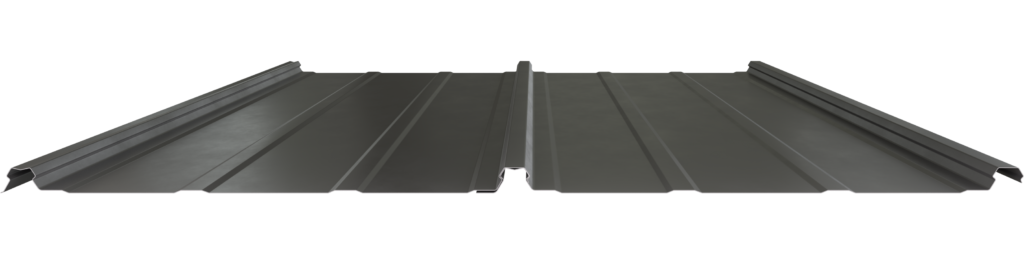
Standing seam metal roofing uses a concealed fastener system where the panels interlock at raised seams and the fasteners are hidden inside the panel joint. No screw heads are exposed to the weather. This design gives standing seam its clean, modern appearance and also makes it the more weather-tight and long-lasting of the two systems.
Standing seam panels float on clips, which allows the metal to expand and contract with temperature changes without stressing the fasteners or creating oil-canning. This is especially important on large commercial roofs or in climates with wide temperature swings, which is exactly what you get in Idaho, Montana, and the rest of the Pacific Northwest.
Standing seam is the right choice when appearance matters, when the building is residential or high-end commercial, or when you want a long-service-life roof with minimal maintenance. For a deeper look at how standing seam compares to exposed fastener on a project-by-project basis, see our article on Types of Metal Roofing Panels.
Exposed Fastener Panels
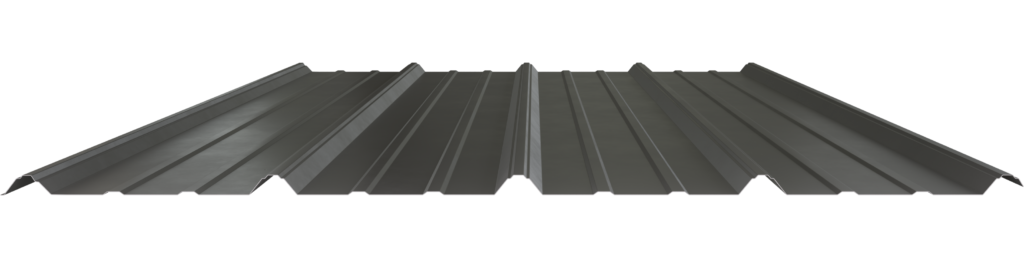
Exposed fastener panels are screwed through the face of the panel directly into the substrate. The screw heads are visible on the finished roof. This system is faster to install, costs less per square foot, and is the standard choice for agricultural buildings, shops, pole barns, and commercial structures where cost efficiency and speed matter more than a premium aesthetic.
Modern exposed fastener panels use neoprene-gasketed screws that seal tightly at installation. Over time, those gaskets can wear, which is why exposed fastener systems typically require more periodic maintenance than standing seam. But for the right applications, they are a proven, reliable system with a long track record.
Metal America Panel Types: A Full Overview
Metal America roll-forms panels in Post Falls, Idaho, which means everything ships from right here in the Pacific Northwest. Here is a breakdown of every panel system we carry.
| Panel Type | Fastener Style | Best Use | Gauge Range | Standing Water OK? |
| QuickLoc Standing Seam | Concealed | Residential, barndominium, commercial | 24, 26 | No (low slope capable) |
| 1.5″ Snap Lock | Concealed | Residential and light commercial | 24, 26 | No |
| 1.75″ Snap Lock | Concealed | Steeper pitches, residential | 24, 26 | No |
| Mechanically Seamed | Concealed | Low slope, wide span commercial | 22, 24 | Yes (low slope) |
| PBR Panel | Exposed | Ag buildings, commercial, shops | 26, 29 | No |
| Tuff Rib | Exposed | Barns, sheds, pole barns | 26, 29 | No |
| 7/8″ Corrugated | Exposed | Ag, rustic, accent applications | 22, 24, 26 | No |
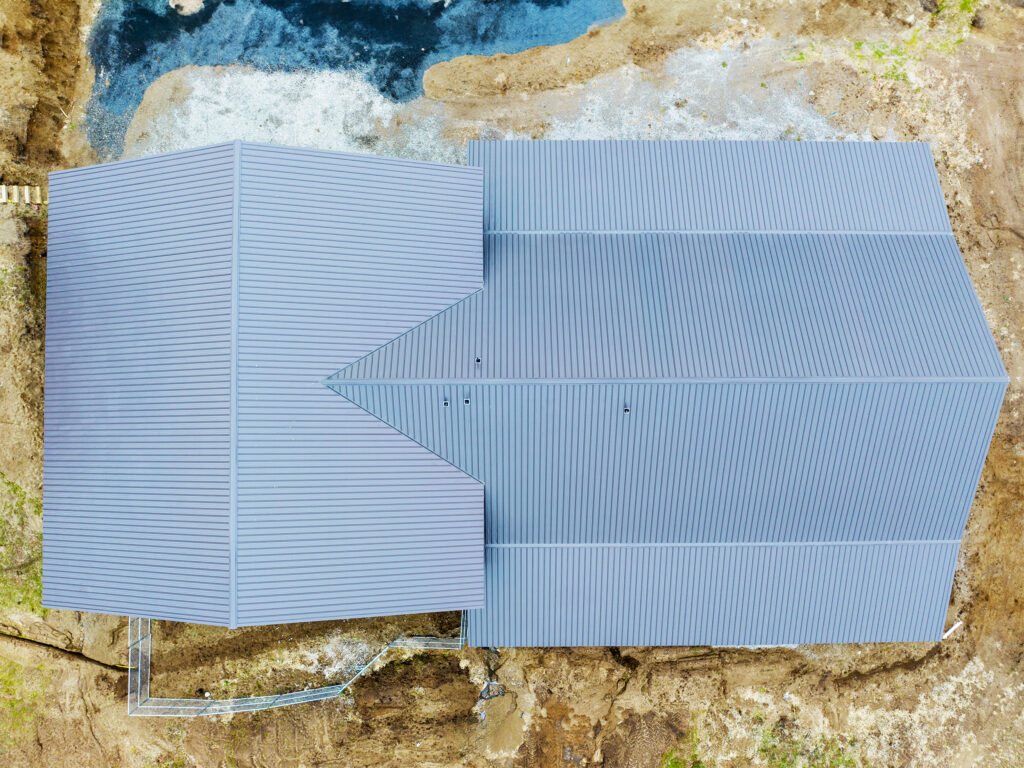
QuickLoc Standing Seam
QuickLoc is Metal America’s most popular standing seam panel and the one we recommend for the majority of residential and commercial standing seam projects. It uses an interlocking snap-together seam that is fast to install without sacrificing the weathertight performance of a true standing seam system.
QuickLoc is available in 24 and 26 gauge and comes in the full range of Sherwin-Williams WeatherXL SMP colors. It is a strong choice for custom homes, barndominiums, contractor shops, and mid-sized commercial buildings.
1.5″ and 1.75″ Snap Lock Standing Seam
Snap lock panels use a different seam geometry than mechanically seamed systems. The panel edges snap together over a fixed clip without requiring a mechanical seaming tool. This makes installation faster and more accessible for smaller crews or contractors who are newer to standing seam.
The 1.5″ profile is well suited to standard residential and light commercial pitches. The 1.75″ profile works well on steeper residential roofs where a slightly taller seam adds a clean visual line. Neither snap lock profile is recommended for very low slopes.
Mechanically Seamed Standing Seam

Mechanically seamed panels are the premium tier of the standing seam category. A seaming tool rolls the panel edges together to create a folded mechanical lock, which is the most watertight seam available in metal roofing. This system is required for low-slope applications (typically down to 1:12 and sometimes lower with the right panel spec) and is the standard for large commercial and industrial roofs.
Metal America offers mechanically seamed panels in 22 and 24 gauge. If you are specifying a roof that will see standing water, heavy snow loads, or wide temperature swings on a large commercial span, mechanically seamed is the system to use.
PBR Panel (Exposed Fastener)
PBR (Purlin Bearing Rib) is the workhorse of commercial and agricultural metal roofing. It features a major rib profile that provides structural strength and allows the panel to bear directly on purlins without additional substrate. PBR is widely used on commercial buildings, shops, pole barns, and agricultural structures across Idaho and the Pacific Northwest.
Available in 26 and 29 gauge, PBR panels are cost-effective, fast to install, and compatible with a wide range of applications. They are the standard panel for most commercial metal buildings and are a good choice any time you need reliable performance at an efficient price point.
Tuff Rib (Exposed Fastener)
Tuff Rib is a popular exposed fastener panel used widely in agricultural applications, pole barns, and rural shop buildings. Its profile is slightly different from PBR, with a ribbed pattern that provides good strength and sheds water well. Tuff Rib is available in 26 and 29 gauge and comes in the same color options as the rest of the Metal America lineup.
If you are building a hay barn, a livestock shelter, a farm shop, or a simple equipment storage building, Tuff Rib is one of the most practical and affordable panel choices available.
7/8″ Corrugated (Exposed Fastener)
The 7/8″ corrugated panel has the classic wave profile that most people picture when they think of a metal barn or farm building. Metal America’s corrugated panel is available in 22, 24, and 26 gauge, giving you options from light residential accent applications all the way up to heavy-duty commercial use.
Corrugated panels are popular in agricultural settings, but they have also made a strong comeback in modern design for accent walls, exterior cladding, and industrial aesthetic applications. The profile is distinctive, durable, and handles Pacific Northwest weather conditions well.
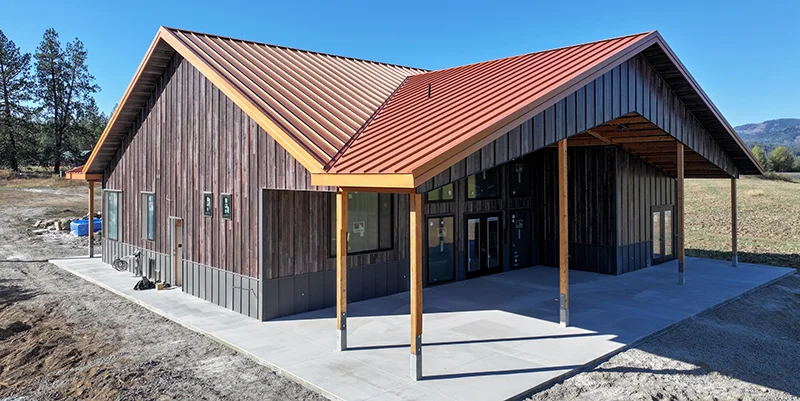
Metal America Siding Panels
Metal America is not just a roofing supplier. We also carry a full line of metal siding panels for exterior wall cladding on homes, barndominiums, commercial buildings, and agricultural structures.
Board and Batten Metal Siding
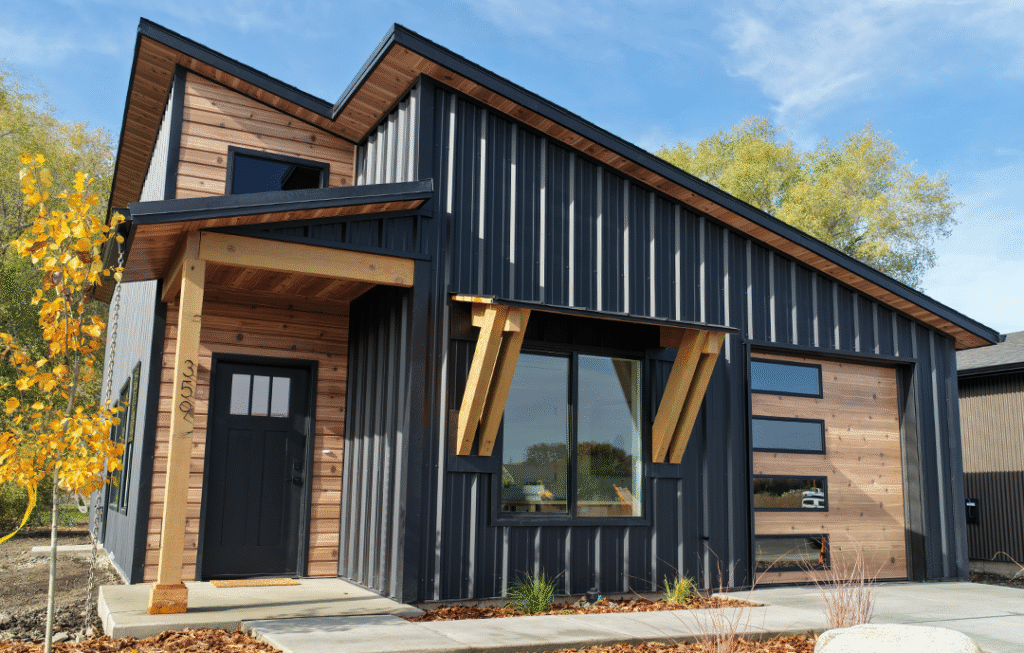
Board and batten is one of the most popular exterior siding profiles for barndominiums, modern farmhouse homes, and rural shop buildings. Metal America’s board and batten panel replicates the vertical shadow lines of traditional wood board and batten siding in a low-maintenance, long-lasting steel panel.
It is available in the full WeatherXL SMP color palette and is a top choice for barndominium contractors and custom home builders who want a distinctive exterior look with minimal upkeep.
Shiplap Metal Siding
Metal America’s shiplap siding panel brings horizontal shadow lines and a clean, modern look to exterior walls. Shiplap is used both as a primary exterior cladding and as an accent element on gable ends, wainscot, or specific facade sections.
It is especially popular for modern farmhouse and contemporary rural residential projects where the goal is a clean, layered exterior look that still holds up to Pacific Northwest weather.
Flush Wall / Soffit and Double Lap
Flush wall panels provide a smooth, flat wall surface for commercial applications, soffits, and applications where a clean, minimal profile is the design goal. Double lap panels create the look of horizontal lap siding in a metal panel, offering a residential-friendly aesthetic with commercial durability.
Specialty Finishes: Wood Look Prints and Cor-Ten
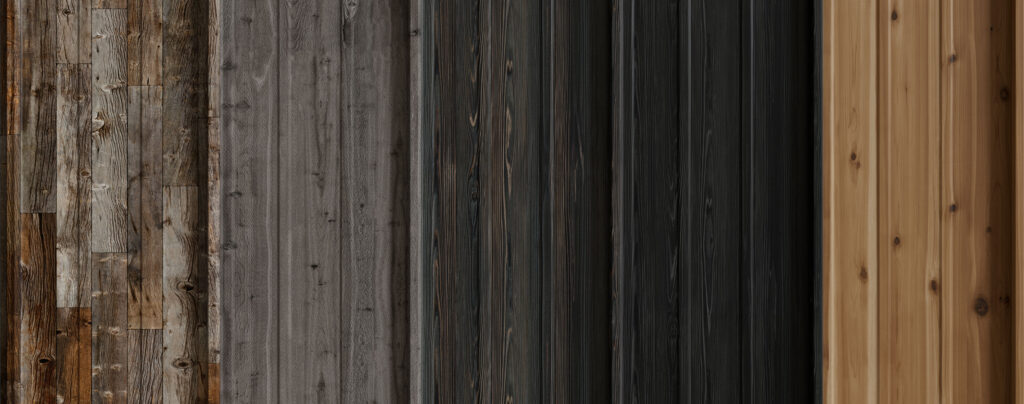
Beyond standard painted panels, Metal America offers specialty finish options that open up a wider range of design possibilities.
Wood Look Metal Panels
Metal America carries scanned wood-print panels that replicate the appearance of real wood, including barnwood, cedar, and charred wood finishes. These panels give you the visual warmth of wood grain on an exterior without any of the maintenance, rot, or fire risk that comes with real wood cladding.
Wood look panels are popular on barndominiums, custom homes, and commercial buildings where the design goal is a natural, textured exterior appearance with metal durability behind it.
Cor-Ten Weathering Steel Panels
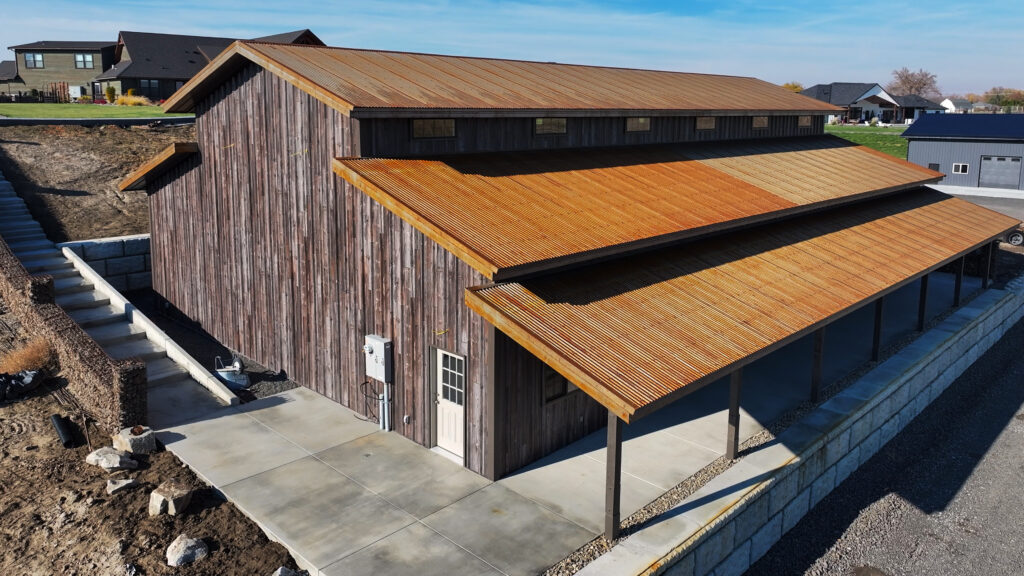
Cor-Ten steel develops a controlled surface rust layer that stabilizes over time and protects the underlying metal. The result is a rich, warm, oxidized appearance that works well in industrial, modern, and agricultural design contexts.
Metal America offers Cor-Ten corrugated panels for projects where this distinct aesthetic is the goal. Cor-Ten is a real conversation-starter on the right building and it is a legitimate, long-lasting option when specified correctly.
Understanding Metal Roofing Panel Gauges
Gauge refers to the thickness of the steel. In the gauge numbering system, lower numbers mean thicker steel. So 22 gauge is thicker and heavier than 29 gauge. This matters for structural performance, dent resistance, longevity, and cost.
| Gauge | Thickness | Common Uses | Notes |
| 22 Gauge | 0.030″ | Heavy commercial, mechanically seamed | Thickest available; premium strength |
| 24 Gauge | 0.024″ | Standing seam, commercial, barndominium | Best balance of strength and cost |
| 26 Gauge | 0.018″ | Residential, shops, light commercial | Most popular gauge overall |
| 29 Gauge | 0.014″ | Agricultural, sheds, budget builds | Budget-friendly; lighter duty |
Choosing the right gauge for your project involves balancing performance requirements and budget. For a full breakdown of how gauges compare and when each one makes sense, see Metal Roofing Panel Gauges Explained: 22, 24, 26, and 29 Gauge Compared at /metal-roofing-panel-gauges/.
Colors and Coatings: Sherwin-Williams WeatherXL SMP
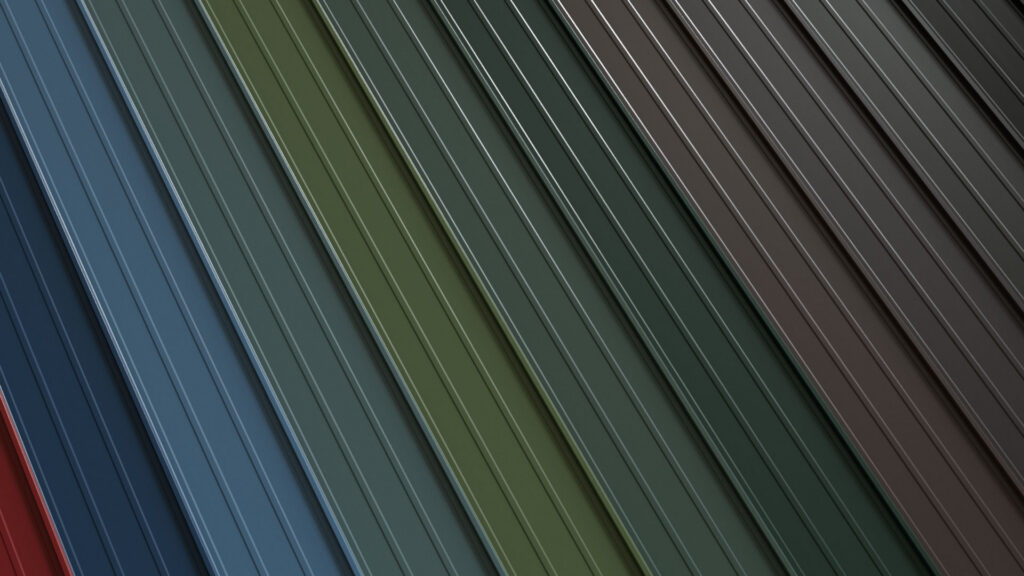
Every painted panel from Metal America is coated with Sherwin-Williams WeatherXL SMP (Siliconized Modified Polyester). This is not a builder-grade paint finish. WeatherXL is a premium exterior coating engineered for long-term color retention, chalk resistance, and protection against the UV exposure, rain, and freeze-thaw cycles common across Idaho, Washington, Oregon, and Montana.
Metal America panels are available in a wide range of WeatherXL colors, from classic standing seam tones like Charcoal Gray and Patina Green to barndominium favorites like Galvalume Plus and custom color matches for specific design projects.
Whether you are picking a panel color for a new home, matching an existing building exterior, or spec-ing a commercial project with a specific color requirement, the WeatherXL lineup covers most needs. Contact Metal America to discuss color options for your project.
Metal Roofing Panel Installation: What You Need to Know Up Front
Metal roofing panels are not complicated to install, but getting the details right matters. Panel overlap, fastener spacing, trim sequencing, and underlayment selection all affect how the finished roof performs. Skipping steps or guessing at specs is how you end up with leaks and callbacks.
A few things to keep in mind before you start:
- Measure your runs carefully. Metal America fabricates panels to custom lengths, which means you order the exact lengths you need for your project. Accurate measurements reduce waste and avoid splicing mid-run.
- Use the right fasteners. Standing seam systems use clips and concealed fasteners. Exposed fastener panels use neoprene-gasketed hex head screws. Using the wrong fastener on a panel system creates problems.
- Do not skip underlayment. A proper underlayment or vapor barrier beneath metal panels reduces condensation risk and adds a secondary moisture barrier.
- Trim matters. Ridge caps, eave trim, rake trim, and flashing pieces are what make a metal roof watertight at the transitions. Do not order panels without specifying the full trim package.
How to Choose the Right Metal Roofing Panel for Your Project
With this many options available, here is a straightforward way to narrow things down based on what you are building.
For a Custom Home or Barndominium
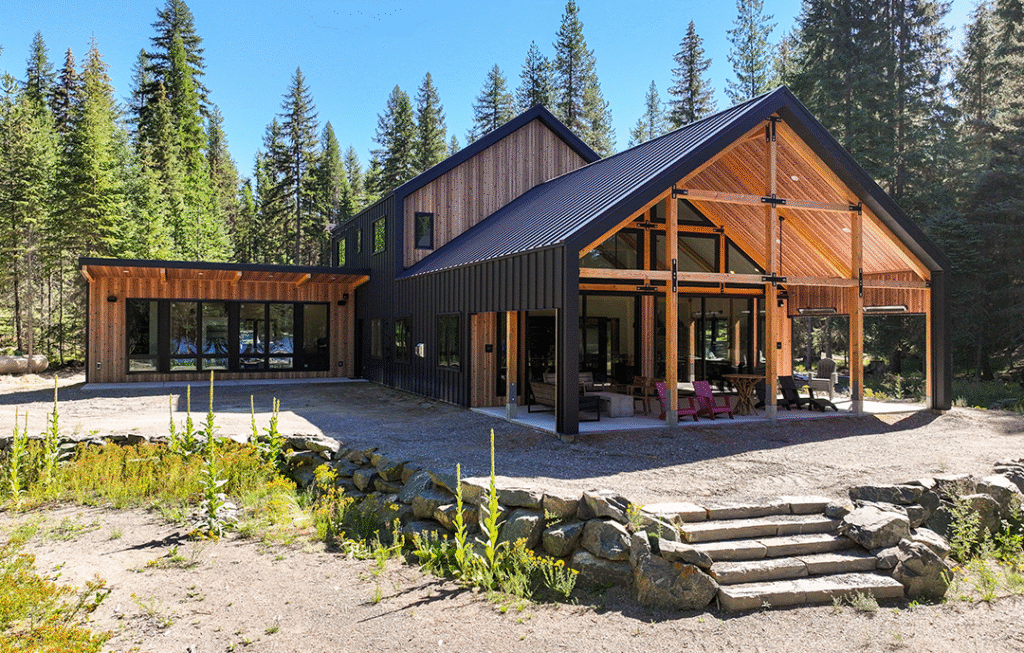
Standing seam is almost always the right choice here. QuickLoc or one of the snap lock profiles give you a clean, modern appearance with concealed fasteners and long-term performance. Pair it with board and batten or shiplap siding for the complete exterior look that barndominium buyers expect. We have a full guide that goes deep into the roofing and siding options for barndominiums.
For a Pole Barn or Agricultural Building
Exposed fastener panels are the standard here. PBR, Tuff Rib, and 7/8″ corrugated all work well for agricultural applications. 29 gauge is cost-effective for simple storage or animal shelters. Step up to 26 gauge if you want more dent resistance and a longer service life.
For a Contractor Shop or Equipment Building
Either system can work here depending on budget and aesthetic goals. PBR or Tuff Rib in 26 gauge is the most cost-effective option. If the building is also a business front or a home shop where appearance matters, stepping up to standing seam is worth considering.
For a Commercial or Industrial Building
Large commercial spans and low-slope applications typically call for mechanically seamed standing seam in 22 or 24 gauge. For vertical wall cladding on commercial buildings, PBR and ribbed siding panels are standard. Custom panel lengths are available for large projects.
For a Design-Forward or Specialty Application
Wood look prints, Cor-Ten corrugated, or a custom WeatherXL color combination can make a building genuinely stand out. These are great options for homeowners and builders who want something beyond a standard color chart.
Why Buy Metal Roofing Panels from Metal America
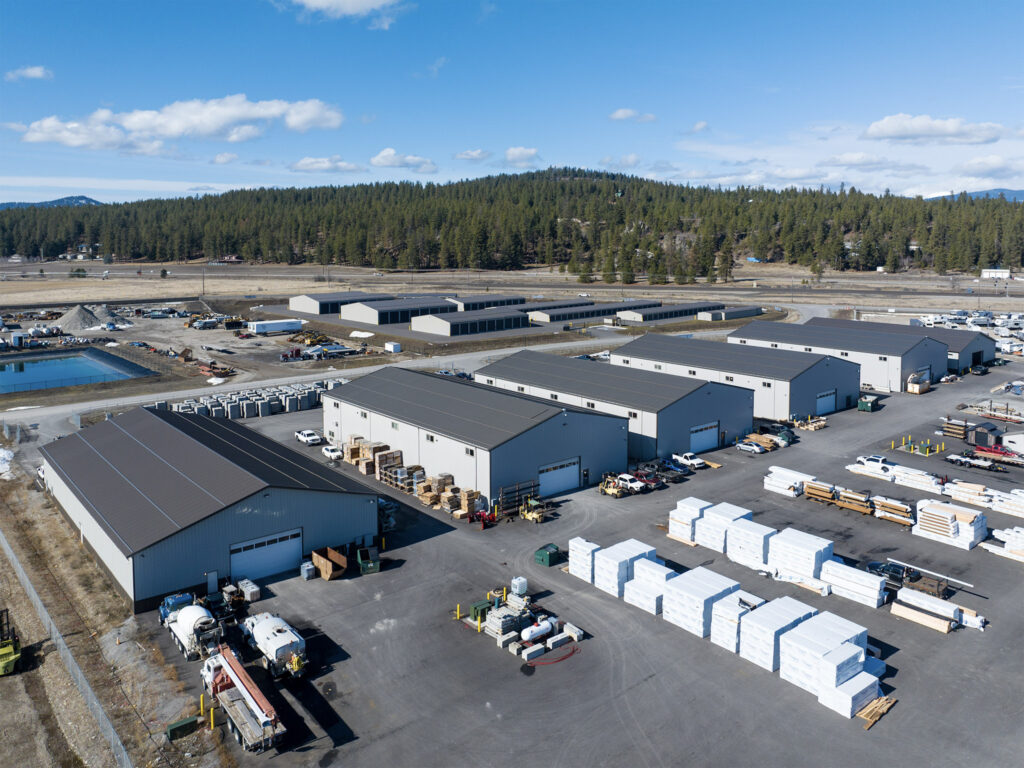
Metal America is a metal panel manufacturer and supplier based in Post Falls, Idaho. We roll-form panels locally, which means shorter lead times for contractors and builders across Idaho, Washington, Oregon, and Montana compared to suppliers shipping from across the country.
A few things that set us apart:
- Custom lengths: We fabricate panels to your exact project dimensions. No field cutting required on standard runs.
- Full trim packages: We supply complete trim and flashing components matched to your panel system and color.
- Wide gauge and profile selection: From 22 gauge mechanically seamed commercial panels to 29 gauge agricultural Tuff Rib, we carry the full range.
- Specialty finishes: Wood look prints, Cor-Ten, and the full Sherwin-Williams WeatherXL color palette.
- Local manufacturing: Panels made in Post Falls, Idaho, available for pickup or delivery throughout the Pacific Northwest.
Whether you are a roofing contractor, a general contractor building a barndominium, a farmer ordering panels for a new shop, or a homeowner comparing options for a renovation project, Metal America is set up to supply your project right.
Frequently Asked Questions
What is the most popular metal roofing panel type?
For residential and barndominium projects, standing seam systems like QuickLoc are the most popular because of their clean appearance and long-term performance. For agricultural and commercial buildings, exposed fastener panels like PBR and Tuff Rib are the most widely used because of their lower cost and fast installation.
Can I use metal roofing panels on a low-slope roof?
Yes, but the panel system has to be specified correctly. Mechanically seamed standing seam panels are engineered for low-slope applications. Exposed fastener panels and snap lock standing seam are not recommended for low slopes because water can back up under the panels at shallow pitches.
How long do metal roofing panels last?
A well-installed metal roof with a quality paint finish like Sherwin-Williams WeatherXL SMP can realistically last 40 to 70 years depending on the gauge, panel system, and maintenance. That is significantly longer than asphalt shingles, which typically last 20 to 30 years under similar conditions.
What gauge metal roofing panel should I buy?
For most residential and barndominium projects, 26 gauge is the most common choice. For commercial or premium residential projects, 24 gauge is worth the upgrade. For budget agricultural buildings, 29 gauge works well for lighter-duty applications.
Where can I buy metal roofing panels near me in Idaho or the Pacific Northwest?
Metal America ships panels throughout Idaho, Washington, Oregon, and Montana from our manufacturing facility in Post Falls, Idaho. Contractors and builders can place orders for standard or custom-length panels directly through Metal America. Contact us to discuss your project specs, panel options, and lead times.
Get a Quote
Find the Best Panel for Your Next Project
Fill out the form below and our team will get back to you within 24 hours with pricing and availability.
E-mail
sales@metalamerica.com
Phone number
855-638-2587