
First Published: August 3, 2026 Last Update: August 3, 2026
The meaning of non combustible is narrower than most people assume. A non combustible material won’t ignite, won’t burn, and won’t give off flammable vapors when it’s heated. It isn’t “hard to burn” or “treated to resist fire.” It doesn’t burn, full stop.
Steel, concrete, masonry, and glass are non combustible. Wood isn’t, no matter how it’s treated. Vinyl isn’t. Wood-plastic composite isn’t.
The code definition and the test behind it
This is a defined term in the building code, not marketing language. A material qualifies as non combustible when it passes ASTM E136, a test that holds a sample in a furnace at roughly 1,380 degrees Fahrenheit and measures whether it ignites, sustains flame, or drives its own temperature up through combustion. Pass, and you’re non combustible. Fail, and you’re combustible, regardless of what the product brochure says.
You can find the standard itself through ASTM International, and the code language that references it through the International Code Council.
Three terms people mix up
| Term | What it means |
|---|---|
| Non combustible | The material won’t burn at all |
| Fire resistant / fire rated | An assembly holds up for a set time, usually 1 or 2 hours. Can include combustible parts |
| Fireproof | Not a code term. Nothing is genuinely fireproof |
That middle row trips people up. A fire rated wall assembly and a non combustible material are different things. An assembly earns a rating by holding back fire for a measured time, and it can contain wood framing inside a protective layer. A non combustible material simply has no fuel in it.
Where the term gets slippery
A few things worth knowing before you take a claim at face value:
- Steel is non combustible, but it isn’t unaffected by fire. It won’t burn, and at high enough temperatures it will lose strength and can deform. That matters for structural members. For cladding and fencing, the practical point is that it doesn’t add fuel.
- A coating doesn’t make a material combustible. Paint systems and printed wood grain finishes on steel are thin enough that the panel stays non combustible. The substrate is what counts.
- Composite means check the components. Anything with wood flour, plastic, or foam in it is combustible, whatever the surface looks like.
- “Non combustible construction” is a different question from “non combustible material.” One describes a building type, the other a product. We cover the building side in our guide to non combustible construction types.
Common materials, sorted
Non combustible: steel, aluminum, concrete, concrete block, brick, stone, glass, gypsum board core, mineral wool.
Combustible: all wood including treated and fire retardant treated, vinyl, PVC, wood-plastic composite, most foam insulation, engineered wood siding, asphalt shingles.
Fiber cement sits in a middle zone that surprises people. It contains cellulose fiber, so it often doesn’t pass ASTM E136 outright, but it performs well enough that codes accept it widely in fire-exposed applications. We get into that comparison in our piece on non combustible siding options.
Why this matters if you’re building in the Northwest
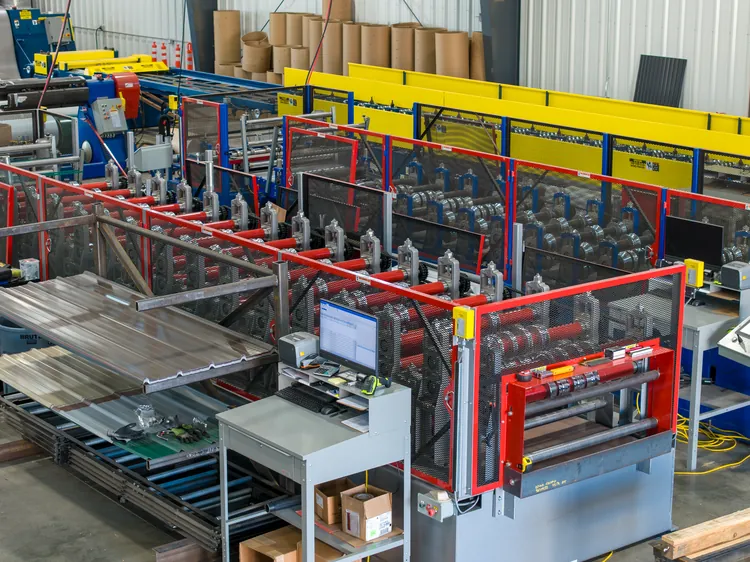
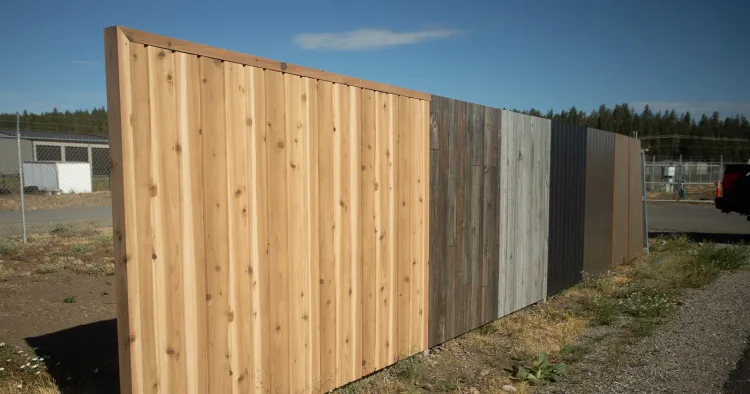
Between wildfire exposure and the wet-dry cycling we get here, material choice carries more weight in the Inland Northwest than the brochures suggest. Steel roofing, steel siding panels, and steel fencing all come in non combustible by nature, and the Galvalume substrate underneath handles our climate well. Our fence panels are Class A rated on top of being non combustible, which covers both the “won’t burn” and the “won’t spread flame across the surface” questions.
The bottom line
Non combustible has a specific meaning: the material won’t ignite or burn, verified by a specific test. It’s a higher bar than fire resistant and a more honest word than fireproof. When you’re picking siding, roofing, or fencing for a fire-exposed property, it’s the word worth looking for.
If you’re weighing materials for a project, give us a call at 855-638-2587 or request a quote. We roll our own panels in Post Falls and Spokane Valley, and we’re happy to talk through what fits your build.
Get a Quote
Find the Best Panel for Your Next Project
Fill out the form below and our team will get back to you within 24 hours with pricing and availability.
E-mail
sales@metalamerica.com
Phone number
855-638-2587