
First Published: August 3, 2026 Last Update: August 3, 2026
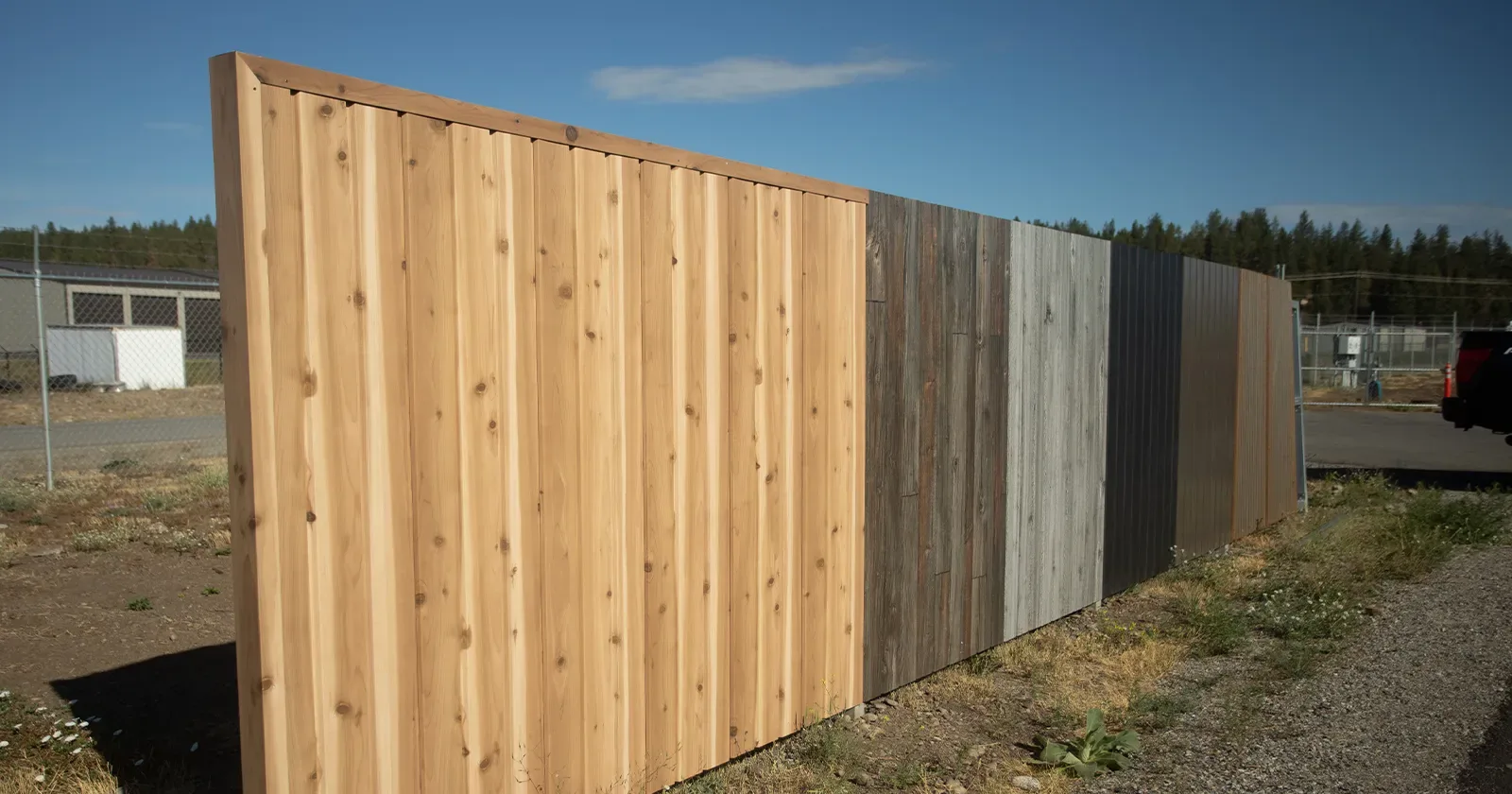
A non combustible fence is a fence built from materials that won’t ignite and won’t carry flame. In practice, that means steel. Metal America’s fence panels are Class A rated and non combustible, so when embers land against one, there’s nothing there to catch.
That’s the short answer. The longer one is worth your time if you live anywhere in the Inland Northwest, because a fence is one of the very few things on a property that runs in an unbroken line from the far corner of your yard right up to the wall of your house.
Why this matters right now around Spokane
As of August 3, 2026, three fires burning in Spokane County (the Old Trails, Autumn Lane and Fairview fires, grouped together as the Spokane Complex) have burned more than 8,000 acres, destroyed roughly 700 structures and put about 65,000 people under evacuation orders. Containment was still at zero when this was written.
Our Spokane Valley shop sits in the middle of this community, and plenty of our neighbors are living out of a car or a relative’s spare room this week. If you’re evacuated or trying to get information about your property, official incident updates are posted on InciWeb and through Spokane County Emergency Management. Rebuilding decisions can wait. When you do get to them, the material choices below are the ones that carry weight.
What makes a fence non combustible
A material is non combustible when it won’t ignite, burn, or release flammable vapors when it’s exposed to fire. Steel qualifies. Wood, vinyl, and wood-plastic composite don’t, no matter how they’re finished or treated.
There are two separate things worth keeping straight:
-
Combustibility is about whether the material itself will burn at all. Steel won’t.
-
Flame spread is about how fast fire travels across a surface. Class A is the top classification, and it’s what our fence panels carry.
A fence that’s both non combustible and Class A rated won’t act as a wick. It doesn’t matter how hard the wind’s blowing or how many embers are in the air. There’s no fuel in the assembly.
Why a fence line is such a weak point
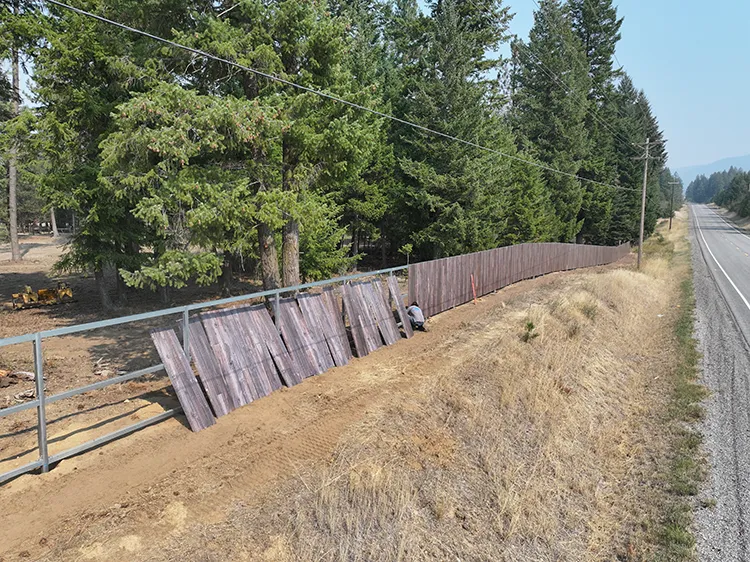
Fire investigators keep finding the same pattern in wildland-urban interface fires: the house didn’t ignite from the wall of flame, it ignited from something attached to it. A wood fence is the textbook version of that problem. It picks up an ember out on the property line, smolders, then delivers flame directly to your siding, your deck, or your eaves.
The fence does the work the fire couldn’t do on its own. It bridges the defensible space you spent all summer clearing.
That’s why home hardening guidance from groups like NFPA puts so much weight on the first five feet around a structure. A non combustible fence removes the bridge entirely.
What our non combustible fencing is built from
Every part of the system is steel:
-
2.5 inch square tube steel posts and steel framing
-
Steel panels in shiplap or stepped profiles
-
Steel trim
The wood grain finish is a high-definition print applied to both sides of the steel coil before the panels are formed, so it looks like cedar or barnwood from the street while staying non combustible all the way through. There’s no wood core, no composite layer, and no hollow cavity for embers to collect in. If you want the full look at profiles and finishes, our guide to wood grain metal fence styles and finishes walks through all ten wood grain options.
Non combustible fence vs wood fence
|
|
Steel (non combustible) |
Wood |
|---|---|---|
|
Ignites from embers |
No |
Yes |
|
Carries flame to the house |
No |
Yes |
|
Flame spread rating |
Class A |
Not rated |
|
Wind rating |
115 mph |
Varies, usually much lower |
|
Rot and insects |
Immune |
Ongoing problem |
|
Refinishing |
Never |
Every few years |
We’ve got a fuller side by side in our metal fence and wood fence comparison, which covers cost, lifespan, and maintenance in more detail than fire alone.
What a non combustible fence won’t do
We’d rather be straight with you than oversell this. A non combustible fence:
-
Won’t burn, but can still be damaged. Sustained direct flame contact can discolor a finish or warp a panel. Non combustible isn’t the same as indestructible, and it isn’t the same as fireproof. Our article on whether metal fencing is truly fireproof gets into where that line sits.
-
Won’t save a house on its own. Your roof, your vents, your siding, and your defensible space all matter at least as much. A fence is one piece.
-
Won’t help if the gate posts are wood. Mixing a steel fence with wood posts or a wood gate leaves the fuel path in place.
What it does do is take one predictable failure point off the board.
Frequently asked questions
Is non combustible fencing required in wildfire areas?
It depends on where you are. Some jurisdictions in fire-prone areas require non combustible materials within a set distance of a structure, and some HOAs and insurers have their own rules. Check with your local building department before you order, because requirements vary a lot county to county.
Does a wood grain finish make the fence combustible?
No. The finish is a coating printed on steel, not a wood veneer. The panel is steel through and through.
Can I put non combustible fencing right against my house?
That’s one of the better places for it. The first five feet around a structure is the zone where fire professionals most want non combustible material, so a steel fence tying into your wall is doing exactly what it should.
Will my insurance company care?
Some carriers do factor home hardening into their underwriting in wildfire-exposed areas. It’s worth a call to your agent to ask whether non combustible fencing and siding change anything on your policy.
The bottom line
If you’re rebuilding, replacing a fence that didn’t make it, or just looking at the hills and doing the math, a non combustible fence is one of the more straightforward upgrades on the list. It’s steel, it’s Class A rated, it won’t carry fire to your house, and it happens to look like cedar.
You can see every profile, finish and trim color in the 3D fence builder on our site and spin the model around before you commit to anything. When you’ve got a look you like, request a free estimate or just call us at 855-638-2587 and talk it through with someone. We roll these panels ourselves in Post Falls, so if you’ve got a question about how the system handles a specific situation on your property, the person answering the phone can give you a real answer.
Get a Quote
Find the Best Panel for Your Next Project
Fill out the form below and our team will get back to you within 24 hours with pricing and availability.
E-mail
sales@metalamerica.com
Phone number
855-638-2587