
First Published: June 12, 2026 Last Update: July 30, 2026
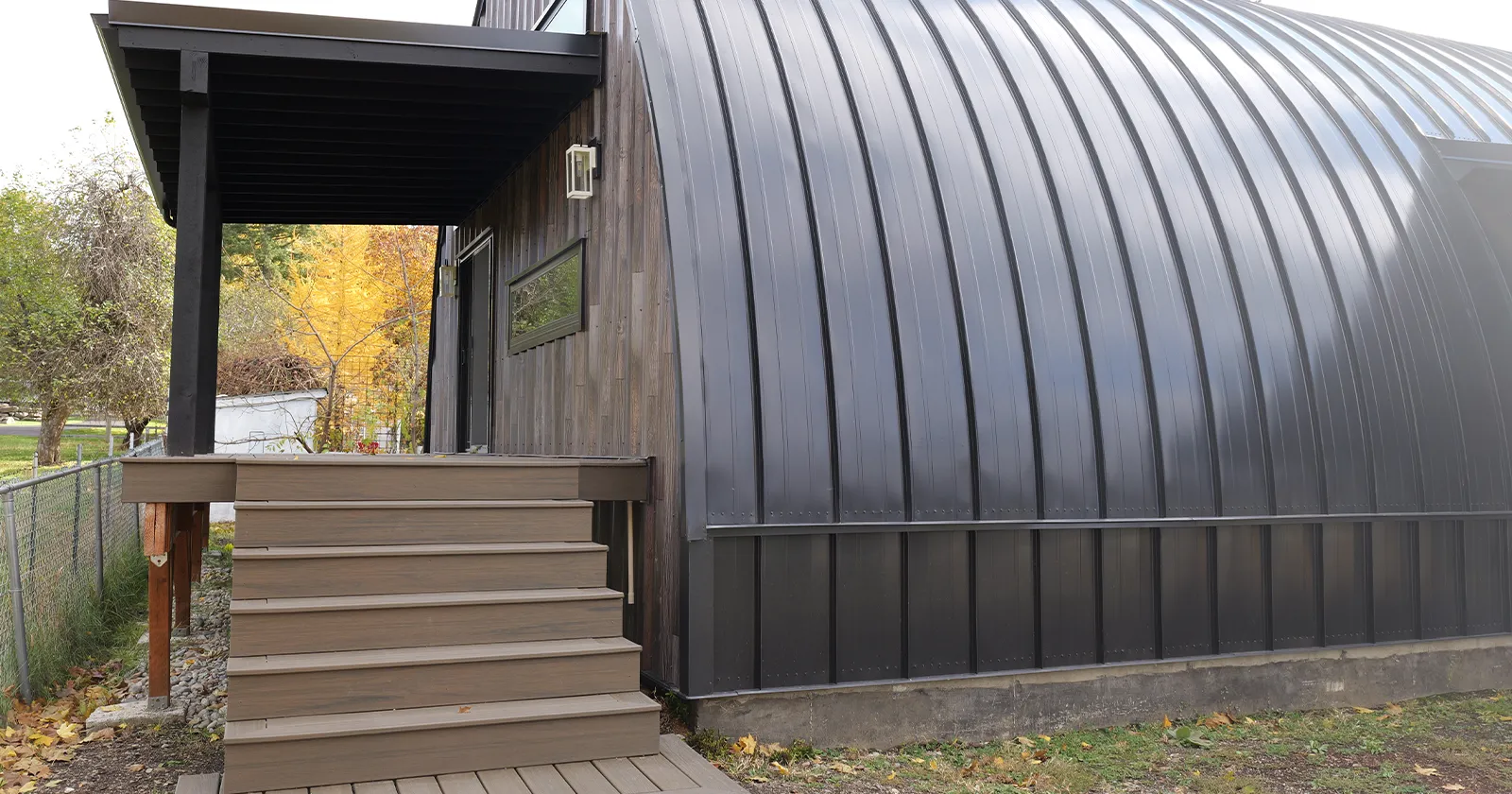
Mechanically seamed metal roofing is the system that commercial and industrial contractors reach for when the roof is too flat for standard standing seam snap lock panels. It is a high-performance, concealed-fastener system designed specifically for the demands of low-slope commercial roofs, wide-span structures, and high-wind environments where panel uplift resistance matters as much as watertightness.
If you are working on a warehouse, industrial facility, large commercial building, or any project where the slope drops below what snap lock panels are rated for, this article covers what you need to know.
What Is Mechanically Seamed Metal Roofing?
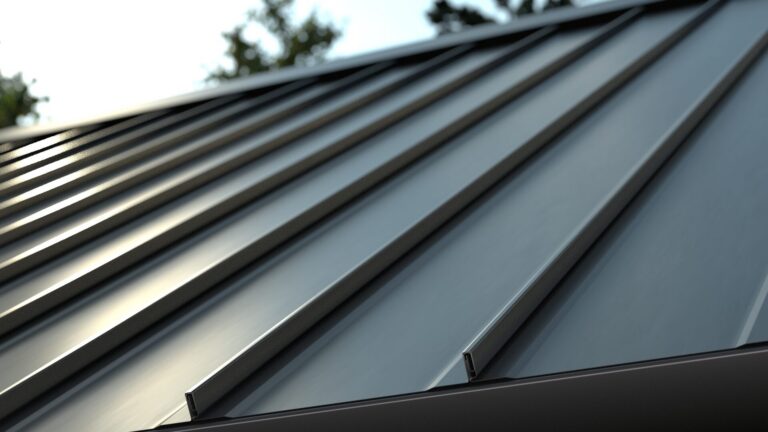
Mechanically seamed metal roofing is a type of standing seam panel system where the vertical seams between adjacent panels are locked together using a powered seaming machine rather than simply snapping together by hand. The machine rolls along the seam after the panels are installed, crimping and folding the interlocking edges into a tight, continuous mechanical joint.
The result is a seam that is structurally superior to a snap lock connection. The mechanical seam creates a weather-tight, continuous lock along the full length of every panel run, with no gaps, no sealants required at the seam itself, and no exposed fasteners anywhere on the roof surface.
Mechanical Seam vs. Snap Lock: What Is the Difference?
Both mechanical seam and snap lock are concealed-fastener standing seam systems, but they work differently and are suited to different applications:
| Feature | Snap Lock Standing Seam | Mechanically Seamed |
| How panels connect | Panels snap together by hand pressure | Panels are seamed with a powered machine after installation |
| Minimum slope | Typically 3:12 or steeper | As low as 1:12 in many configurations |
| Seam strength | High | Very high (superior uplift resistance) |
| Wind uplift rating | Good | Excellent (highest in class) |
| Panel floating | Fixed clip system allows thermal movement | Fixed clip system allows thermal movement |
| Installation equipment | Standard hand tools | Requires mechanical seaming machine |
| Best use | Residential, steep commercial | Low slope commercial, industrial, wide span |
The key takeaway: if your project has a low slope, a large footprint, or is in an area with high wind uplift requirements, mechanical seam is the system to spec.
When Do You Need Mechanically Seamed Metal Roofing?
Mechanical seam is not the right call for every project, but it is the right call for a specific and common category of commercial work. Here are the situations where it consistently makes sense:
Low-Slope Roofs
This is the primary driver. Snap lock standing seam panels are generally rated for slopes of 3:12 and above. Mechanically seamed systems can be installed on slopes as low as 1:12, and in some engineered configurations even lower. For commercial buildings designed with minimal slope for drainage, mechanical seam is often the only concealed-fastener panel option that meets the slope requirement.
Wide-Span Commercial and Industrial Buildings
Warehouses, manufacturing plants, distribution centers, and large agricultural facilities often have wide structural bays and long panel runs. Mechanically seamed systems are well suited to these buildings because the superior seam integrity holds up across long panel lengths without the risk of seam separation that can occur on snap lock systems under thermal cycling and high loads.
High-Wind Zones
Parts of eastern Washington, southern Idaho, and exposed corridors in Montana and Oregon see sustained high winds and strong gusts. Mechanical seam panels deliver the highest uplift resistance of any standing seam system, making them the appropriate choice in zones where building code requires high uplift ratings or where the local wind environment demands it.
Projects Where Long-Term Leak Performance Is Non-Negotiable
On a commercial building that is expected to be in service for 40 to 60 years, the seam quality matters enormously. A mechanically seamed roof eliminates the primary failure point of most roofing systems: the fastener penetration. There are no exposed screws, no washer degradation, and no fastener pull-through over time. The seam itself becomes the permanent weather barrier.
Metal America’s Mechanically Seamed Panel Options

Metal America manufactures two mechanically seamed standing seam panel profiles suited to commercial and industrial applications:
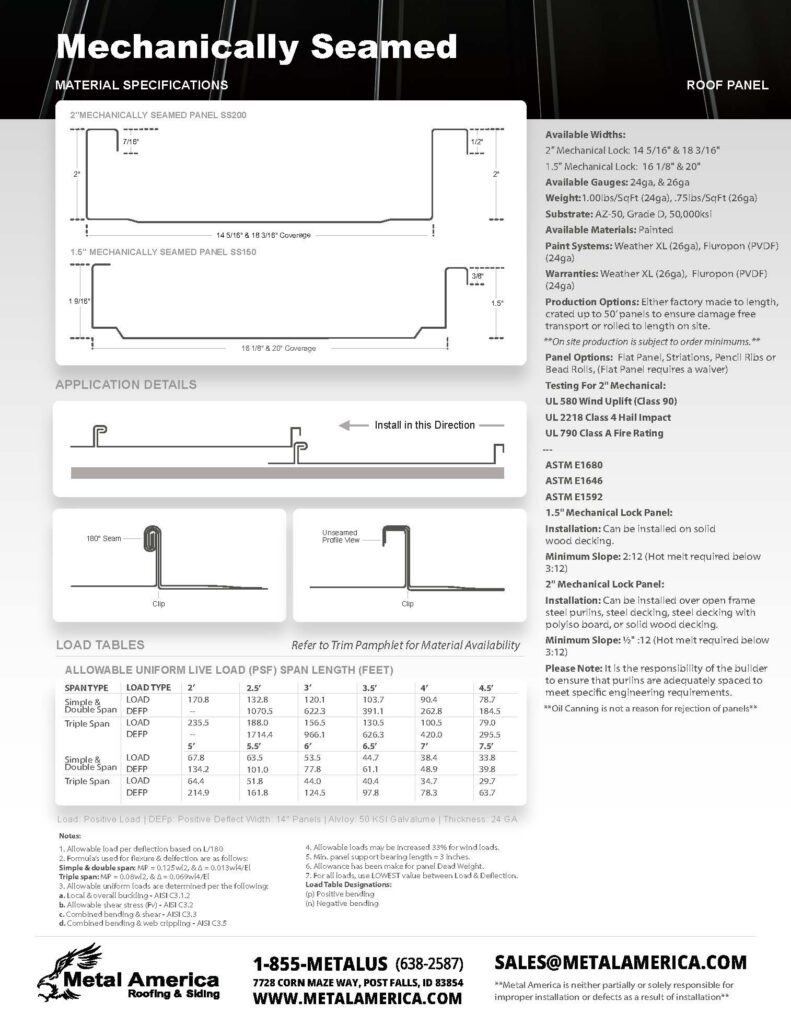
1.5 Inch Mechanically Seamed Panel
| Spec | Detail |
| Seam height | 1.5 inches |
| Panel coverage | Typically 16″ or 18″ coverage width depending on configuration |
| Gauge options | 22 gauge and 24 gauge |
| Minimum slope | 1:12 (verify with project engineer for specific configurations) |
| Substrate | Galvalume or G90 galvanized |
| Coating | Sherwin-Williams WeatherXL SMP |
| Best use | Commercial buildings, light industrial, moderate-span roofs |
2 Inch Mechanically Seamed Panel
| Spec | Detail |
| Seam height | 2 inches |
| Panel coverage | Typically 16″ or 18″ coverage width depending on configuration |
| Gauge options | 22 gauge and 24 gauge |
| Minimum slope | 1:12 (verify with project engineer for specific configurations) |
| Substrate | Galvalume or G90 galvanized |
| Coating | Sherwin-Williams WeatherXL SMP |
| Best use | Heavy commercial, industrial, long-span, high-wind applications |
The 2 inch seam height provides greater panel stiffness across the seam, which is beneficial on long panel runs and in applications where snow accumulation adds load across the roof surface. For most commercial projects, either panel works; the 2 inch is the better spec when span lengths are long or wind uplift requirements are aggressive.
How Mechanical Seaming Works in the Field
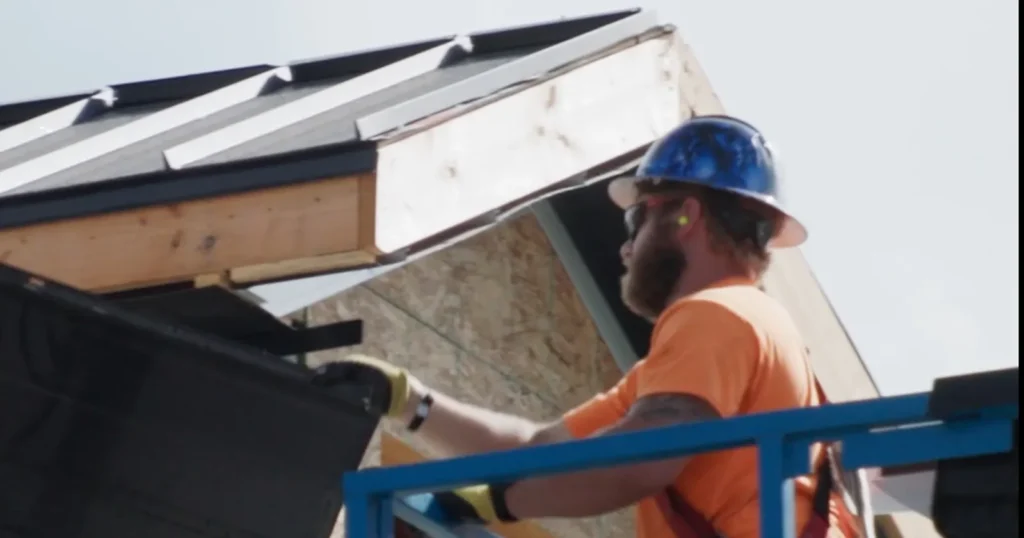
Understanding the installation process helps contractors plan the job correctly and communicate the system’s requirements to project owners and general contractors.
Panel Installation
Mechanically seamed panels install on a hidden clip system, similar to snap lock. Clips are fastened to the structural substrate (purlins or roof deck) at the specified spacing. The panel’s male leg is placed into the clip, and the female leg of the adjacent panel overlaps it. At this stage, the panels are hand-held together but not yet permanently joined.
Mechanical Seaming
Once panels are positioned and clipped, a powered seaming machine travels along each seam from eave to ridge. The machine grips the interlocking panel edges and rolls them together, folding and crimping the metal into the finished mechanical seam profile. A single seaming pass is typical for a single-lock mechanical seam; some high-performance specifications call for a double-lock seam, which requires a second machine pass.
Thermal Movement
Like all metal roofing, mechanically seamed panels expand and contract with temperature changes. The hidden clip system is designed to allow panels to float over the clip as they move, which prevents buckling or fastener pull-through. On long panel runs on large commercial roofs, this thermal movement accommodation is especially important.
Equipment Requirements
Mechanical seaming requires a powered seaming machine matched to the specific panel profile. Installers need access to the correct machine for the panel being used. Metal America can advise on seaming machine compatibility for our mechanically seamed panel products.
Gauge Selection for Mechanically Seamed Commercial Roofing
Most commercial mechanically seamed projects are specified in 24 gauge or 22 gauge steel. Here is how to think about the choice:
- 24 gauge: The standard commercial specification. Handles typical commercial spans and loads well. Good balance of strength and cost.
- 22 gauge: Recommended for long spans, heavy snow loads, high-wind uplift requirements, or projects where the engineer of record specifies a higher-strength panel. Also preferred for premium architectural commercial applications.
For most Pacific Northwest commercial projects, 24 gauge mechanically seamed panels are the appropriate starting point. Discuss with your structural engineer if your project involves spans longer than 5 feet between purlins, significant snow load, or aggressive wind uplift requirements.
Coatings and Substrates for Low-Slope Commercial Applications
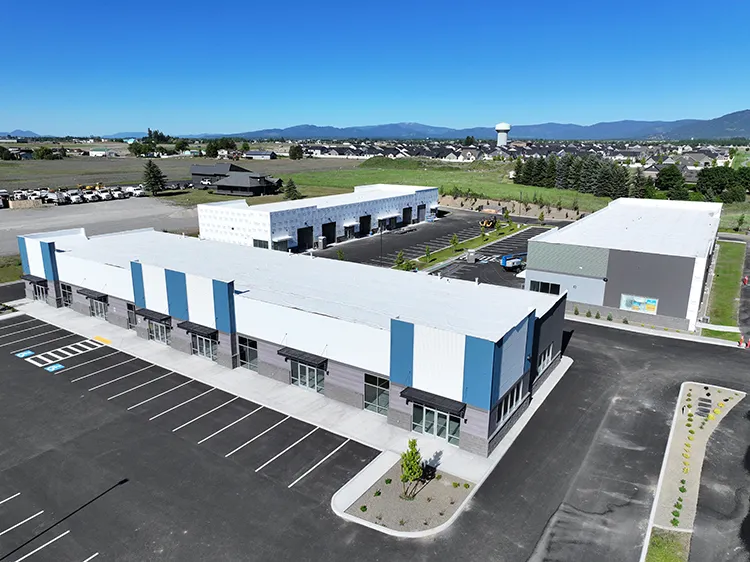
Low-slope roofs are more demanding on coatings and substrates than steep-slope applications because water moves more slowly across the surface and has more contact time with the panel material. Here is what matters for mechanically seamed commercial roofing:
- Galvalume substrate: The preferred substrate for most low-slope commercial applications. Galvalume (aluminum-zinc alloy coated steel) provides superior corrosion resistance compared to standard G90 galvanized and is the industry standard for concealed fastener roofing systems.
- Sherwin-Williams WeatherXL SMP coating: Applied over the Galvalume substrate, the SMP paint system provides UV resistance, color retention, and additional moisture protection. SMP coatings are well suited to the Pacific Northwest climate.
- Cut edge treatment: On cut panel ends, the raw steel edge is exposed. Proper installation practice includes applying a cut edge sealant to protect exposed edges from moisture ingress at trim and panel terminations.
Trim and Flashing on Low-Slope Mechanically Seamed Roofs
Trim and flashing detailing is where low-slope metal roofing projects succeed or fail. Even with a perfect mechanical seam across the field of the roof, poor trim details at eaves, rakes, walls, and penetrations will result in leaks.
Key details to get right on low-slope mechanically seamed commercial roofs:
- Eave detail: On low slopes, water movement is slow. The eave termination needs to direct water positively into the gutter or drip edge without allowing it to back up under the panel.
- Wall and curb flashing: Any penetration through a low-slope mechanically seamed roof needs to be flashed with the same attention as a flat membrane roof. Curb-mounted equipment, skylights, and HVAC penetrations all require proper counterflashing.
- Ridge and hip treatment: On low slope roofs with ridges, the ridge cap detail needs to accommodate the low pitch geometry and still shed water effectively.
- Sealant selection: Use sealants rated for metal roofing applications. At low slopes, sealant joints see more prolonged water contact, so quality matters.
Metal America supplies matching trim components in the same coating and color as our mechanically seamed panels. Ordering a complete trim package with your panels is the most reliable way to ensure compatibility.
Is Mechanically Seamed Roofing Right for Your Project?
Here is a quick checklist to help determine if mechanically seamed is the right call:
| Project Condition | Recommendation |
| Roof slope below 3:12 | Mechanically seamed is likely required |
| Roof slope 1:12 to 3:12 | Mechanically seamed is the appropriate choice |
| Roof slope 3:12 and steeper | Snap lock or mechanically seamed both viable; evaluate based on uplift needs |
| High wind uplift requirements | Mechanically seamed preferred |
| Long panel runs over 40 feet | Mechanically seamed preferred for seam integrity |
| Wide structural bays, long purlin spans | Spec 22 gauge mechanically seamed |
| Budget-driven steep slope commercial project | Snap lock may be more cost-effective |
Ordering Mechanically Seamed Panels from Metal America
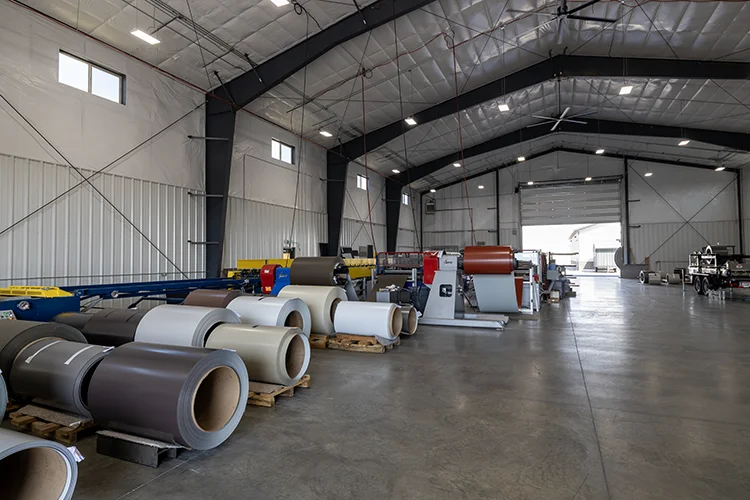
Ordering you mechanically seamed panels from Metal America is easy. We manufacture mechanically seamed standing seam panels at our Post Falls, Idaho facility. Panels are roll-formed to custom lengths for your project, which eliminates field splices on long runs and reduces installation time.
To get a quote on mechanically seamed panels for your commercial project, have the following information ready:
- Roof plan dimensions and slope
- Panel run lengths (from eave to ridge or from eave to midpoint if the design calls for it)
- Seam height required (1.5 inch or 2 inch)
- Gauge preference (22 or 24 gauge)
- Color and coating selection
- Trim and accessory requirements
- Project location and delivery address
Metal America serves commercial contractors throughout Idaho, Washington, Oregon, and Montana. Contact us to discuss your project and get a custom quote.
Frequently Asked Questions
What is the minimum slope for mechanically seamed metal roofing?
Most mechanically seamed systems can be installed on slopes as low as 1:12. Some engineered configurations allow even lower slopes. Always verify the minimum slope with your panel manufacturer and confirm with your structural engineer for the specific project conditions.
Does mechanical seam cost more than snap lock?
Yes, generally. The panels themselves are similar in material cost, but mechanical seaming requires a powered seaming machine and adds labor time compared to snap lock installation. On large commercial projects, this is typically a worthwhile trade-off for the performance benefit on low slopes or in high-wind environments.
Can I install mechanically seamed panels myself?
Mechanical seaming requires a powered seaming machine and experience with the process. It is not a DIY system. Commercial projects using mechanical seam should be installed by a roofing contractor experienced with standing seam systems and equipped with the appropriate seaming machine for the specific panel profile.
Does Metal America offer on-site roll forming for mechanically seamed panels?
Yes. For large commercial projects with long panel runs, on-site roll forming can be arranged. Contact Metal America to discuss whether on-site forming is appropriate for your project.
Get a Quote
Find the Best Panel for Your Next Project
Fill out the form below and our team will get back to you within 24 hours with pricing and availability.
E-mail
sales@metalamerica.com
Phone number
855-638-2587