
First Published: August 3, 2026 Last Update: August 3, 2026
In the International Building Code, non combustible construction type means Type I or Type II. Those are the two of the five IBC construction types where the structural frame, walls, floors and roof are built from materials that won’t burn, which in practice means steel, concrete and masonry.
Types III, IV and V all allow combustible material somewhere in the building. Here’s how the whole thing breaks down.
The five IBC construction types
| Type | Structure | Non combustible? |
|---|---|---|
| Type I | Non combustible, with fire-resistive protection on structural elements | Yes |
| Type II | Non combustible, with less required protection | Yes |
| Type III | Non combustible exterior walls, interior framing may be combustible | Partly |
| Type IV | Heavy timber and mass timber | No |
| Type V | Any code-permitted material, typically wood frame | No |
Each type also splits into an A and a B. The A version carries higher fire-resistance ratings on structural elements; the B version carries lower ones or none. So Type IIB is a non combustible building with minimal fire-resistive protection, while Type IA is the most heavily protected classification in the code.
The current code language lives at the International Code Council, and your local jurisdiction may have amendments on top of it. Always confirm locally before you design to a type.
Type I vs Type II: the practical difference
Both use non combustible materials. The difference is how much protection those materials get.
Type I requires fire-resistance ratings on the structural frame, often 2 to 3 hours, usually achieved by encasing steel in concrete or spray-applied fireproofing. That’s the classification for high-rises and large hospitals, where occupants can’t all evacuate quickly.
Type II uses the same non combustible materials with much less required protection. A pre-engineered steel building with exposed steel framing is the classic Type IIB. It’s the most common commercial construction type in the country by a wide margin, because it delivers the fire safety of non combustible material without the cost of encasing everything.
Non combustible construction examples
Buildings you’d recognize in each category:
- Type IA: downtown high-rise office towers, large hospitals, parking structures with concrete-encased steel.
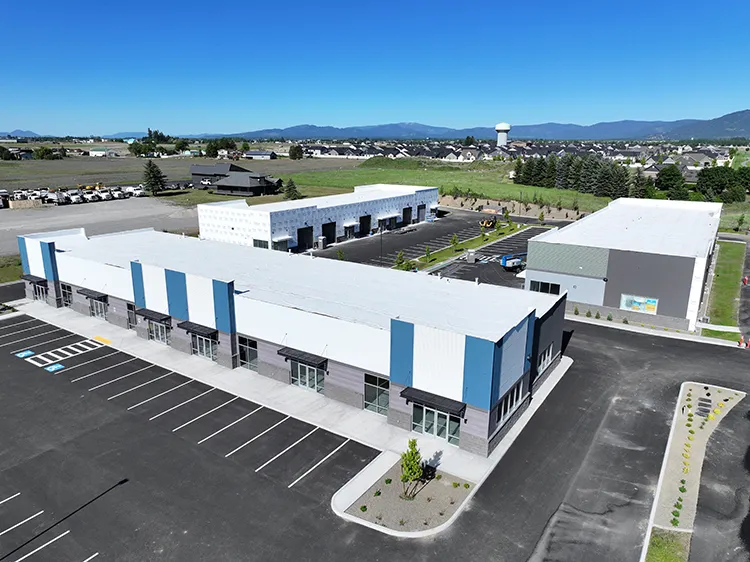
- Type IIB: big-box retail, distribution warehouses, manufacturing plants, most modern self-storage. Steel frame, steel roof deck, steel or masonry walls, minimal fireproofing.
- Type IIA: mid-size schools, some medical office buildings, assembly spaces where occupant load pushes the requirements up.
What these have in common is that the building itself contributes no fuel. Whatever burns in a Type II fire is contents, not structure.
Where a shop, barn or barndominium lands
This is the question we field most often. A post-frame building with wood columns is Type V, even if it’s clad in steel roofing and siding. The classification follows the structural frame, not the skin.
A steel-framed shop with steel cladding is Type II. That’s worth knowing if you’re planning a build, because construction type interacts with allowable area, allowable height, and sometimes with what your insurer wants to see.
That said, cladding still matters a great deal for wildfire exposure, which is a separate question from code classification. A Type V post-frame building with non combustible steel siding is far better protected against embers than the same building with wood siding, even though its construction type doesn’t change.
Frequently asked questions
Does steel siding make a building non combustible construction?
No. Cladding alone doesn’t set the construction type. The structural frame does. Steel siding on a wood-framed building is still Type V, though the siding itself is non combustible and does real work against embers.
Is Type II always safer than Type III?
For structure, generally yes, since Type II has no combustible framing anywhere. But a Type IIIA building with rated assemblies can outperform a bare Type IIB in some scenarios. The subtypes matter as much as the numbers.
What does non combustible mean exactly?
It’s a defined term with a specific test behind it. Our article on the meaning of non combustible covers the definition and how materials get classified.
The bottom line
Non combustible construction type is IBC Type I and Type II. Type I adds fire-resistive protection to non combustible structure; Type II uses the same materials with less of it. Most steel buildings you drive past are Type IIB.
Metal America supplies the roofing, wall panels and trim for these projects across Idaho, Washington, Oregon and Montana, including commercial metal roofing systems and the full range of metal roofing panels. If you’re specifying for a Type II build and want to talk through panel and gauge options, call us at 855-638-2587 or request a quote.
Get a Quote
Find the Best Panel for Your Next Project
Fill out the form below and our team will get back to you within 24 hours with pricing and availability.
E-mail
sales@metalamerica.com
Phone number
855-638-2587