
First Published: June 4, 2026 Last Update: June 29, 2026
Metal siding vs wood siding vs fiber cement is one of the most common decisions homeowners face when building new or replacing an aging exterior. Each material has a genuine case to make, and none of them is the right answer for every situation. The right choice depends on where you are building, how long you plan to stay, how much maintenance you are willing to take on, and what you want the building to look like.
This guide puts all three materials side by side on the factors that actually drive the decision: durability, maintenance, lifespan, climate performance, fire and pest resistance, and design flexibility. By the end, you should have a clear sense of which direction fits your project.
Quick Comparison: Metal vs. Wood vs. Fiber Cement Siding
| Category | Metal (Steel) | Wood | Fiber Cement |
| Typical Lifespan | 40-70+ years | 20-40 years | 25-50 years |
| Maintenance Level | Very low | High | Moderate |
| Repainting Frequency | Rarely (coating dependent) | Every 5-7 years | Every 10-15 years |
| Rot Resistance | Excellent | Poor without treatment | Good |
| Pest Resistance | Excellent (insects cannot eat steel) | Poor (susceptible to termites, woodpeckers) | Good |
| Fire Resistance | Excellent (non-combustible) | Poor (combustible) | Good (non-combustible) |
| Moisture Resistance | Excellent | Poor without sealing | Good |
| Weight | Light | Moderate | Heavy |
| Design Flexibility | High (profiles, colors, specialty prints) | High (paintable, workable) | High (paintable, varied profiles) |
| Typical Upfront Cost | Moderate to high | Moderate to high | Moderate |
| Long-Term Value | Excellent | Poor to moderate | Good |
Durability: How Each Material Holds Up Over Time
Metal Siding Durability
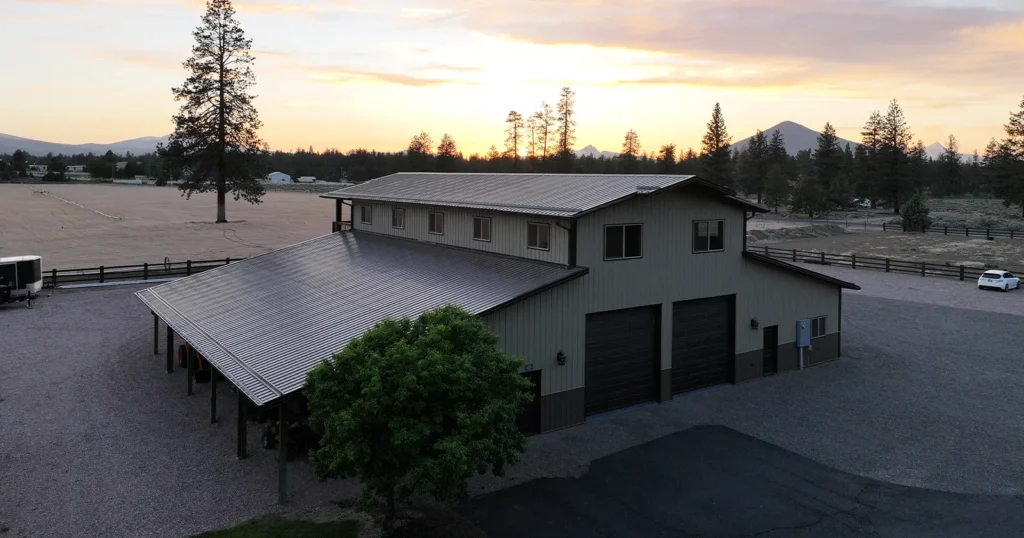
Steel siding is the most durable of the three materials across nearly every performance category. It does not rot, warp, split, crack, or swell with moisture. It is not a food source for insects. It does not burn. And it holds its structural integrity through freeze-thaw cycles that degrade other materials over time.
The paint coating is where the durability story has the most nuance. A quality SMP (Siliconized Modified Polyester) coating like Sherwin-Williams WeatherXL, which Metal America uses on their residential siding panels, is formulated for long-term color retention and chalk resistance. It is not the same as brushing latex paint onto a wood surface. The coating is factory-applied and cured as part of the manufacturing process, which gives it adhesion and durability that field painting cannot replicate.
In Pacific Northwest conditions, where rain, snow, UV exposure, and temperature swings are all part of the normal weather picture, steel siding with quality coatings consistently outperforms wood and fiber cement in long-term surface integrity.
Wood Siding Durability
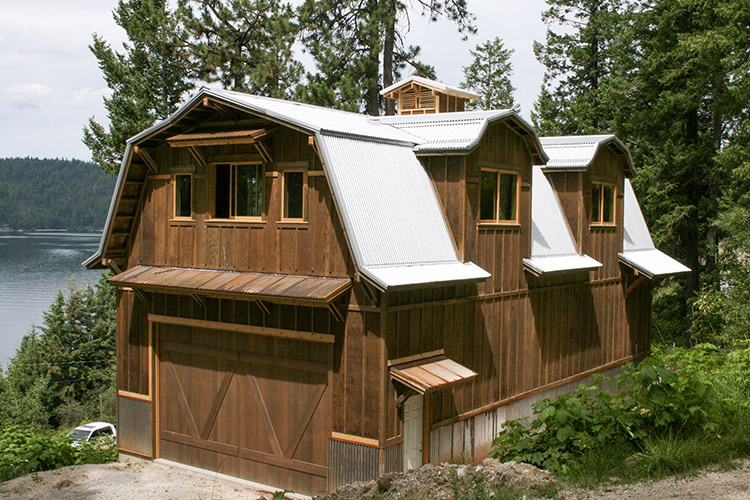
Wood siding is the most maintenance-dependent of the three materials. Its durability is directly tied to how consistently it is maintained. A well-maintained wood exterior on a protected site can last 30 to 40 years. An inadequately maintained wood exterior in a wet climate like western Idaho or western Oregon can show serious deterioration in 10 to 15 years.
The specific failure modes for wood siding are rot, splitting, pest damage, and paint adhesion failure. In areas with persistent moisture, the wood-to-sheathing interface is a common point of moisture intrusion that accelerates rot from the back side of the panel, which is invisible until it is advanced.
Cedar, redwood, and other naturally durable wood species perform better than pine or fir, but none of them is immune to moisture damage in wet climates without consistent maintenance.
Fiber Cement Durability
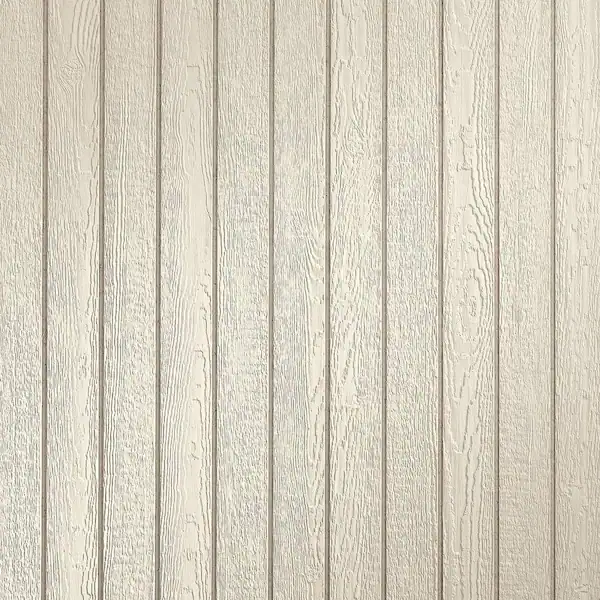
Fiber cement siding, commonly known by the brand name Hardie board, occupies a middle position between wood and metal in durability. It is made from a composite of cement, sand, and cellulose fiber that resists rot, insects, and fire better than wood. It does not warp or split the way wood does, and it holds paint longer than wood.
The durability limitations of fiber cement center on moisture management at cut edges and penetrations. If cut edges are not properly primed and sealed on installation, or if the factory finish is damaged and not promptly repaired, moisture can wick into the panel and compromise its integrity over time. In wet climates, this requires more attention than manufacturers sometimes make clear.
Fiber cement is also brittle compared to wood and steel. Impact from hail, debris, or direct strikes can chip or crack panels in ways that are difficult to repair cleanly.
Maintenance: What Each Material Demands Over Time
Metal Siding Maintenance
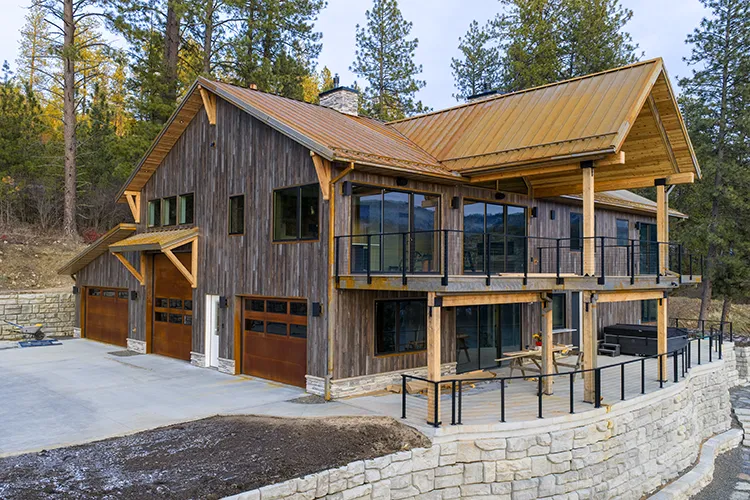
Metal siding has the lowest ongoing maintenance requirement of the three materials. The primary maintenance task is periodic washing to remove accumulated dirt, pollen, and airborne debris. A garden hose and mild soap handle most of this. In areas near agriculture, heavy construction, or industrial sites, more frequent cleaning may be appropriate.
Beyond cleaning, the main maintenance considerations for metal siding are:
- Touch-up paint on any scratches, cut edges, or fastener penetrations that expose bare steel to avoid rust initiation at those points
- Inspection of trim and flashing at roof-to-wall intersections, window surrounds, and base details to confirm sealants remain intact
- Cleaning of gutters and ensuring roof drainage does not direct standing water against siding panels
There is no repainting schedule for factory-coated steel siding panels under normal conditions. The SMP coating is not a film that peels or needs refreshing the way brushed paint does.
Wood Siding Maintenance
Wood siding demands more ongoing maintenance than any other common exterior material. The typical maintenance schedule for painted wood siding includes:
- Repainting every 5 to 7 years, or more frequently in high-moisture or high-UV environments
- Annual caulking inspection and repair at all joints, penetrations, and trim interfaces
- Regular checks for rot, pest damage, and paint adhesion failure, particularly at window sills, base sections, and any horizontal wood surfaces that hold moisture
- Treatment for mold, mildew, and algae growth in shaded or wet areas
- Pest management if termites or woodpeckers are active in the area
The ongoing cost of wood siding maintenance over the life of a home adds up significantly and is one of the primary reasons homeowners who do the math often move away from wood on new construction or replacement projects.
Fiber Cement Maintenance
Fiber cement maintenance falls between metal and wood. The key maintenance tasks include:
- Repainting every 10 to 15 years, or sooner if the factory finish is damaged or showing chalking
- Inspection and resealing of cut edges, particularly at horizontal cuts and around window and door openings
- Caulking inspection at joints and trim interfaces
- Cleaning to remove dirt, mildew, and algae growth
Fiber cement holds paint longer than wood but still requires a repainting cycle over the life of the building. On a large home, a full repaint is a substantial cost every decade to decade and a half.
Lifespan: How Long Can You Expect Each Material to Last?
Lifespan estimates for siding materials vary based on climate, installation quality, and maintenance, but general industry ranges give a useful picture:
| Material | Typical Lifespan Range | Factors That Extend It | Factors That Shorten It |
| Metal (steel) | 40-70+ years | Quality coatings, proper installation, climate control at penetrations | Coastal salt air, surface damage left unrepaired, poor drainage design |
| Wood | 20-40 years | Regular painting and caulking, sheltered exposure, naturally durable species | High moisture, pest pressure, neglected maintenance, direct sun and rain exposure |
| Fiber cement | 25-50 years | Proper edge sealing, protected exposure, timely repainting | Moisture at cut edges, impact damage, wet climates with inadequate maintenance |
For a homeowner building on rural acreage with plans to stay for 30 to 50 years, the lifespan difference between metal and the other two materials is a meaningful factor. A metal siding exterior installed today could realistically outlast the mortgage without requiring a full replacement. The same cannot be said with confidence for wood in most Pacific Northwest conditions.
Climate Performance in the Pacific Northwest
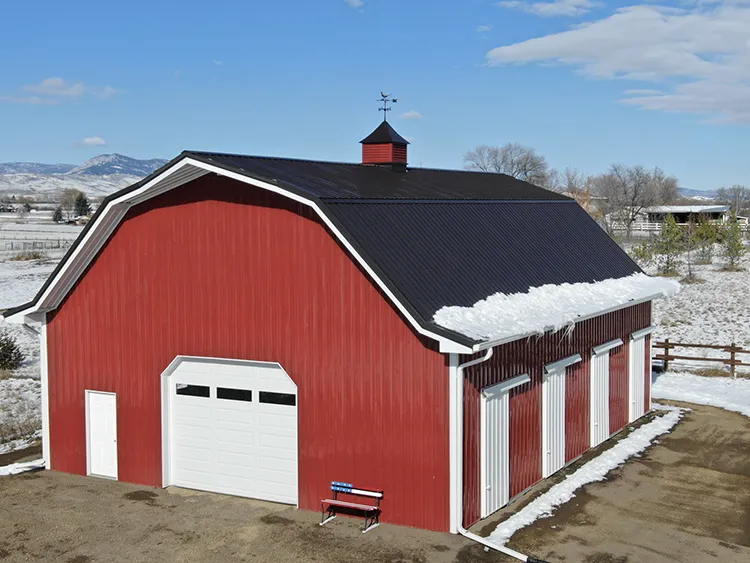
For homeowners in Idaho, Washington, Oregon, and Montana, climate performance is one of the most important factors in siding selection. The Pacific Northwest presents a combination of challenges that exposes the weaknesses of moisture-sensitive materials.
Rain and Moisture
Western Oregon and Washington receive some of the highest annual rainfall in the continental United States. Eastern regions of the Pacific Northwest see less rain overall but more dramatic freeze-thaw cycling. Both conditions accelerate moisture-related deterioration in wood siding and can challenge fiber cement at cut edges and penetrations.
Steel siding is fundamentally indifferent to moisture in a way that organic and cement-based materials are not. It does not absorb water. It does not swell, crack, or rot in response to rain exposure. The long-term moisture performance advantage of steel siding over wood in Pacific Northwest conditions is significant.
Snow and Freeze-Thaw Cycles
In Idaho and Montana particularly, repeated freeze-thaw cycles through winter and spring put stress on siding materials. Water that gets behind or into siding panels freezes, expands, and pries at joints and panel edges. Over years, this process works on wood siding caulking, fiber cement edge sealants, and any material system that depends on field-applied sealants for moisture exclusion.
A properly installed metal siding system with lapped and sealed joints is more inherently resistant to freeze-thaw moisture intrusion than either wood or fiber cement.
UV Exposure
High-elevation locations in Idaho and Montana receive strong UV loads, particularly at south-facing wall exposures. UV degrades paint films on wood siding relatively quickly, accelerating the repainting cycle. Fiber cement holds paint better than wood, but SMP factory coatings on steel panels are specifically engineered for UV resistance in a way that field-applied paints are not.
Fire and Pest Resistance
Fire Resistance
Steel siding is non-combustible. In wildland-urban interface areas across Idaho, Washington, and Montana, where wildfire is an active risk, non-combustible exterior materials are a meaningful consideration. Wood siding is combustible and can contribute to fire spread. Fiber cement is also non-combustible and performs comparably to steel in fire resistance ratings.
If you are building in a fire-prone area or a jurisdiction with fire-resistant construction requirements, both metal and fiber cement are appropriate choices. Wood is not.
Pest Resistance
Insects cannot eat steel. Wood siding is susceptible to termite damage across much of the Pacific Northwest, and woodpecker damage is a documented issue in forested areas of Idaho and eastern Washington. Fiber cement is also resistant to termites and woodpeckers, though woodpeckers can occasionally probe fiber cement looking for insects in underlying wood sheathing.
In areas where pest pressure is a known issue, both metal and fiber cement outperform wood.
Design Flexibility: What Each Material Lets You Do
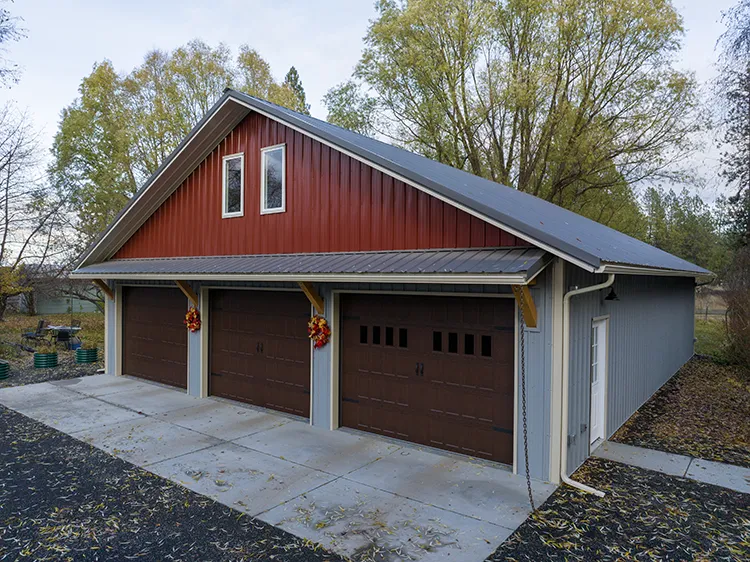
All three materials offer meaningful design flexibility, but in different ways.
Metal Siding Design Options
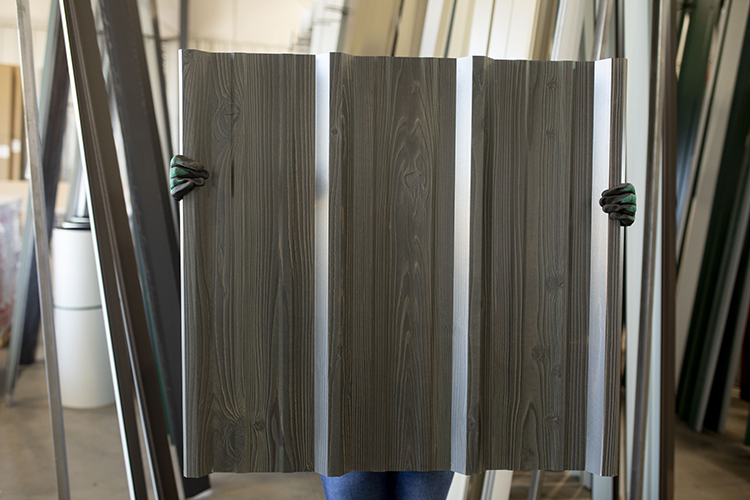
Modern metal siding is available in a wide range of profiles including board and batten, shiplap, corrugated, ribbed panels, flush wall, and double lap. Factory color options span dozens of hues and shades in SMP coatings. Specialty finishes include wood-look prints that replicate barnwood, cedar, and charred wood, as well as Cor-Ten weathering steel for an industrial-modern aesthetic.
Metal panels can be custom cut to length, which reduces field waste and gives you precision on complex building geometries. The material is consistent from panel to panel in a way that natural wood is not.
Wood Siding Design Options
Wood siding’s design strength is its natural variation, workability, and paintability. It can be cut, shaped, and detailed in ways that factory panels cannot match. It takes paint in any color. It has warmth and grain variation that manufactured materials replicate but do not fully duplicate. For homeowners where natural material authenticity is the priority, wood has a legitimate case to make on those specific grounds.
Fiber Cement Design Options
Fiber cement is available in a range of profiles including lap siding, vertical panel, shakes, and trim boards. It is paintable in any color. It does not have the profile variety or specialty finish options that metal offers, but it covers the standard residential siding applications well.
Which Siding Material Is Right for Your Home?
Here is a practical framework for thinking through the decision:
| Your Situation | Best Material |
| Building on rural acreage, want 40+ year lifespan, minimal maintenance | Metal (steel) |
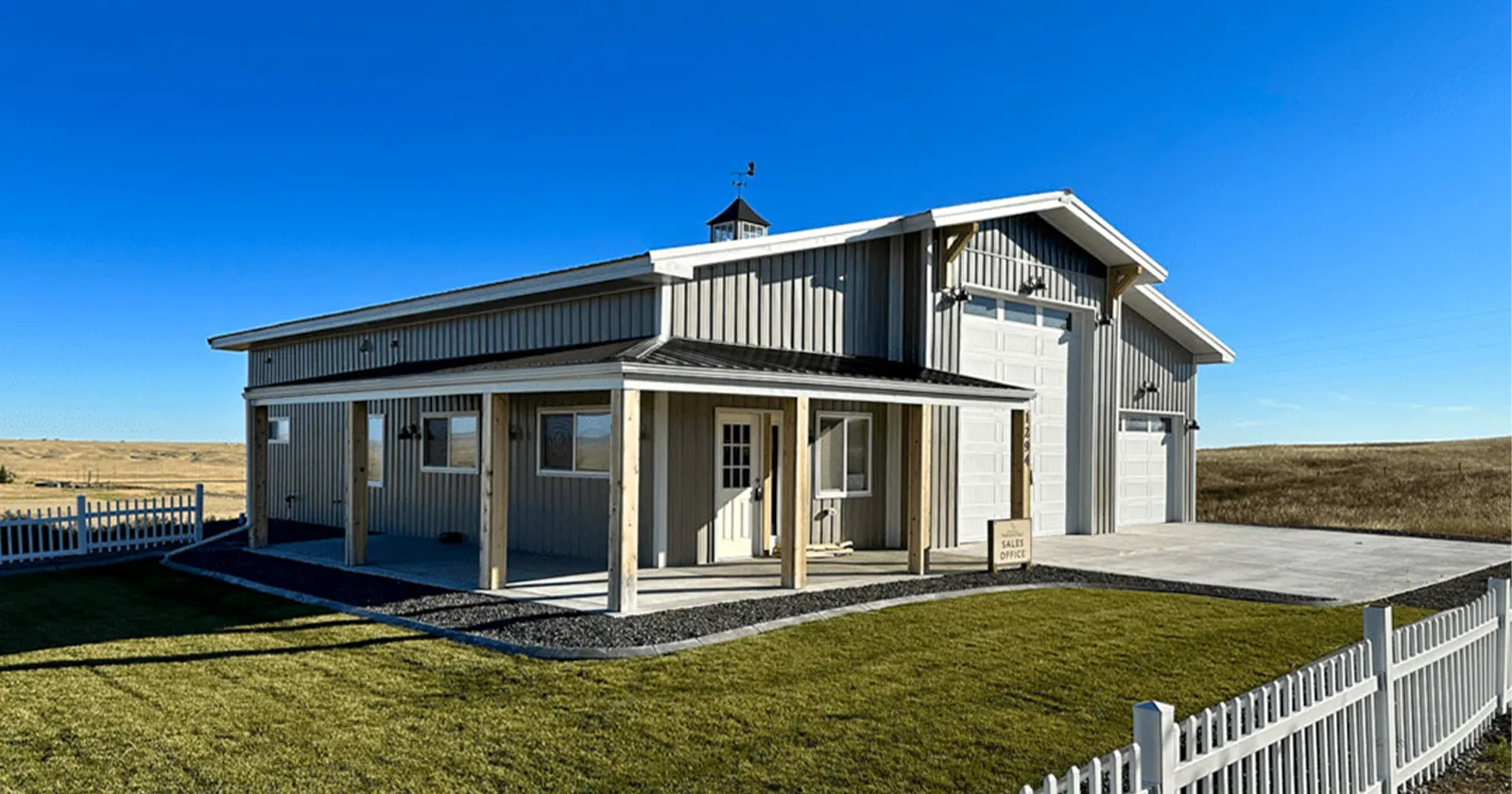
| Barndominium or large shop-home with metal roofing | Metal (steel) for visual coordination and performance |
| Modern farmhouse or contemporary rural aesthetic | Metal (steel) for board and batten or shiplap profile options |
| High fire risk or wildland-urban interface location | Metal or fiber cement (both non-combustible) |
| Traditional suburban neighborhood, conventional home style | Fiber cement or wood depending on maintenance preference |
| Natural material appearance is the top priority | Wood (with understanding of maintenance demands) |
| Tight budget on a conventional home, planning to sell in 10-15 years | Fiber cement offers a balance of cost and performance |
| Pacific Northwest climate with heavy rain or freeze-thaw cycles | Metal for best long-term moisture performance |
A Note on Metal Siding in the Pacific Northwest
For homeowners and contractors in Idaho, Washington, Oregon, and Montana, metal siding is not a premium niche choice. It is one of the most practical exterior materials available for the climate, the building types, and the long ownership horizons that rural and semi-rural properties typically involve.
Metal America manufactures metal siding panels at their Post Falls, Idaho facility and serves the Pacific Northwest directly. Their residential panel lineup covers the profiles and finishes that work on modern homes, barndominiums, farmhouses, and rural properties, with Sherwin-Williams WeatherXL SMP coatings that are engineered to perform in regional conditions. Custom panel lengths are available, and the team can help you spec the right combination of profile, gauge, and color for your specific project.
Frequently Asked Questions
Is metal siding better than fiber cement?
For most Pacific Northwest applications, metal siding outperforms fiber cement on lifespan, moisture resistance, maintenance frequency, and fire performance. Fiber cement has a lower upfront cost in some markets and a wider availability through standard building supply channels. The right choice depends on your specific project, budget, and performance priorities.
Does metal siding look cheap compared to wood?
Modern metal siding, particularly board and batten and shiplap profiles with quality SMP coatings, does not look cheap. The material has become closely associated with contemporary rural-modern and farmhouse design aesthetics. What looks cheap is poor installation, thin gauge panels, or color choices that do not suit the building. Good metal siding, properly installed, looks intentional and high-quality.
Is fiber cement or metal siding better in cold climates?
Metal siding generally performs better than fiber cement in cold climates with significant freeze-thaw cycling. The moisture vulnerability at fiber cement cut edges and the brittleness of the material in cold temperatures are points of concern that do not apply to steel panels. Both materials outperform wood in cold and wet conditions.
What is the lowest-maintenance exterior siding?
Factory-coated steel siding has the lowest ongoing maintenance requirement of the standard residential siding materials. There is no repainting schedule under normal conditions, no rot, no pest damage, and no caulking-dependent moisture exclusion at panel joints. Periodic washing is the primary maintenance task.
Can you paint metal siding if you want to change the color?
Yes. Metal siding panels can be field painted if you decide to change the color after installation. However, the factory SMP coating is more durable than field-applied paint, so repainting is typically a choice rather than a maintenance requirement for decades after installation.
Get a Quote
Find the Best Panel for Your Next Project
Fill out the form below and our team will get back to you within 24 hours with pricing and availability.
E-mail
sales@metalamerica.com
Phone number
855-638-2587