
First Published: April 29, 2026 Last Update: April 29, 2026
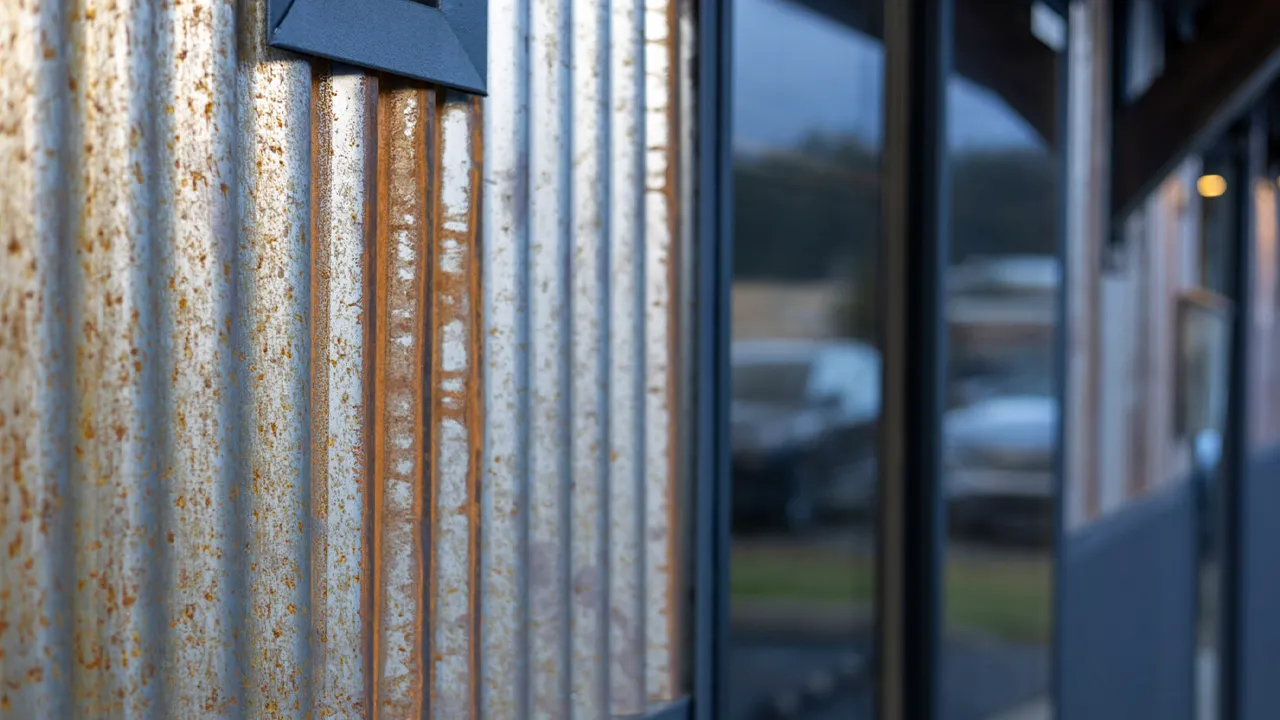
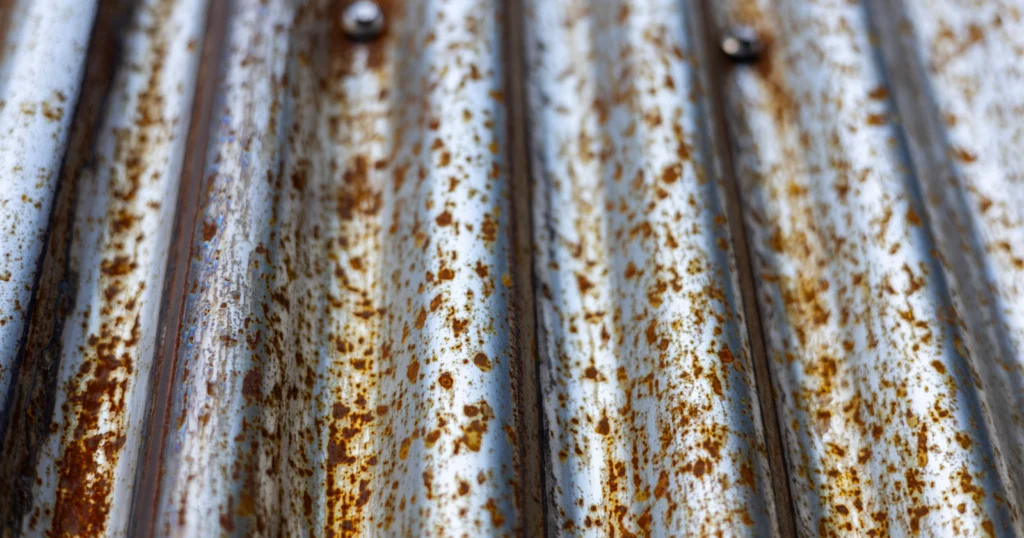
Cor-Ten weathering steel panels do something no painted or printed finish can replicate: they develop a living surface over time. The orange-to-brown rust patina that forms on Cor-Ten is not a sign of deterioration. It is the protection. Understanding that distinction is the foundation for knowing whether Cor-Ten is right for your project.
This article covers what Cor-Ten weathering steel actually is, how the patination process works, where it performs well on buildings, how it compares to other specialty finishes, and the practical things you need to know before specifying it.
What Is Cor-Ten Weathering Steel?
Cor-Ten is a trademarked name for a family of high-strength, low-alloy steels originally developed by U.S. Steel in the 1930s. The name is derived from the two properties that define it: corrosion resistance and tensile strength. The alloy composition, which includes small amounts of copper, chromium, nickel, and phosphorus, causes the steel to form a stable, tightly adherent oxide layer when exposed to alternating wet and dry conditions.
That oxide layer is what most people recognize as the rust-orange to deep brown patina that develops on weathering steel surfaces. Unlike ordinary carbon steel, where rust is a progressive process that continues to penetrate deeper into the material, Cor-Ten’s patina is self-limiting. Once the stable oxide layer forms, it significantly slows further corrosion by blocking moisture and oxygen from reaching the steel beneath.
The result is a structural metal product that does not require paint, coating, or surface treatment to maintain its integrity over time, and that develops a distinctive visual character in the process.
How the Patination Process Works
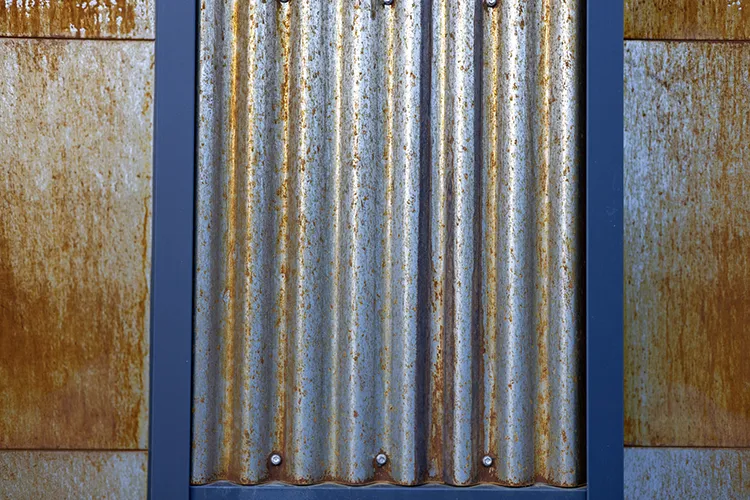
The Cor-Ten patina does not form instantly. It develops over a period of 12 to 36 months depending on local climate and exposure conditions. In humid climates with regular rainfall, the patina typically stabilizes faster. In very dry climates, the process takes longer because the alternating wet-dry cycle that drives patination is less frequent.
The stages look roughly like this:
- Months 1 to 3: Initial surface oxidation begins. The steel takes on an uneven orange and brown coloring with visible rust streaking. This is the most visually unsettled stage of the process.
- Months 3 to 12: The oxide layer deepens and begins to even out. Streaking reduces. The surface starts showing the characteristic warm brown and rust tones associated with mature Cor-Ten.
- Months 12 to 36: The patina stabilizes into a consistent deep brown to orange-brown tone with a matte, slightly textured surface. At this point, the protective layer is fully formed and active corrosion slows substantially.
It is worth setting accurate expectations upfront: the first few months after installation can look rough. Buyers who are not prepared for the initial streaking and uneven orange coloring sometimes mistake it for a defective product. It is not. It is the process working as intended. If the final look of mature Cor-Ten is what you want, you need to be willing to wait through the early stages.
Cor-Ten on Buildings: Where It Works Best
Cor-Ten is not the right finish for every project, but it is the right finish for a specific set of applications where no painted or printed alternative fully delivers.
Industrial and Warehouse Buildings
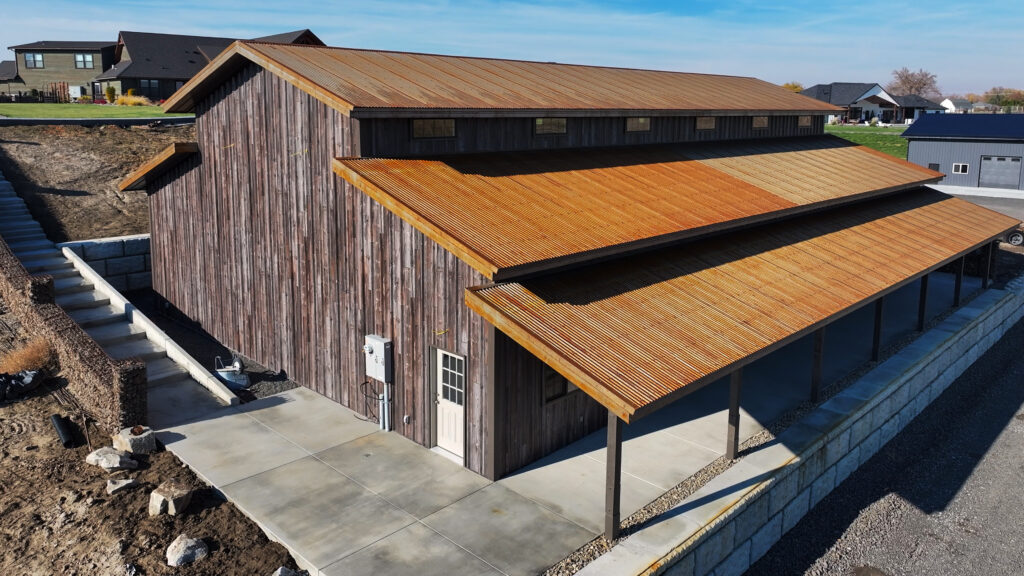
Cor-Ten has a long history in industrial architecture, where the material’s raw, structural character is appropriate rather than at odds with the design. On warehouse facades, equipment storage buildings, and industrial facilities, Cor-Ten siding creates a presence that painted metal does not. The patina reads as intentional, textured, and substantial rather than utilitarian.
Agricultural and Rural Buildings
In rural settings, the warm earth tones of aged Cor-Ten blend naturally into landscapes of dry grass, rock, and timber. A Cor-Ten-clad barn or equipment storage building develops a visual integration with its surroundings over time that no factory-applied color fully achieves. For owners who want a building that looks like it belongs on the land rather than sitting on top of it, weathering steel is a strong option.
Architectural and Design-Forward Residential
Contemporary residential architecture has embraced Cor-Ten extensively over the past two decades. Accent walls, feature facades, entry canopies, and feature panels in weathering steel are common on modern custom homes, particularly those with a material palette of concrete, glass, and raw steel. The key is using Cor-Ten deliberately as a design element rather than as the primary cladding material on an entire residential building, where it can overwhelm rather than anchor the design.
Commercial and Retail Spaces
Restaurants, craft breweries, boutique retail, and hospitality projects frequently use Cor-Ten as an exterior accent or feature wall material. The patina signals authenticity and craft in ways that align with the branding of these businesses. It also ages gracefully, which matters for commercial properties where exterior appearance is a long-term asset.
Landscape and Site Structures
Retaining walls, planter boxes, fencing, and site signage in Cor-Ten are common in commercial landscape architecture. These applications allow the weathering process to proceed naturally with minimal maintenance, and the material blends well with planted areas as the patina deepens.
Cor-Ten vs. Standard Painted Metal Panels
| Factor | Comparison |
| Appearance | Cor-Ten develops a natural rust patina that evolves over time. Painted panels maintain a consistent factory color indefinitely if properly maintained. |
| Maintenance | Cor-Ten requires no painting, coating, or surface treatment once the patina has stabilized. Painted panels may require repainting after several decades. |
| Installation appearance | Cor-Ten looks unfinished during the patination period (months 1 to 36). Painted panels look finished immediately. |
| Run-off staining | Cor-Ten will produce orange-brown run-off during patination that can stain concrete, masonry, and adjacent materials. Site planning is required. |
| Design intent | Cor-Ten suits projects where an organic, industrial, or raw material aesthetic is deliberate. Painted panels suit projects where a specific color or clean finish is required. |
| Long-term color stability | Cor-Ten’s patina continues to evolve slowly over decades, deepening to darker brown tones. Painted finishes remain stable if maintained. |
Important Practical Considerations Before Specifying Cor-Ten
Run-Off Staining
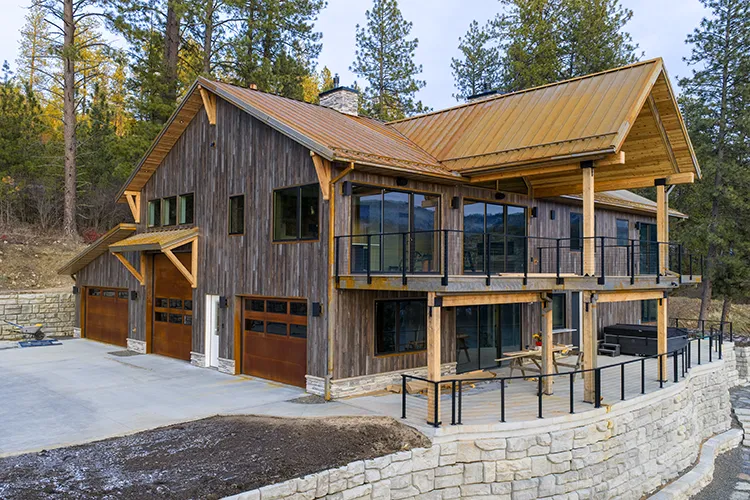
This is the single most common issue buyers do not anticipate. During the patination period, rain water running off Cor-Ten panels carries iron oxide particles that leave orange-brown stains on concrete foundations, sidewalks, masonry walls, and any adjacent light-colored materials. This is a normal part of the weathering process and not a defect, but it needs to be accounted for in site planning.
Strategies for managing run-off include designing overhangs that direct water away from foundation surfaces, using gravel or dark aggregate at the base of Cor-Ten walls to absorb run-off without staining, and avoiding placement adjacent to white or light-colored concrete flatwork.
Climate Suitability
Cor-Ten performs best in environments with regular wet-dry cycles, which is exactly the kind of climate found across the Pacific Northwest. In persistently wet environments with minimal dry periods, the patina may not stabilize as efficiently and ongoing corrosion can be more active. In persistently dry climates with infrequent rainfall, patination is slow and inconsistent. Neither extreme disqualifies Cor-Ten, but both affect how it performs.
One environment where Cor-Ten is generally not recommended is coastal zones with heavy salt air exposure. Salt accelerates corrosion in ways that are not self-limiting in the same way as standard weathering, and standard Cor-Ten may not perform as well in marine environments as it does inland.
Fastener and Flashing Compatibility
Fasteners and flashings used with Cor-Ten panels should be compatible with the weathering steel to avoid galvanic corrosion. Stainless steel or weathering steel fasteners are typically recommended. Standard zinc-plated or galvanized fasteners will corrode in contact with Cor-Ten and should be avoided. Consult with your installer and the Metal America team on the appropriate hardware specification for your application.
Not Suitable for Every Application
Cor-Ten is available from Metal America in corrugated panel profiles. It is a specialty product with specific design intent, not a general-purpose substitute for painted panels. If the project requires a specific color, a clean finished appearance from day one, or a finish that is predictable and consistent over time, a standard SMP or PVDF painted panel is the right choice.
Cor-Ten vs. Other Specialty Finishes
Metal America’s specialty finish lineup also includes the Vintage and Gotham Patina PVDF finishes, which deliver an aged metallic appearance without the active weathering process. These finishes provide a more controlled and immediately consistent alternative to Cor-Ten for projects where the aged metal aesthetic is desired but the patination timeline, run-off management, or climate uncertainty of real weathering steel is a concern. See the full specialty finish collection at metalamerica.com/specialty-metal-finishes.
For projects calling for a wood-grain aesthetic rather than an industrial metal one, the wood-look print collection is a separate direction entirely. See the wood look metal panels guide for that category.
Summary: Is Cor-Ten Right for Your Project?
| Cor-Ten is a strong fit when… | Consider alternatives when… |
| The design calls for an industrial, raw, or earthy aesthetic | A specific consistent color is required from day one |
| The building is in a rural, agricultural, or design-forward context | The site has light-colored concrete or masonry at grade that cannot be stained |
| Long-term low maintenance is a priority | The project is in a salt-air coastal environment |
| The patination timeline is acceptable to the owner | Budget or schedule requires a predictable finished appearance immediately |
| Wet-dry climate cycles are present (Pacific Northwest is well suited) | Persistent wet conditions without adequate dry periods are expected |
If you’re evaluating Cor-Ten for a specific project, the Metal America team can help you think through the site conditions, panel profile options, and installation considerations. Reach out at 855-638-2587 or sales@metalamerica.com.
Get a Quote
Find the Best Panel for Your Next Project
Fill out the form below and our team will get back to you within 24 hours with pricing and availability.
E-mail
sales@metalamerica.com
Phone number
855-638-2587