
First Published: June 10, 2026 Last Update: June 10, 2026
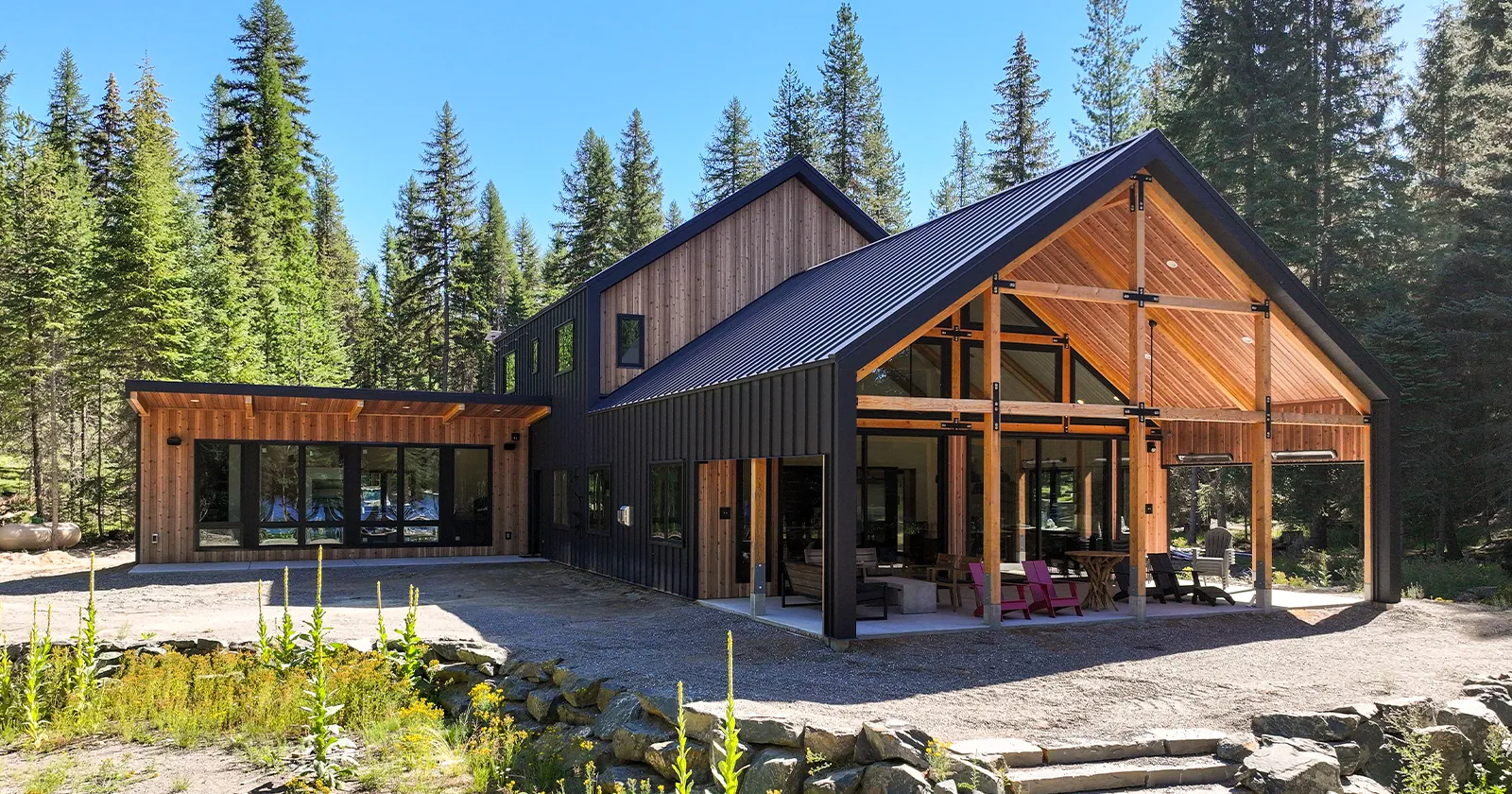
Metal siding for barndominiums is not a one-size-fits-all decision. The panel profile you choose, how you combine colors, and the way you detail the transitions between materials all determine whether the finished exterior looks like a thoughtfully designed home or just a big metal box. The good news is that with the right panel selection and a few smart design moves, barndominium exteriors can be genuinely impressive, and metal is the material that makes most of it possible.
This guide covers the best metal siding panel options for barndominium builds, the design approaches that work at barndominium scale, and the color and finish ideas that are popular right now in the Pacific Northwest and across the country.
Why Metal Siding Is the Standard for Barndominium Exteriors
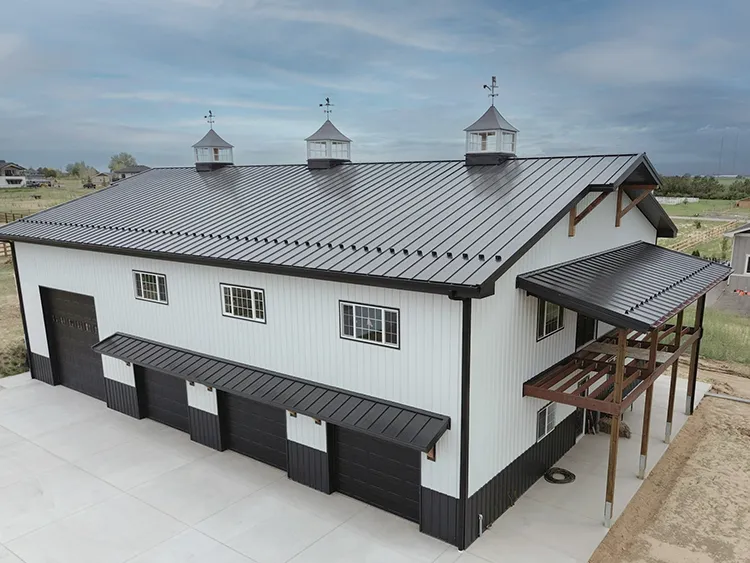
Barndominiums are not a niche building type anymore. They have become one of the most popular ways for rural landowners to build a home that combines living space with shop, garage, or storage area under one roof. And almost universally, the exterior finish of choice is metal siding.
There are a few reasons for that. First, metal siding performs at the scale of a barndominium. These are large buildings, often with 16-foot or taller wall heights and 2,000 to 5,000 square feet of exterior wall surface. Materials that look fine on a small suburban house can look underwhelming or impractical at that scale. Metal panels go up efficiently, cover large expanses well, and hold their appearance over decades without the maintenance demands of wood or fiber cement.
Second, the visual vocabulary of metal siding matches what most barndominium buyers are going for: a rural-modern look that reads as solid, intentional, and a little bit different from a standard house. Board and batten metal panels, in particular, have become closely associated with the barndominium aesthetic the same way board and batten wood siding defined farmhouse architecture a generation ago.
Third, metal siding integrates naturally with metal roofing, which is also almost universal on barndominium builds. A coordinated metal exterior on roof and walls is easier to pull off than mixing metal roofing with fiber cement or vinyl siding, and it delivers a more cohesive final look.
Read more about the benefits of metal siding in our article: Metal Siding vs. Wood Siding vs. Fiber Cement: Which Is Best for Your Home?
Barndominium Metal Siding Panel Options
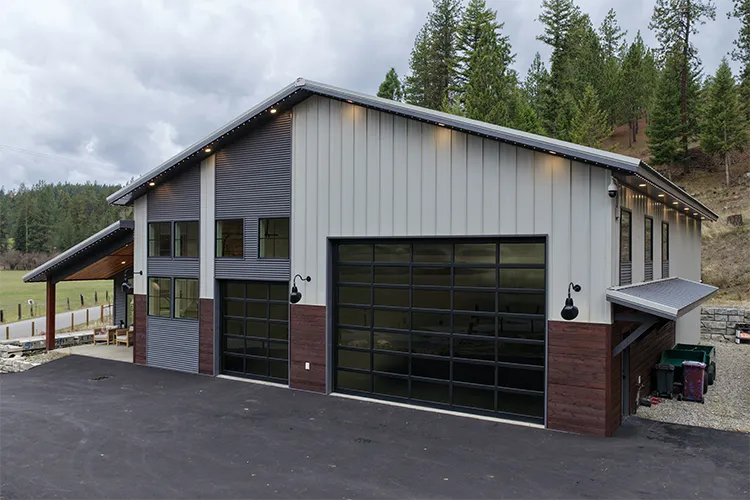
The metal siding panel market has expanded significantly, and barndominium builders now have a real range of profiles to choose from. Here is how the main options stack up for barndominium applications.
Board and Batten Metal Siding
Board and batten is the dominant panel choice for barndominium exteriors, and for good reason. The vertical profile with raised rib details creates shadow lines that add visual texture to large wall surfaces without overcomplicating the design. It reads as intentionally rural and modern at the same time, which is exactly the aesthetic most barndominium buyers are chasing.
On a large barndominium with 14- to 16-foot wall heights, board and batten’s vertical orientation helps the building feel tall and architectural rather than wide and warehouse-like. The shadow lines also help break up the visual monotony of a large uninterrupted wall plane.
Metal America’s Board and Batten panel is available in 26 and 24 gauge and comes in the full Sherwin-Williams WeatherXL SMP color range. It pairs naturally with matching trim packages for corners, window surrounds, and base details.
Corrugated Metal Siding
Corrugated metal panels, particularly the 7/8 inch corrugated profile, have a strong following in barndominium design. The wavy profile has an honest, utilitarian quality that reads as intentional on a building that is part home and part working structure.
Corrugated siding tends to be more budget-friendly per square foot than board and batten or standing seam profiles, which matters on large barndominium exteriors where square footage adds up fast. It is also one of the profiles most associated with classic barn construction, which gives it an authentic rural quality that some barndominium buyers specifically want.
Corrugated panels work well as accent sections on a barndominium exterior even when board and batten is the primary panel. A corrugated gable end or a corrugated lower wainscot section against a board and batten field is a design combination that works consistently.
Ribbed Metal Panels: PBR and Tuff Rib
PBR and Tuff Rib are exposed fastener ribbed panels that are common on agricultural and light commercial buildings. On barndominiums, they are typically used when budget efficiency is a primary concern or when the builder specifically wants a more utilitarian aesthetic on the shop side of the building.
These panels are practical, widely available, and install efficiently. They do not have the architectural polish of board and batten or standing seam, but on a large barndominium with a generous lot, a ribbed panel exterior in a good color can still look sharp.
Standing Seam Siding on Barndominiums
Standing seam is primarily known as a roofing system, but it is also used as a siding material on contemporary and high-end barndominium builds. The concealed fastener system with clean vertical seams creates a very modern, minimalist look on a wall surface.
Standing seam siding is the premium option in terms of material cost, and it is most often used as an accent on specific wall sections rather than on the full exterior. A standing seam panel on a single gable face or a projecting entry tower can serve as a strong design statement against a board and batten or corrugated field.
Wood-Look Metal Panels
Specialty printed metal panels that replicate the look of barnwood, cedar, charred wood, or other natural materials are one of the most exciting options available for barndominium siding. Metal America offers these as part of their specialty finish lineup.
The application on a barndominium is typically as an accent rather than a full field material. A wood-print panel on a gable end, a covered porch soffit, a single accent wall section, or a dormer face creates a natural warmth against a painted metal field without the maintenance of real wood. It is also significantly more durable than actual wood siding in wet Pacific Northwest conditions.
Barndominium Siding Design Ideas That Work
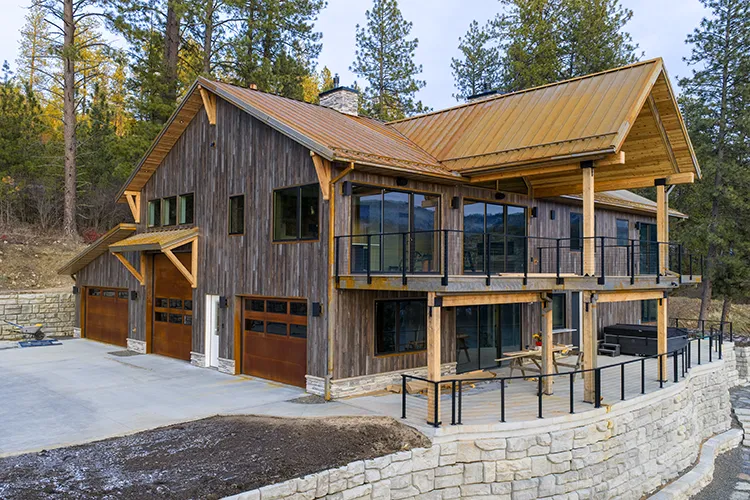
Panel selection is the starting point, but the design decisions that determine how those panels come together on the building are just as important. Here are the approaches that consistently produce strong results on barndominium exteriors.
Two-Tone Color Combinations
A single color exterior on a large barndominium can read as flat, particularly when the building has simple rectangular massing. Introducing a second color on a wainscot section, on the gable ends, on accent wall planes, or on trim creates visual hierarchy and makes the building feel more composed.
Popular two-tone combinations for barndominiums in the Pacific Northwest include:
- Charcoal field with black trim: Clean and contemporary, works with almost any site condition
- Tan or sand field with dark bronze or brown trim: Warm and earthy, blends naturally with rural landscapes
- White or light gray field with charcoal or dark green accent: Classic and versatile, reads as modern farmhouse
- Barn red or burnt sienna with black trim: More traditional rural character, strong visual presence
- Slate gray field with weathered wood accent panels: Contemporary and layered, popular on design-forward builds
Wainscot Details
A wainscot is a lower band of siding that runs around the base of the building, typically in a different color or profile from the field above. On a barndominium, wainscot details serve a few purposes. They visually ground the building, protect the lower wall section from mud splash and equipment contact, and add architectural layering to what might otherwise be a plain exterior.
Common wainscot heights on barndominiums run from 36 inches to 48 inches off grade. A corrugated or ribbed panel wainscot below a board and batten field is a popular combination. A dark wainscot color below a lighter field color is the most common approach.
Gable and Accent Wall Differentiation
The gable ends of a barndominium are some of the most visible surfaces on the building, particularly from a distance. Using a different panel profile, a different color, or a wood-look specialty print on a gable end turns what would be a plain triangle of siding into a design feature.
Similarly, any wall plane that steps forward or back from the main building face is an opportunity to introduce a second material or color. These are the moments that make an exterior look designed rather than built.
Garage Door Integration
Most barndominiums include large overhead garage doors, and how those doors are framed and trimmed has a major impact on the overall exterior appearance. A few things to think about:
- The header trim above the garage door opening should be substantial enough to read clearly against the siding field. A thin header in the same color as the siding can disappear visually.
- The panel layout should be planned so the garage door openings fall naturally within the panel grid rather than creating awkward cuts or narrow slivers at the edges of openings.
- If the garage doors themselves are a feature color or have window lites, make sure the siding color supports rather than fights the door design.
Covered Porch and Entry Details
Covered porches and entries are where barndominiums most clearly read as homes rather than just large metal buildings. The siding treatment on a porch ceiling, a porch column, or an inset entry wall can shift the character of the entire exterior.
Flush wall panels or wood-look specialty print panels on porch ceilings are common details that add warmth and finish to what would otherwise be an industrial-looking underside of a roof. A painted metal soffit panel in a warm white or cream creates a clean, residential quality in porch and entry spaces.
Choosing the Right Color for Your Barndominium Metal Siding
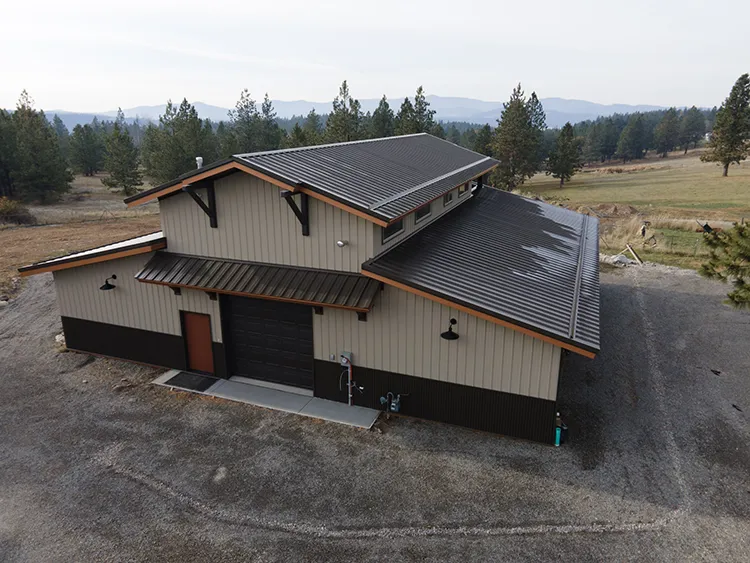
Color selection is one of the decisions that most homeowners and builders wrestle with the longest, and for good reason. On a large barndominium, the exterior color is one of the first things anyone will notice from the road.
A few principles that hold up consistently:
- Darker colors read as more contemporary and intentional. A dark charcoal or deep forest green barndominium exterior photographs well, shows less dirt, and tends to feel more modern.
- Lighter neutrals are more forgiving on irregularly shaped sites or buildings with complex rooflines. White, cream, and light gray work in almost any context and age gracefully.
- Earth tones blend into rural landscapes rather than competing with them. Tan, bronze, brown, and warm gray all read as natural on a rural property.
- Bold or saturated colors, like red, deep green, or navy, work well when the building has simple, clean massing. On a complex roofline or an irregularly shaped barndominium, a bold color can make the design feel busier than it needs to be.
Metal America’s panels are finished with Sherwin-Williams WeatherXL SMP coatings, which provide strong color retention and chalk resistance over the life of the panel. The full color range is available through the Metal America team, and they can help you compare options before committing to a production run.
Panel Gauge for Barndominium Siding

Most barndominium siding projects use 26 gauge steel panels. That is the standard residential gauge and it handles normal wall loads, panel spans, and fastener requirements without issue.
For barndominiums with very tall wall heights, exposed high-wind locations, or premium design intentions, moving to 24 gauge is worth considering. The heavier gauge is stiffer, which reduces the likelihood of oil canning on large flat panel sections and gives the wall a more solid feel when you knock on it. On a high-end barndominium build where the exterior is a significant part of the project’s value proposition, 24 gauge is a reasonable upgrade.
Working with a Local Panel Supplier
One of the advantages of working with Metal America for barndominium siding is that their panels are roll-formed at their Post Falls, Idaho facility. Custom panel lengths are available, which means your installer is not dealing with awkward field cuts across a 16-foot wall. Panels cut to your exact wall height go up cleaner and faster, and the reduction in field waste has a real impact on installation cost.
Metal America serves barndominium contractors and owner-builders directly across Idaho, Washington, Oregon, and Montana. If you are in the planning stage of a barndominium build and want to talk through panel options, their team can help you work through the profile, gauge, and color decisions before your installation date.
Frequently Asked Questions About Barndominium Metal Siding
What is the most popular metal siding for barndominiums?
Board and batten metal siding is the most widely used profile on barndominium exteriors. Its vertical orientation, shadow-line details, and rural-modern character match the aesthetic that most barndominium buyers are going for. Corrugated metal is a close second, particularly on builds where budget efficiency is a priority or where the buyer wants a more traditional agricultural character.
Can you mix panel profiles on a barndominium?
Yes, and mixing profiles is one of the most effective design strategies for barndominium exteriors. A board and batten field with a corrugated wainscot, a standing seam accent panel on a gable end, or a wood-look specialty print on a covered porch ceiling are all approaches that add visual interest without overcomplicating the design.
How do you make a barndominium look more like a home?
A few things shift a barndominium exterior from industrial-looking to residential: covered porch or entry details, warm-toned siding finishes, contrasting trim that frames windows and doors clearly, and wood-look accent panels on visible sections like gable ends or porch ceilings. The garage door design and framing also have a significant impact on how residential the building reads from the road.
What gauge metal siding is best for a barndominium?
26 gauge is the standard for most barndominium siding projects and performs well in typical residential applications. If your building has very tall wall heights, is in a high-wind location, or is a premium build where panel stiffness and surface quality matter, 24 gauge is worth the upgrade.
Does barndominium metal siding require a lot of maintenance?
No. That is one of the primary reasons metal siding is so popular on barndominiums. With quality SMP coatings like Sherwin-Williams WeatherXL, the panels resist fading, chalking, and surface degradation for decades. Normal cleaning with water and mild detergent is typically all that is needed to keep the panels looking sharp. There is no repainting schedule the way there is with wood siding.
Get a Quote
Find the Best Panel for Your Next Project
Fill out the form below and our team will get back to you within 24 hours with pricing and availability.
E-mail
sales@metalamerica.com
Phone number
855-638-2587