
First Published: June 15, 2026 Last Update: June 16, 2026
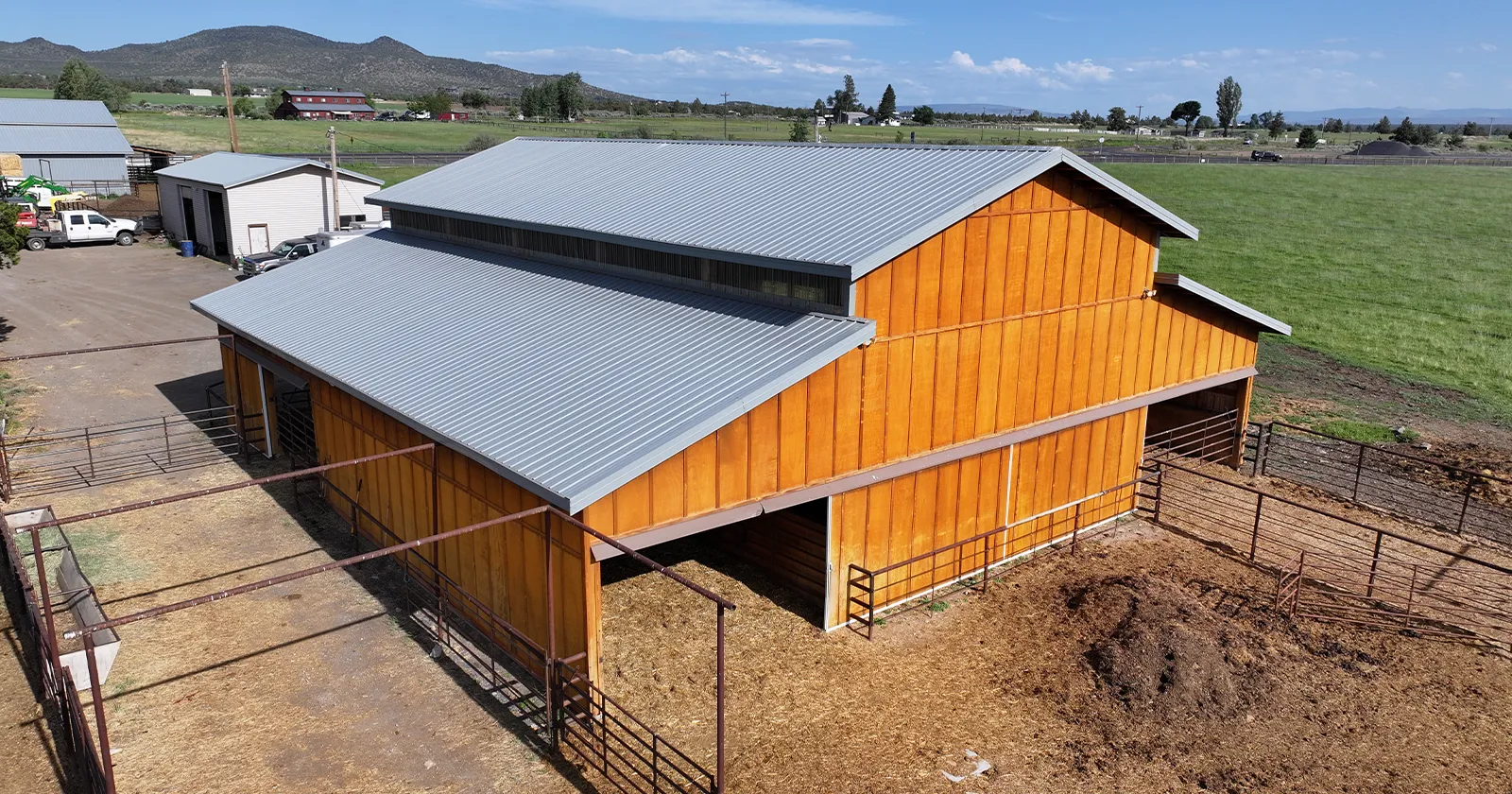
Metal roofing for livestock barns is one of the most demanding roofing applications in agricultural construction, and it deserves more specific attention than a standard pole barn roofing guide provides. A cattle barn, dairy operation, or horse facility generates heat, moisture, ammonia, and airborne particulates at levels that stress roofing materials, fasteners, and structural components in ways that a dry equipment shed simply does not.
At the same time, farm equipment storage buildings have their own set of requirements. Wide doors, tall clearances, and the risk of impact from large machinery make durability and proper panel selection important for a completely different set of reasons.
This guide covers the specific roofing considerations for both livestock barns and equipment storage buildings, including which metal panels hold up best, how to manage interior moisture and condensation, ventilation design basics, and what to ask before you order your roofing materials.
A note on scope: this article focuses on panel selection and roofing system design for these specific building uses. It does not cover general pole barn panel comparisons (covered in our roofing panel guide), lifespan and maintenance topics (covered in our metal roofing lifespan guide), or building construction decisions that belong to your structural contractor or engineer.
Why Livestock Barns and Equipment Buildings Have Different Roofing Needs
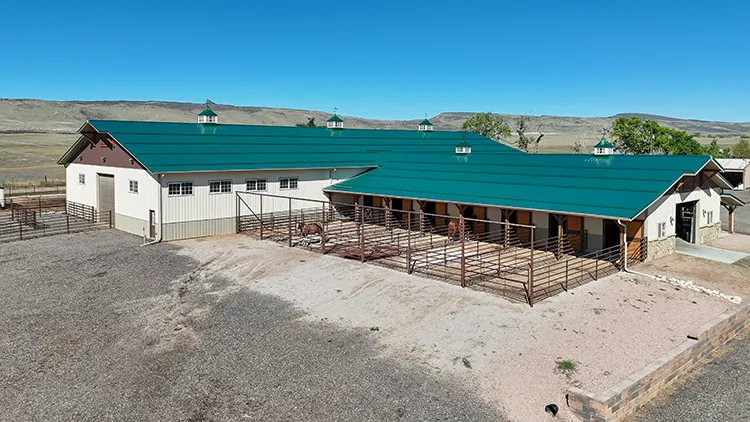
Most agricultural buildings look similar from the outside. They are typically post-frame or pole barn structures with metal roofing over purlin systems. But the conditions inside those buildings vary dramatically, and those interior conditions drive some important differences in how you should approach panel and system selection.
Livestock Barns: The Moisture and Corrosion Challenge
Livestock produce body heat, respiration moisture, urine, and manure gases around the clock. In an enclosed or semi-enclosed barn, this creates a persistently humid and chemically active interior environment. The roof is the part of the building closest to where warm, moist air rises and accumulates before it can escape through ridge or eave ventilation.
The practical result is that the interior surface of a livestock barn roof is exposed to higher humidity levels, more frequent condensation cycles, and in some cases, ammonia and hydrogen sulfide off-gassing from manure. These conditions accelerate corrosion of unprotected metal surfaces, attack fastener neoprene washers over time, and degrade insulation if it is present.
Getting the roofing selection and ventilation design right from the start is far less expensive than dealing with premature corrosion, dripping condensation onto animals, or structural damage to purlins and trusses.
Equipment Storage Buildings: The Impact and Access Challenge
Farm equipment storage buildings deal with a different set of demands. The roofing itself sees less interior moisture than a livestock barn, but the building design typically involves very large overhead doors, tall clear-span interiors, and the regular presence of large, expensive machinery.
The main roofing concerns for equipment storage are panel durability against hail and impact, proper flashing and sealing around large door openings and sidewall transitions, and long-term performance without the maintenance attention that a busy farm shop might not receive.
Recommended Metal Roofing Panels for Livestock Barns
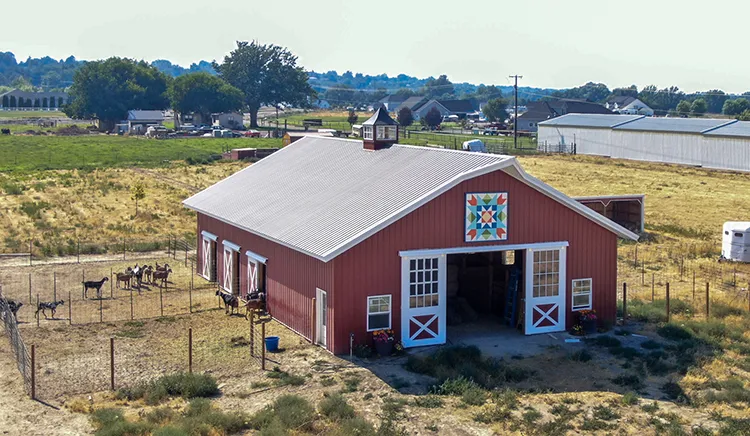
What to Prioritize in a Livestock Barn Roofing Panel
For a livestock barn roof, your panel selection should prioritize corrosion resistance in the substrate, quality coating systems, and a gauge that provides adequate structural performance. The three factors work together: a thicker substrate coating, a premium paint system, and a heavier gauge combine to give you a panel that will perform for decades in a high-moisture agricultural environment.
Galvalume Substrate for Corrosion Resistance
For livestock barns, a Galvalume steel substrate provides a meaningful advantage over galvanized steel in high-moisture environments. Galvalume is an alloy coating of zinc, aluminum, and silicon that delivers superior barrier corrosion protection compared to galvanized steel alone. In an environment where interior humidity is chronically elevated, that additional corrosion resistance matters.
Metal America’s panels on a Galvalume substrate with Sherwin-Williams WeatherXL SMP coating provide the corrosion protection and coating durability appropriate for demanding agricultural interiors.
Panel Profile Options for Livestock Barns
Both Tuff Rib and PBR panels work well for livestock barn roofing when specified in the appropriate gauge and substrate. For larger barns with wide purlin spans and significant snow loads, PBR at 24 gauge is a strong choice. For mid-sized livestock buildings with standard purlin spacing, 26 gauge Tuff Rib provides reliable performance at a more accessible price point.
Corrugated panels are also used on livestock barns, particularly older structures being reroofed and buildings where the traditional corrugated profile is already established. The 7/8 inch corrugated profile sheds water efficiently and has a long track record in agricultural applications.
Recommended Metal Roofing Panels for Farm Equipment Storage
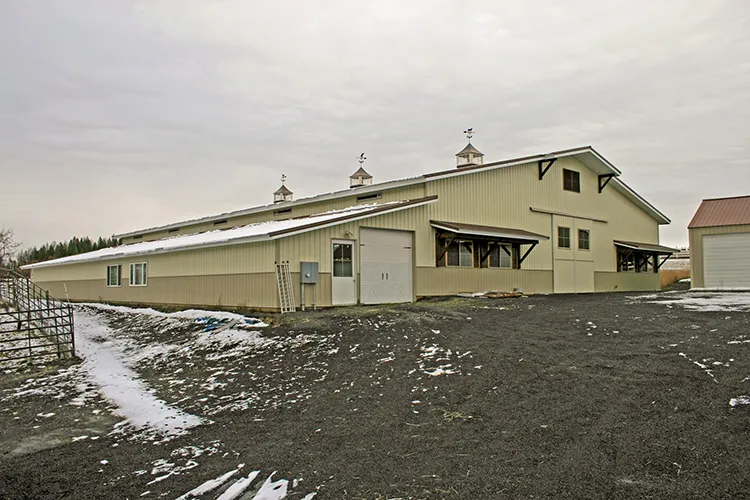
What to Prioritize in an Equipment Storage Roofing Panel
Equipment storage buildings are somewhat forgiving compared to livestock barns in terms of interior moisture, but they are often large, which means purlin spans can be significant. The priority for equipment building roofing is structural performance appropriate for the span, a quality coating system for long-term appearance, and proper sealing around large door openings and wall transitions.
PBR for Large Equipment Buildings
For larger equipment storage buildings, PBR at 24 or 26 gauge is the preferred panel. The structural rib profile handles wide purlin spans better than shallower ribbed panels, and the range of available gauges lets you right-size the panel to the building’s specific load requirements.
Tuff Rib for Smaller and Mid-Sized Equipment Sheds
For smaller equipment sheds, implement storage buildings, and general-purpose agricultural outbuildings, Tuff Rib at 26 gauge is a reliable, cost-effective choice. It installs quickly, comes in custom lengths, and provides the weather resistance and durability appropriate for most farm equipment storage applications.
Building Type Quick-Reference Guide
| Building Type | Moisture Level | Ventilation Need | Recommended Panel |
| Dairy barn | Very High | Critical | Galvalume-base PBR or Tuff Rib, 26 ga |
| Cattle/livestock barn | High | High | Tuff Rib or PBR, 26 ga |
| Hay storage | Low to Medium | Moderate | Tuff Rib or Corrugated, 26-29 ga |
| Equipment storage | Low | Low to Moderate | Tuff Rib or PBR, 26 ga |
| Grain/feed storage | Medium | Moderate | PBR, 24-26 ga, vapor consideration |
Managing Moisture and Condensation in Agricultural Building Roofs
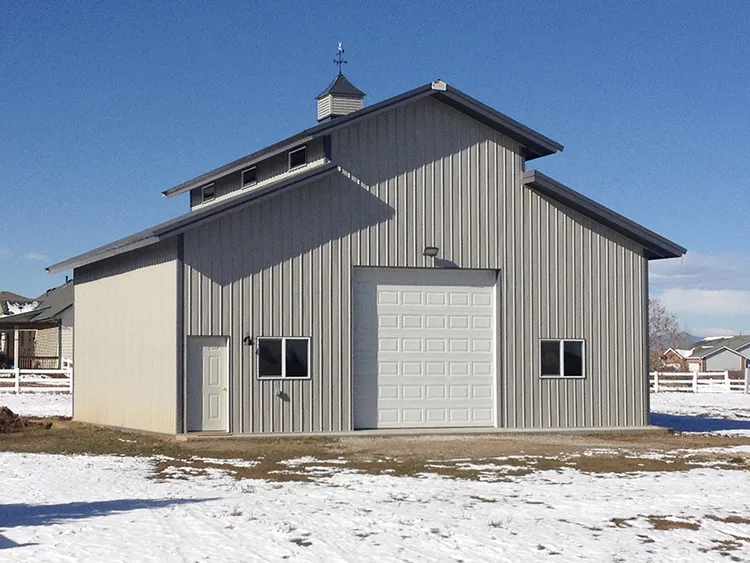
Condensation is the most common moisture-related problem in agricultural metal roofing, and it is one of the most misunderstood. Condensation forms when warm, humid interior air contacts a cold metal surface, causing water vapor to condense into liquid droplets. In a livestock barn, this can result in water dripping from the roof onto animals, bedding, and feed. In any building, it can cause accelerated corrosion of purlins, rafters, and fasteners over time.
Managing condensation requires a combination of ventilation design and, in some cases, condensation-control products applied to or under the roof panels.
Ventilation: The Primary Condensation Defense
Proper ventilation is the most important tool for controlling condensation in agricultural buildings. The goal is to move humid interior air out of the building before it can saturate the space and contact cold roof surfaces. This is achieved through a combination of ridge ventilation and eave ventilation that creates a natural airflow path from low to high.
In a properly ventilated barn, fresh air enters at the eave level and exits at the ridge, carrying heat and moisture with it. When this airflow is adequate, interior humidity stays at manageable levels and condensation on the roof is minimized.
Ventilation Methods for Livestock Barns
| Ventilation Method | How It Works | Best For |
| Ridge ventilation | Open ridge or vented ridge cap allows hot, moist air to escape at the peak | Livestock barns, hay buildings |
| Eave ventilation | Open eave or vented eave trim allows fresh air in at the low point | Works in combination with ridge vent |
| Sidewall louvers | Fixed or adjustable louvers in the sidewall panels | Equipment buildings, enclosed structures |
| Cupolas | Traditional ventilation fixtures on the ridge | Livestock barns, aesthetic plus function |
Condensation Control Products
In buildings where ventilation alone is not enough to manage condensation, which is common in dairy barns, hog facilities, and other high-moisture livestock operations, condensation-control products can be applied to the underside of the roof panels. These products absorb and slowly release moisture rather than allowing it to drip.
Anti-condensation coatings and fiberglass batt insulation installed under the roof panels are two common approaches. Discuss the right solution for your specific building with your roofing contractor or panel supplier before installation.
Ventilation Design Basics for Agricultural Roofing
Getting ventilation right on a livestock barn is a design decision, not an afterthought. The key principles are straightforward.
- Inlet area should roughly equal or exceed exhaust area: Your eave opening or lower sidewall ventilation should allow at least as much air in as the ridge vent allows out. A common mistake is installing a ridge vent without corresponding eave ventilation, which severely limits airflow.
- Ridge vents should run the full length of the building: Partial ridge ventilation is less effective than full-length ventilation. For livestock barns especially, continuous ridge ventilation provides the best performance.
- Avoid blocking eave ventilation with insulation: If you are insulating the roof, make sure the insulation does not block the eave air intake path. Baffles or a gap above the insulation are necessary to maintain airflow.
- Consider prevailing wind direction: In areas with consistent prevailing winds, positioning sidewall louvers and openings to take advantage of natural cross-ventilation improves overall air movement through the building.
Fastener and Trim Considerations for High-Moisture Agricultural Buildings
In livestock barns and other high-moisture agricultural buildings, fastener quality matters more than in a dry equipment shed. Neoprene-washered screws are standard for exposed fastener metal roofing, and in high-moisture environments, using stainless steel or high-quality coated fasteners extends their service life.
Trim and flashing details are particularly important around ridge vents, eave transitions, and any penetrations through the roof. Water infiltration around poorly detailed trim is a common source of interior moisture problems that can be mistaken for condensation. Ensure your contractor uses proper closure strips and butyl tape sealants at all lap joints and penetrations.
What to Tell Your Panel Supplier for a Livestock or Equipment Building Project
When you contact Metal America about roofing panels for a livestock barn or equipment storage building, be ready to share the following information so they can help you choose the right materials.
- Building type and primary use: Livestock barn, hay storage, equipment storage, or multi-use. The interior environment drives substrate and gauge recommendations.
- Building dimensions and roof pitch: Overall length, width, and eave height, plus the roof pitch. Pitch affects panel selection and drainage design.
- Purlin spacing: Spacing determines the appropriate panel profile and gauge for structural performance.
- Local snow load requirements: Particularly important for buildings in northern Idaho, western Montana, and higher elevations in Washington and Oregon.
- Ventilation design intent: Whether you plan to use open ridge ventilation, cupolas, sidewall louvers, or a combination. This affects trim package selection.
- Custom panel lengths needed: Metal America roll forms to custom lengths at Post Falls. Providing exact panel lengths eliminates field cutting and waste.
Get a Quote
Find the Best Panel for Your Next Project
Fill out the form below and our team will get back to you within 24 hours with pricing and availability.
E-mail
sales@metalamerica.com
Phone number
855-638-2587