
First Published: May 28, 2026 Last Update: May 28, 2026
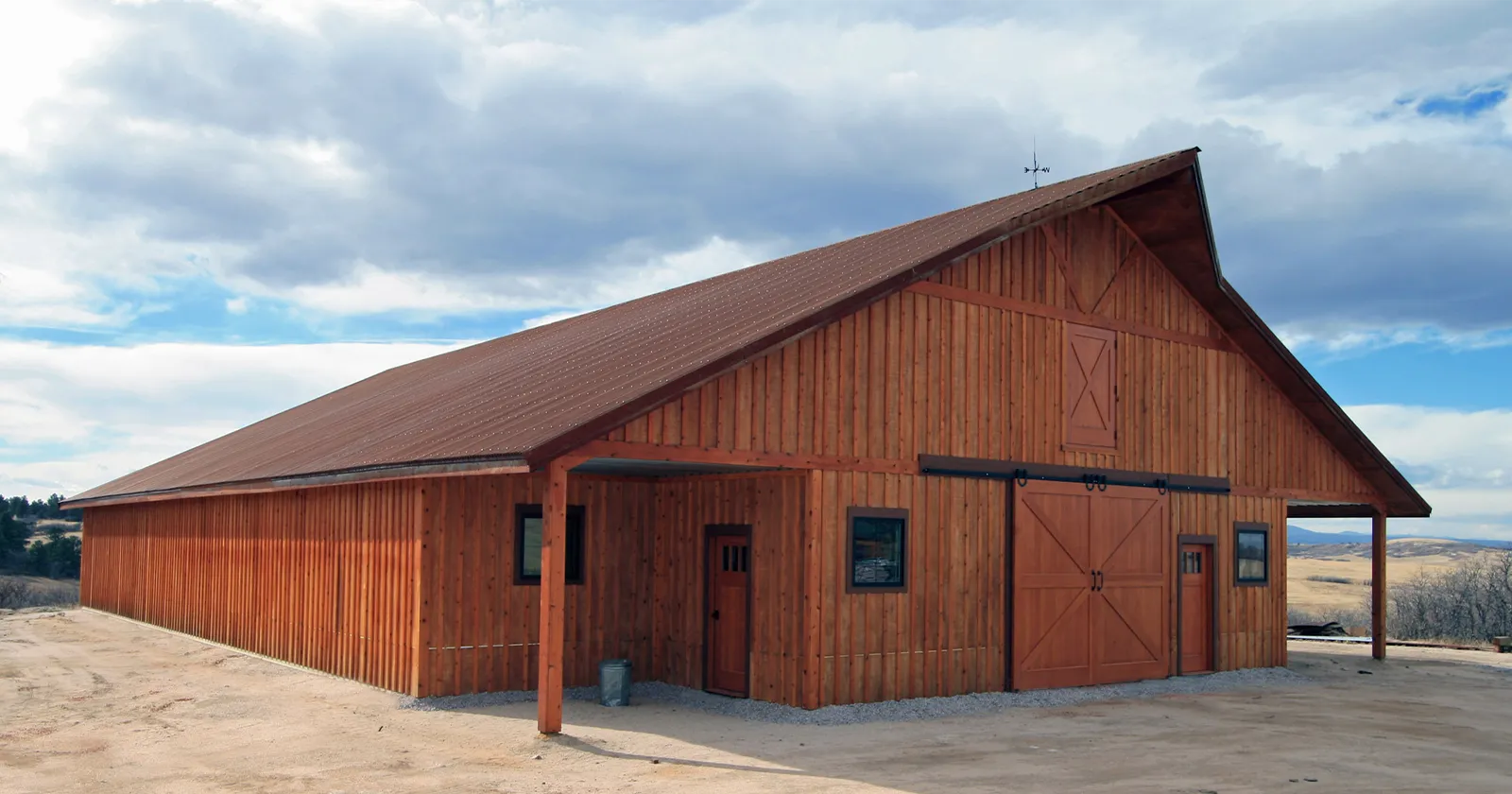
How long does metal roofing last on a farm building is a question worth answering carefully, because the answer has real financial implications for farm owners and contractors planning agricultural construction projects across the Pacific Northwest. A roof is not just another line item. On a working farm building, it is protecting expensive equipment, livestock, hay, grain, and the structural integrity of the building itself.
The short answer is this: a quality metal roofing panel installed correctly on an agricultural building will typically last 40 to 60 years or more before the panel itself needs replacement. The coating, the substrate, the gauge, the installation quality, and the maintenance practices all affect where in that range your roof lands. This guide unpacks each of those factors so you know what you are actually paying for and how to protect that investment.
One thing this guide does not cover: cost per square foot comparisons between metal roofing and other materials. This article is focused specifically on durability, longevity, warranty coverage, and maintenance.
What Drives Metal Roofing Lifespan on Farm Buildings
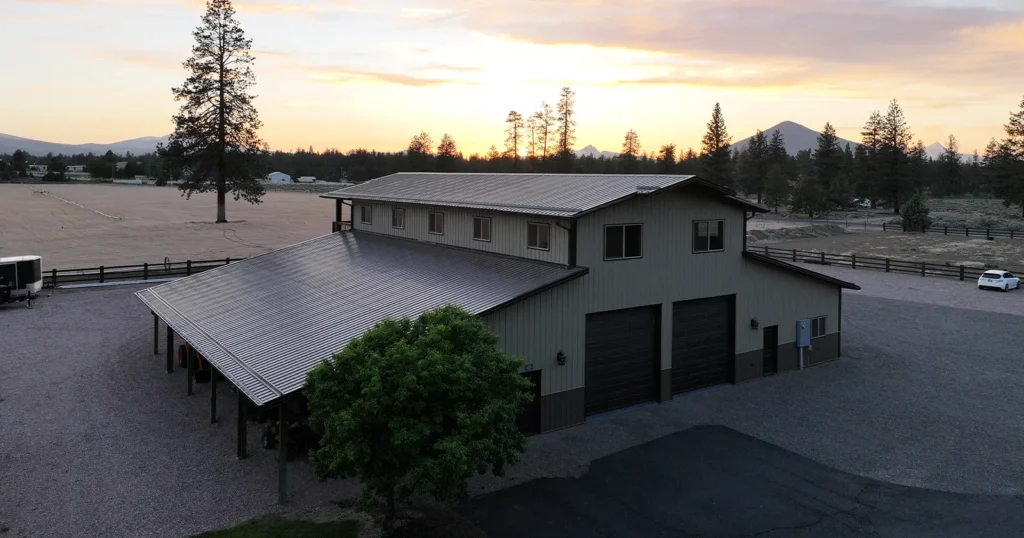
Metal roofing lifespan is not a single fixed number because it is determined by a combination of factors working together. The panel quality and gauge, the paint system, the installation quality, and the post-installation environment all interact to determine how long your roof will perform. Understanding those factors gives you real control over the outcome.
The Steel Substrate
The substrate is the steel itself, before any coating or paint is applied. Agricultural metal roofing panels from Metal America are built on either galvanized or Galvalume steel.
Galvanized steel is coated with a zinc layer that protects against corrosion through both a physical barrier and a sacrificial mechanism: the zinc corrodes preferentially, protecting the steel beneath it. Galvanized panels have a long track record in agricultural applications and provide excellent durability in most farm environments.
Galvalume is an alloy of zinc, aluminum, and silicon that provides superior corrosion resistance compared to galvanized, particularly in high-humidity environments like livestock barns. For agricultural buildings with elevated interior moisture, Galvalume-based panels extend service life compared to galvanized alternatives.
Both substrate types provide decades of corrosion protection when covered by a quality paint system and properly installed. Galvalume has an edge in demanding agricultural environments; galvanized is reliable in drier agricultural applications.
The Paint and Coating System
The coating system applied over the steel substrate is the primary determinant of the roof’s long-term appearance and its first line of defense against UV degradation, moisture penetration, and chemical attack. Metal America uses Sherwin-Williams WeatherXL SMP (siliconized modified polyester) coatings on its agricultural panels.
WeatherXL is a premium paint system specifically formulated for demanding exterior applications. It provides long-lasting color retention, resistance to chalking, and durability in the temperature extremes, high UV exposure, and moisture cycling that Pacific Northwest farm buildings experience across the seasons.
The WeatherXL system carries a 40-year fade warranty and a 40-year chalk warranty when applied on qualifying panels. What that means in practical terms is that the paint system is engineered and warranted to maintain its appearance and protective properties for four decades under normal service conditions.
Panel Gauge

Gauge is the thickness of the steel panel. Heavier gauge panels (lower gauge numbers) are thicker, more rigid, more resistant to impact damage from hail and debris, and capable of spanning greater distances between purlins without deflection. All of these characteristics contribute to longer service life.
For agricultural buildings in the Pacific Northwest, 26 gauge is the most common specification for standard farm applications, providing the right balance of structural performance and cost efficiency. In high snow load areas, wide-span buildings, or applications where maximum durability is the priority, 24 gauge is the appropriate step up.
A heavier gauge panel also provides more metal at field-cut edges, which are a common point of early corrosion. The additional substrate thickness at cut edges gives you more protection before the galvanized or Galvalume coating is consumed.
Installation Quality
Installation quality is the factor that buyers have the most control over but often underestimate. The same high-quality panel can perform very differently depending on how it was installed.
The most common installation factors that affect lifespan on agricultural buildings are fastener selection and installation, panel overlap sealing, flashing detail quality, and roof pitch compliance.
Exposed fastener panels rely on neoprene-washered screws driven to the correct torque to seal each fastener penetration. Over-driven screws compress and distort the washer, creating gaps that allow water infiltration. Under-driven screws leave the washer unseated and the panel insecure. Getting fastener installation right from the start is fundamental to long-term roof performance.
Site Environment
The environment your farm building sits in affects the lifespan of its metal roof. Factors that reduce lifespan include persistent high interior humidity (especially in livestock facilities), coastal salt air exposure (less common in the Idaho and inland Pacific Northwest market), heavy shade from overhanging trees that keeps the roof surface wet, and debris accumulation in panel laps and valleys that traps moisture.
Most Pacific Northwest farm locations are well-suited to metal roofing longevity. The dry summers allow moisture from wet winters to evaporate. Livestock barn applications are the primary exception, where proactive moisture management is necessary to achieve maximum panel lifespan.
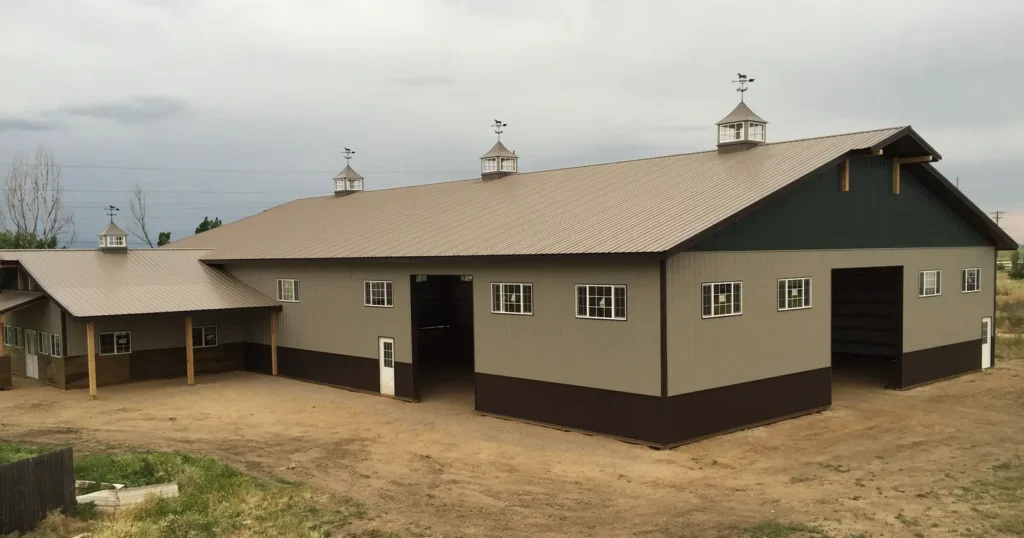
Expected Metal Roofing Lifespan by Panel Type
| Panel Type | Expected Lifespan | Key Longevity Factor | Pacific Northwest Note |
| Exposed fastener (Tuff Rib, PBR) | 40 to 60+ years (panel) | Fastener washer maintenance | Snow load spec at install is critical |
| Corrugated exposed fastener | 40 to 60+ years (panel) | Fastener and lap sealing | Purlin spacing affects long-term performance |
| Standing seam (QuickLoc) | 50 to 70+ years (panel) | Thermal movement clips | Excellent snow-shed performance |
| WeatherXL SMP coating | 40-year fade/chalk warranty | Substrate prep at manufacture | Performs well across PNW climate range |
These are panel lifespan figures, meaning the time before the roofing panel itself needs replacement. Individual components, particularly fastener washers on exposed fastener systems, may need attention before the panel itself requires replacement.
Understanding the WeatherXL Paint Warranty
Metal America applies Sherwin-Williams WeatherXL SMP coatings to its agricultural panel line. For buyers evaluating the long-term value of a metal roof on a farm building, understanding what the warranty covers and what it requires is important.
What the Warranty Covers
The WeatherXL warranty covers paint fade and chalk. Fade refers to color change, measured in Hunter color units, beyond the threshold specified in the warranty. Chalk refers to the white residue that forms on degraded exterior paint surfaces as the binder breaks down and pigment is exposed.
A 40-year fade and chalk warranty means that for 40 years from the date of installation, the paint system is warranted to maintain color within the specified range and to resist chalking beyond the specified threshold. This is a meaningful warranty for an agricultural building that you expect to own and operate for decades.
What Affects Warranty Coverage
Paint warranties, including WeatherXL, have conditions that must be met for coverage to apply. These typically include proper installation per manufacturer specifications, use of compatible accessories and fasteners, and avoidance of conditions that void coverage such as contact with incompatible chemicals or installation in environments outside the warranty’s scope.
For agricultural applications, the most relevant condition is that livestock barn environments with unusually aggressive chemical exposure, specifically high ammonia or hydrogen sulfide concentrations, may affect warranty coverage. Discuss your specific building environment with Metal America when ordering panels for a high-moisture livestock facility.
Panel Manufacturer vs. Paint Manufacturer Warranties
It is worth understanding that panel warranties and paint warranties are separate instruments. The steel substrate may carry its own corrosion warranty from the steel producer, the paint system carries the WeatherXL coating warranty, and Metal America as the panel manufacturer warranties the formed panel product. Ask for documentation on all applicable warranty coverage when you purchase.
How to Maximize Metal Roofing Lifespan on a Farm Building
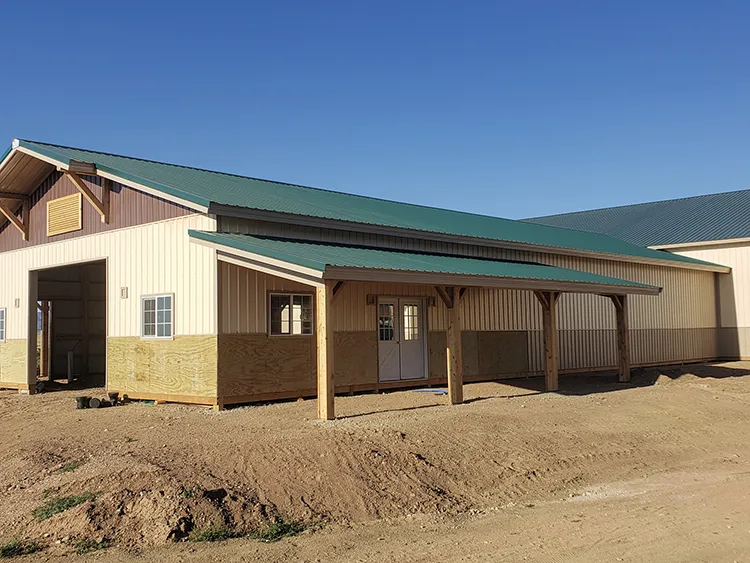
Getting 40 to 60 or more years of service life from a metal roof on a farm building is achievable. It requires getting a few things right at the start and doing a small amount of maintenance over the life of the roof.
Start with Correct Specification
The decisions made before installation are the most important ones. Choosing the right gauge for your purlin spacing and snow load, specifying a Galvalume substrate for high-moisture applications, selecting a quality coating system, and ensuring your roof pitch meets the panel manufacturer’s minimum all set the ceiling for how long your roof will perform.
Working with a knowledgeable panel supplier like Metal America at the specification stage costs nothing extra and can meaningfully extend your roof’s service life by helping you avoid common specification mistakes.
Maintenance Schedule for Agricultural Metal Roofing
| Timeframe | Maintenance Task | Why It Matters |
| At installation | Verify correct fastener torque and washer seating | Over-driven screws distort washers; under-driven screws leak |
| Year 1 to 3 | Inspect fastener washers for any gaps or movement | Early identification of installation issues |
| Every 5 to 7 years | Full fastener inspection and re-torque if needed | Neoprene washers can compress over time in high-UV areas |
| Every 5 to 10 years | Clear debris from valleys, ridges, and gutters | Debris traps moisture and accelerates localized corrosion |
| After major weather events | Inspect for panel damage, fastener pull-through, or flashing displacement | Storm damage caught early is far cheaper to repair |
| As needed | Touch up any scratches or cut edges with touch-up paint | Bare steel at cut edges or scratches is corrosion-prone |
The Six Things That Shorten Metal Roof Life on Farm Buildings
| Lifespan Killer | How It Happens | Prevention |
| Ponding water | Insufficient slope or blocked drainage | Minimum 3:12 pitch, clear gutters and valleys regularly |
| Galvanic corrosion | Dissimilar metals in contact (copper flashing, aluminum fasteners with steel panels) | Use compatible metals; avoid copper contact with steel panels |
| Cut edge corrosion | Bare steel exposed at field cuts | Apply touch-up paint to all cut edges immediately |
| Fastener failure | Washer degradation, over-driving, or wrong fastener type | Use correct panel screws; inspect every 5 to 7 years |
| Debris accumulation | Leaves, pine needles, organic matter in panel laps and valleys | Annual clearing of debris from roof valleys and gutters |
| Chemical exposure | Ammonia or hydrogen sulfide in livestock barns | Galvalume substrate + premium coating + proper ventilation |
Metal Roofing Longevity vs. Asphalt on Farm Buildings
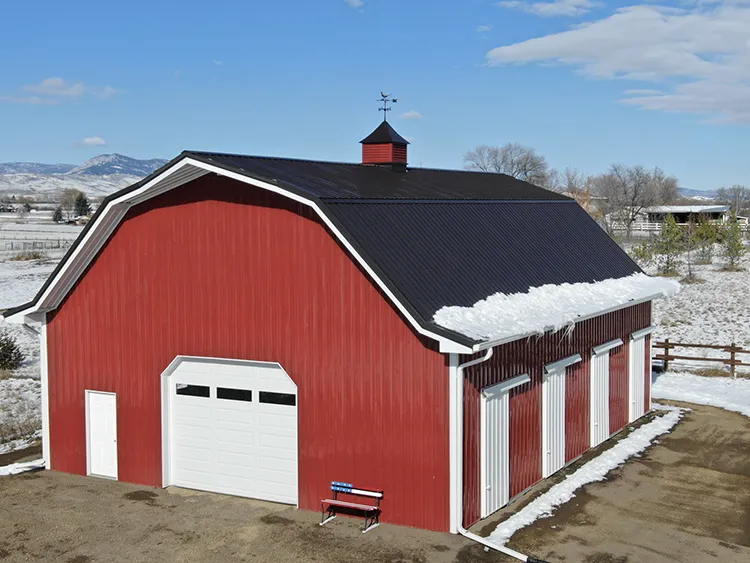
Many farm owners evaluating a re-roofing project are comparing metal against asphalt shingles, which may be what is currently on the building. The lifespan comparison is stark.
Asphalt shingles on an agricultural building typically last 12 to 20 years depending on pitch, sun exposure, and local weather conditions. Farm buildings often see shorter asphalt lifespans than residential homes because they are frequently built on lower pitches, have less active maintenance attention, and deal with impact from debris and the mechanical stress of wide-span framing.
A quality metal roofing panel system on the same building is expected to last 40 to 60 or more years. Over the life of a building, a metal roof typically requires one replacement where asphalt might require three or four. The upfront price difference narrows considerably when viewed over a 40-year ownership horizon, and metal’s durability advantage compounds further when you factor in labor costs for multiple tear-off and re-roofing cycles with asphalt.
This is not a cost comparison article, but longevity is fundamental to the value equation, and it is worth understanding how dramatically metal outperforms alternative materials on farm buildings over time.
Questions to Ask Your Metal Roofing Panel Supplier
When you are purchasing metal roofing panels for a farm building with longevity as a priority, the right questions help you make a better decision.
- What substrate is the panel built on: galvanized or Galvalume? For high-moisture agricultural buildings, Galvalume provides an advantage.
- What paint system is used and what warranty does it carry? Ask for the specific product name and warranty documentation.
- What gauge options are available for this panel profile? Confirm the right gauge for your purlin spacing, span, and snow load.
- Does the panel carry any manufacturer warranty beyond the paint warranty? Some panel manufacturers provide separate structural or corrosion warranties.
- Are custom lengths available? Custom-length panels eliminate field cuts, which are a common early corrosion point.
- What are the installation requirements for this panel? Confirm minimum pitch, fastener specs, and any installation details specific to the panel.
Metal America’s Agricultural Panel Line
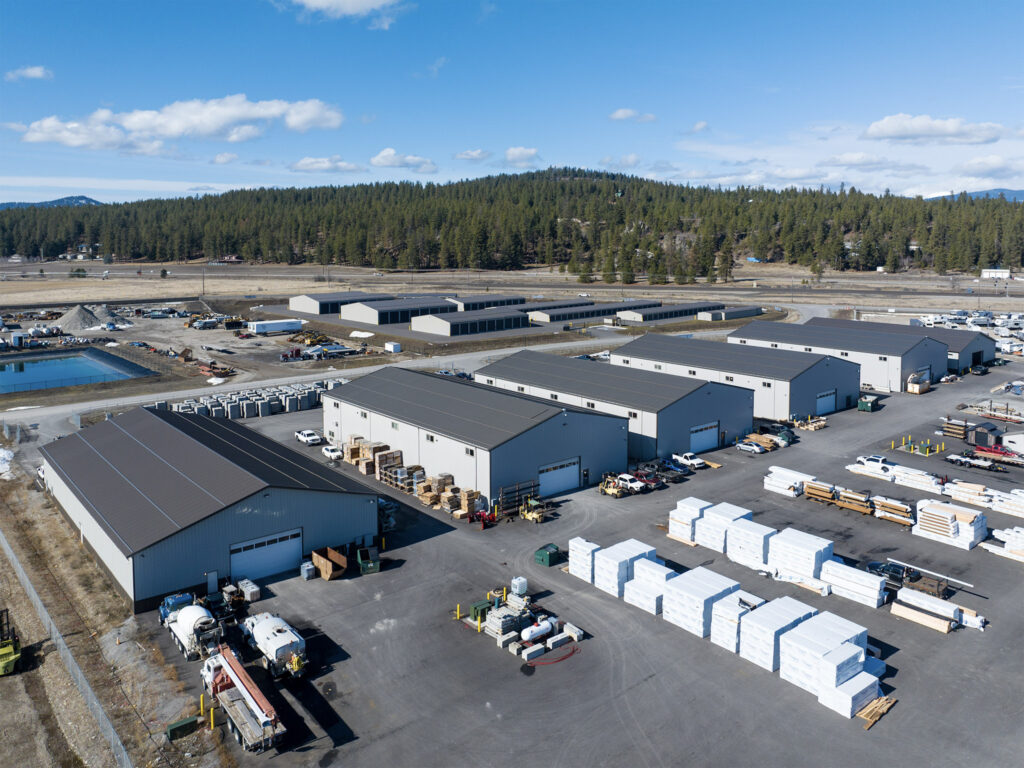
Metal America manufactures Tuff Rib, PBR, corrugated, and standing seam panels at its Post Falls, Idaho facility, supplying farm and agricultural building projects across Idaho, Washington, Oregon, and Montana. Panels are available with Sherwin-Williams WeatherXL SMP coatings on galvanized or Galvalume substrates, roll formed to custom lengths for agricultural projects.
Whether you are a farm owner planning a new storage building, a contractor reroofing an existing barn, or a builder specifying materials for a new livestock facility, Metal America’s team can help you select the right panel for your application and environment.
Get a Quote
Find the Best Panel for Your Next Project
Fill out the form below and our team will get back to you within 24 hours with pricing and availability.
E-mail
sales@metalamerica.com
Phone number
855-638-2587