
First Published: March 26, 2026 Last Update: March 26, 2026
Metal Roofing Cost in Spokane & Idaho: What Actually Affects Price
Let’s Be Direct About Metal Roofing Cost
If you’ve searched for metal roofing cost in Spokane or metal roof prices in Idaho and landed on pages full of round numbers and national averages, you’ve already noticed the problem: those numbers don’t mean much for your actual project.
Metal roofing cost varies significantly based on the panel system you choose, the gauge of steel, the coating, the complexity of your roof, and who installs it. A simple agricultural Tuff Rib roof and a mechanically seamed commercial standing seam roof are both “metal roofing”, but they sit at opposite ends of the cost spectrum and serve completely different purposes.
Rather than give you a number that may have nothing to do with your job, this guide breaks down every variable that determines your final cost. By the end, you’ll understand exactly what drives metal roofing pricing and you’ll be better equipped to evaluate any quote you receive.
| The honest baseline Metal roofing costs more upfront than asphalt shingles. That is true across the board. But the comparison that matters isn’t the upfront cost, it’s the lifetime cost. That distinction is covered in full at the end of this article, and it is where metal almost always wins. |
What Actually Drives Metal Roofing Cost
There are six primary variables that determine the cost of a metal roof in the Spokane and Idaho market. Understanding each one puts you in control of the conversation with any supplier or contractor.
Cost Driver 1: Panel System (The Biggest Variable)
The single largest cost variable in any metal roofing project is the type of panel system you choose. The gap between the lowest-cost exposed fastener panel and a mechanically seamed standing seam system is substantial, often more than the difference between asphalt and entry-level metal altogether.
| Cost Tier | System Type | Typical Applications |
| Lowest Cost | Tuff Rib (exposed fastener) | Agricultural buildings, pole barns, utility structures |
| Low–Mid Cost | PBR Panel (exposed fastener) | Post-frame commercial, pole barns, metal buildings |
| Mid Cost | 7/8” Corrugated (exposed fastener) | Farmhouse, retail, event venues, residential accent |
| Mid–Premium Cost | QuickLoc™ Standing Seam | Residential, barndominiums, light commercial |
| Premium Cost | 1.5” / 1.75” Snap Lock Standing Seam | Residential, architectural commercial |
| Highest Cost | Mechanically Seamed Standing Seam | Low-slope commercial, high-spec architectural |
For most homeowners replacing a residential roof in Spokane or North Idaho, the relevant comparison is between an exposed fastener system (Tuff Rib or PBR) and a QuickLoc™ or snap-lock standing seam system. Standing seam will cost more. How much more depends on the other variables below, but the performance and lifespan advantages of standing seam are real and quantifiable, as covered later in this guide.
We have a guide comparing the different types of roofing
Cost Driver 2: Steel Gauge (26 vs 24 Gauge)
Steel thickness is measured in gauge, and counterintuitively, lower gauge numbers mean thicker steel. 24 gauge steel is thicker and heavier than 26 gauge. Both are common in residential and commercial metal roofing; the right choice depends on the application and the performance expectations.
| Factor | 26 Gauge | 24 Gauge |
| Thickness | Thinner: industry standard for residential | Thicker: heavier, more rigid |
| Cost | Lower | Higher, typically 10–20% more on material |
| Dent resistance | Good | Better, more resistant to hail and impact |
| Snow load performance | Adequate for most Spokane/Idaho applications | Preferred for high-load or commercial specs |
| Standing seam use | Common for residential standing seam | Standard for commercial standing seam |
| Exposed fastener use | Standard for Tuff Rib, PBR, corrugated | Available as upgrade |
| Recommended for | Residential reroof, light commercial, barns | Commercial builds, engineered specs, hail zones |
For most residential projects in Spokane and North Idaho, 26 gauge is the standard and appropriate choice. For commercial structures, engineered metal buildings, or areas with high hail frequency, 24 gauge is worth the modest cost premium. Ask your Metal America representative which gauge is specified for your panel profile and application.
Cost Driver 3: Coating System (SMP vs PVDF / Kynar)
The coating on a metal panel isn’t just paint, it’s the primary protection against UV degradation, chalking, fading, and corrosion. The two dominant coating systems in the industry are SMP (Silicone Modified Polyester) and PVDF (Polyvinylidene Fluoride, often called Kynar®). Metal America uses SMP across its standard lineup.
| Factor | SMP (Metal America Standard) | PVDF / Kynar® (Specialty) |
| Cost | Standard with no premium | Higher with specialty coating upcharge |
| Paint warranty | 40 years (WeatherXL™ by Metal America) | 30–40 years typical |
| UV / fade resistance | Excellent for Pacific Northwest climate | Excellent, slightly better in extreme UV |
| Chalk resistance | Very good | Best in class |
| Color retention | Strong, especially in Northern latitudes | Strongest in high-UV Southern climates |
| Availability | Standard on all Metal America panels | Special order with limited profiles |
| Best for | Idaho & Washington climates, ideal choice | High-UV Southern exposures, specialized specs |
Here is the key point for Spokane and Idaho buyers: SMP coatings perform exceptionally well in Northern latitudes. The UV intensity in the Pacific Northwest is significantly lower than in Arizona or Southern California, where PVDF’s superior UV resistance makes a larger difference. Metal America’s WeatherXL™ SMP coating is engineered specifically for Pacific Northwest conditions and carries a 40-year paint warranty, longer than many PVDF products on the market. For most projects in this region, you are not leaving performance on the table by choosing SMP over PVDF. You are getting the right coating for the climate.
| Metal America’s warranty advantage Most metal panel suppliers in the Inland Northwest offer 20–30 year paint warranties. Metal America’s WeatherXL™ SMP coating carries a 40-year paint warranty, 10 to 20 years longer than the regional standard. That warranty difference is not marketing. It reflects a meaningful difference in coating quality and long-term performance. |
Cost Driver 4: Roof Complexity
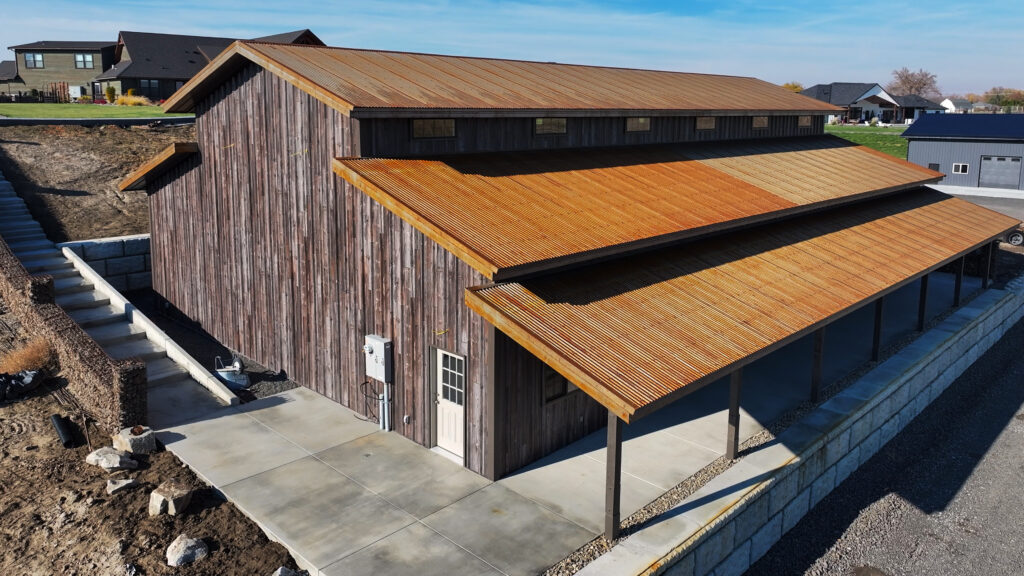
Panel material cost is only part of the equation. The labor and trim required to complete a roof increases substantially with complexity, and complexity varies enormously from project to project.
The factors that add cost on the installation side:
- Valleys: Where two roof planes meet, panels must be cut and flashed carefully. Each valley adds labor time and trim material.
- Penetrations: Every pipe, flue, skylight, or chimney requires custom flashing and additional labor. A roof with six penetrations costs more to install than a clean gable roof.
- Dormers and hips: Hip roofs, dormers, and complex geometries require more cuts, more waste, and more trim than simple gable or shed roofs.
- Roof pitch: Steeper pitches require safety equipment, slower movement on the roof, and more labor time per square. A 12:12 pitch roof takes meaningfully longer to install than a 4:12 pitch roof.
- Tear-off and deck condition: If existing roofing needs to be removed and the deck below is damaged or uneven, remediation adds cost before a single metal panel goes on.
- Panel length: Longer panel runs (common on large commercial or agricultural buildings) reduce lap waste but require more careful handling during installation.
Rule of thumb: A simple gable or shed roof with no penetrations and moderate pitch is the lowest-cost installation scenario. Every valley, penetration, hip, or pitch increase adds to the final number. When comparing quotes, make sure each contractor is working from the same roof complexity assumptions.
Cost Driver 5: Labor and Location
Metal roofing installation labor in the Spokane and North Idaho market generally reflects regional construction wage rates, which are competitive but not as elevated as major coastal markets. That said, labor costs vary based on several factors specific to this region:
- Urban vs rural access: A job in Spokane Valley or Post Falls has easier access and potentially more contractor competition than a remote rural property in Bonner or Boundary County. Remote sites add mobilization cost and limit the contractor pool.
- Crew availability and season: Roofing is a seasonal business in the Inland Northwest. Spring through early fall is peak demand. Projects scheduled during peak season may face higher labor costs or longer wait times than off-season work.
- Contractor experience with metal: Not every roofing contractor is proficient with metal panel installation, particularly standing seam. Inexperienced crews are slower, and slow crews are expensive. Paying a modest premium for a contractor familiar with Metal America panels can reduce overall project cost by eliminating mistakes.
- Material sourcing: Contractors who source through Metal America directly typically pass through more competitive material pricing than those purchasing through distributors. If you are comparing bids, ask each contractor where they source their panels.
Relative Cost Tiers (Without False Precision)
We are not going to give you a per-square-foot number and call it a “typical metal roof cost in Spokane.” That number would be accurate for some projects and misleading for many others. What we can tell you honestly is how the different systems relate to each other in cost and how metal as a category compares to asphalt.
Metal Roofing: Relative Cost Tiers
| Cost Tier | System Type | Typical Applications |
| Lowest tier | Tuff Rib / PBR: 26 gauge, standard colors | Agricultural, basic commercial, utility buildings |
| Mid tier | 7/8” Corrugated or PBR: 26 gauge, premium colors | Residential, farmhouse, event venue |
| Mid–high | QuickLoc™ Standing Seam: 26 gauge | Residential reroof, barndominium, light commercial |
| High tier | Snap Lock Standing Seam: 24 or 26 gauge | Residential, architectural commercial |
| Premium tier | Mechanically Seamed: 24 gauge, specialty finish | Commercial low-slope, high-spec architectural |
Metal Roofing vs Asphalt: The Cost Relationship
Asphalt shingles are less expensive upfront than any metal roofing system. That is true, and we are not going to pretend otherwise. Here is how to think about the comparison:
- Asphalt shingles: Lowest upfront material and installation cost. Standard 3-tab and architectural shingles are the most price-competitive roofing option per square foot installed.
- Exposed fastener metal (Tuff Rib, PBR): The gap between asphalt and entry-level metal is meaningful but not as large as many people assume. For large simple roofs (barns, shops, commercial buildings), exposed fastener metal can approach asphalt pricing on a per-square basis when installation efficiency is factored in.
- Standing seam metal: Carries a meaningful premium over asphalt. On a residential reroof, a quality standing seam system will cost noticeably more upfront than an architectural asphalt shingle job.
The comparison that actually matters is not upfront cost, it’s the total cost of ownership over the life of the building.
Cost vs Long-Term Value: Where Metal Wins
Upfront cost is one number. Total cost of ownership is a different (and far more important) number. For property owners in Spokane and North Idaho who plan to be in their homes or buildings for 15 years or more, the lifetime cost of metal roofing is almost always lower than asphalt, even though the upfront cost is higher. Here is why.
Lifespan: The Foundation of the Math
Asphalt shingles in the Inland Northwest typically last 15–25 years before requiring replacement. The wide range reflects differences in shingle quality, installation, roof pitch, and exposure. In our climate, with heavy snowfall, UV-intense summers, and significant freeze-thaw cycling, asphalt shingles experience accelerated granule loss, cracking, and blow-off relative to milder climates.
Metal America panels, properly installed, have an expected service life of 40–60+ years for standing seam systems and 25–40 years for exposed fastener systems. The WeatherXL™ SMP coating carries a 40-year paint warranty. The steel substrate does not rot, grow moss, lose granules, or crack in cold temperatures.
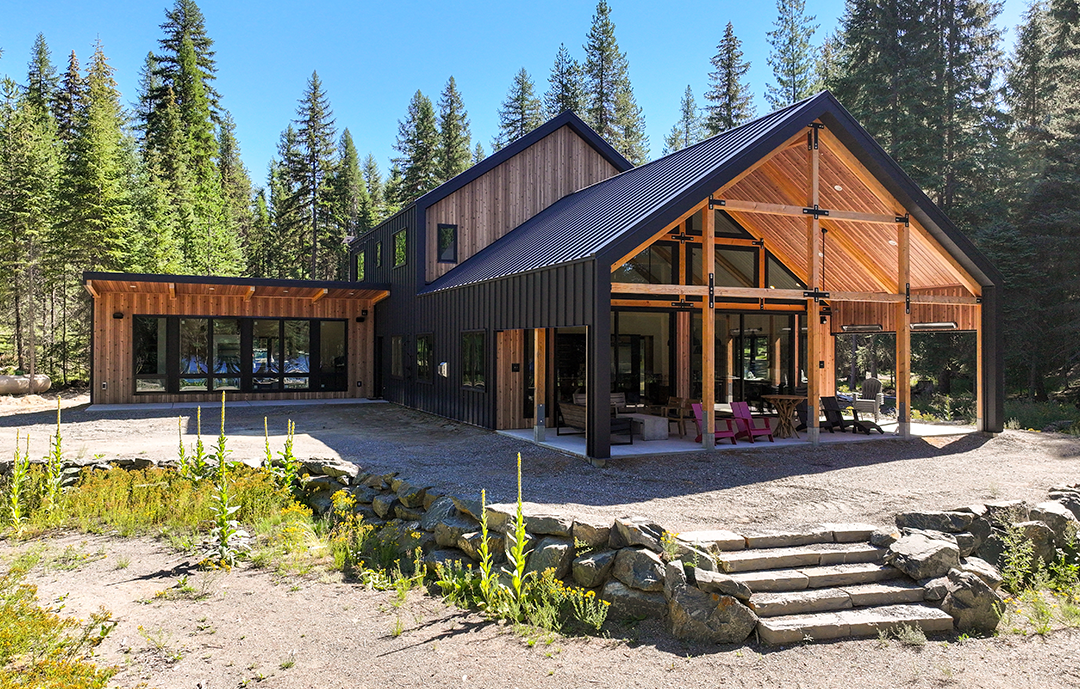
The practical implication: a property owner who installs asphalt shingles today will likely replace that roof two to three times before a metal roof installed at the same time needs replacement. Each replacement cycle carries not only material cost but also the labor cost of tear-off, disposal, and reinstallation, and those labor costs increase with every passing decade.
| The replacement cycle math If asphalt shingles are replaced twice over a 50-year period and a standing seam metal roof is installed once over the same period, the total installation events are 3 vs 1. Each asphalt replacement carries full material and labor cost. Metal roofing’s upfront premium shrinks significantly when measured against the full cost of ownership over a building’s lifespan. |
Maintenance Savings
Asphalt shingles require periodic inspection, moss and algae treatment, granule loss monitoring, and eventual repair or replacement of damaged sections. Metal roofing requires very little of this. Properly installed metal panels:
- Do not grow moss or algae (no organic material for biological growth to colonize)
- Do not lose granules or experience surface erosion over time
- Do not crack in cold temperatures or curl in heat
- Do not require repainting, the coating is applied in the manufacturing process and is warranted for 40 years
- Shed snow cleanly in most configurations, reducing ice dam formation and ice-related damage
The accumulated maintenance cost differential between a metal roof and an asphalt roof over a 40-year period is real and meaningful, though it varies by property and climate. For a Spokane or North Idaho property owner dealing with heavy winters, the snow shedding performance of metal is particularly valuable.
Energy Efficiency
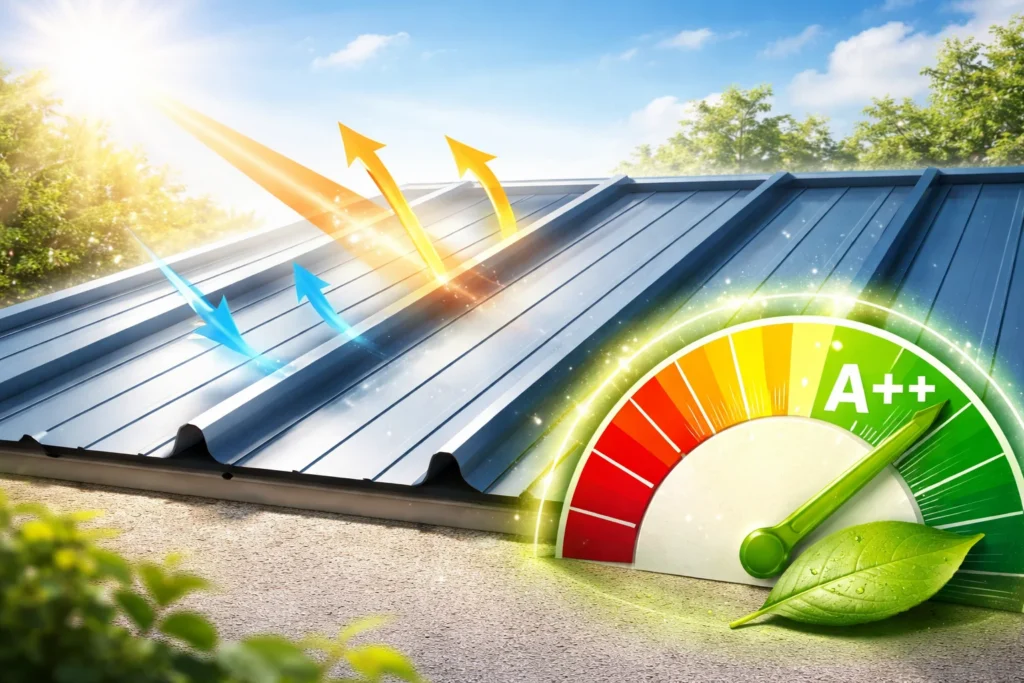
Metal roofing reflects solar radiation more effectively than asphalt shingles, which absorb and transfer heat. In the summer months, a reflective metal roof reduces attic temperatures and can meaningfully reduce cooling loads. Metal America’s WeatherXL™ SMP coating is available in a range of lighter colors that maximize solar reflectance.
This is more impactful in climates with high summer cooling loads than in the Pacific Northwest, where heating dominates the energy budget. That said, any reduction in summer cooling load represents real savings, and the effect is cumulative over the life of the roof.
The Warranty Difference
Warranty coverage is a tangible, contractual reflection of expected product performance. Here is how Metal America’s warranty compares to the regional standard:
- Metal America WeatherXL™ SMP coating: 40-year paint warranty covering color retention, chalking, and film adhesion
- Regional metal panel standard: 20–30 years is the most common warranty offered by distributors sourcing from third-party manufacturers
- Architectural asphalt shingles: 25–30 year limited warranty, prorated after the first few years in most cases, and subject to installation conditions
- 3-tab asphalt shingles: 20–25 year limited warranty as entry-level shingles carry the shortest coverage
Warranty terms matter most when something goes wrong. A 40-year paint warranty from Metal America is meaningful because it is backed by a company that manufactures its own panels and controls the coating process. When a warranty claim arises on a distributed product, tracing responsibility between installer, distributor, and manufacturer can be complicated. Metal America is the manufacturer so there are no chain of custody questions.
Frequently Asked Questions About Metal Roofing Cost
How much does metal roofing cost in Spokane?
The honest answer is: it depends on the system, gauge, complexity, and contractor. Exposed fastener systems (Tuff Rib, PBR) are the lowest-cost metal roofing option. Standing seam systems (QuickLoc™, Snap Lock) carry a meaningful premium. The best way to get an accurate number for your specific project is to request a materials quote from Metal America and get installation bids from contractors familiar with the system you choose. Call us at 855-638-2587 or use the quote form at metalamerica.com/contact/.
Is metal roofing worth the cost compared to asphalt in Idaho and Spokane?
For most permanent structures such as homes, shops, barndominiums, commercial buildings, yes. The Inland Northwest climate is hard on asphalt shingles: heavy snow loads, UV-intense summers, and freeze-thaw cycling all accelerate shingle degradation. Metal roofing handles these conditions significantly better and lasts two to three times longer.
What is the difference in cost between 26 gauge and 24 gauge metal roofing?
24 gauge steel is thicker and costs approximately 10–20% more on materials than 26 gauge for the same profile. For most residential applications in Spokane and North Idaho, 26 gauge is the appropriate standard. 24 gauge is typically specified for commercial builds, engineered metal building systems, or applications where higher dent and impact resistance is required.
Does the coating system affect metal roofing cost?
Yes, but less dramatically than the choice of panel system or gauge. PVDF (Kynar) coatings carry a price premium over SMP coatings. However, in the Pacific Northwest climate, Metal America’s 40-year WeatherXL™ SMP coating delivers excellent long-term performance and a longer warranty than most PVDF products available in this market. For most Spokane and Idaho projects, SMP is the right coating choice on both performance and cost grounds.
How do I get an accurate metal roofing quote in Spokane or Idaho?
The most reliable approach is to get a materials quote directly from Metal America. Call 855-638-2587 or email sales@metalamerica.com with your panel type, dimensions, gauge, and color. Then get installation bids from contractors who specify the same panel system. Separating materials from labor in your bidding process gives you visibility into each component and makes comparisons cleaner.
Can I buy metal roofing panels directly from Metal America without a contractor?
Yes. Metal America sells directly to homeowners, owner-builders, and DIY builders. No contractor license required. Both locations are walk-in friendly. If you are doing your own installation or supplying materials to your contractor, you are welcome to purchase direct.
Get a Metal Roofing Quote for Your Spokane or Idaho Project
The fastest way to understand what your project will cost is to get a real materials quote. Metal America can provide pricing on any panel system, gauge, and color from our Post Falls, Idaho and Spokane Valley, Washington locations. Both are walk-in friendly.
- Phone: 855-638-2587
- Email: sales@metalamerica.com
- Quote Request: Fill out the form below, or visit metalamerica.com/contact/
- Post Falls, ID 7728 Corn Maze Way | Mon–Thu: 7 AM–4 PM, Fri: 7 AM–2 PM
- Spokane Valley, WA 13520 E Nora Ave | Mon–Fri: 8 AM–4 PM
Metal America® is a registered trademark. All panels manufactured at our Post Falls, ID facility. © 2026 Metal America. All rights reserved.
Get a Quote
Find the Best Panel for Your Next Project
Fill out the form below and our team will get back to you within 24 hours with pricing and availability.
E-mail
sales@metalamerica.com
Phone number
855-638-2587