
First Published: March 26, 2026 Last Update: March 26, 2026
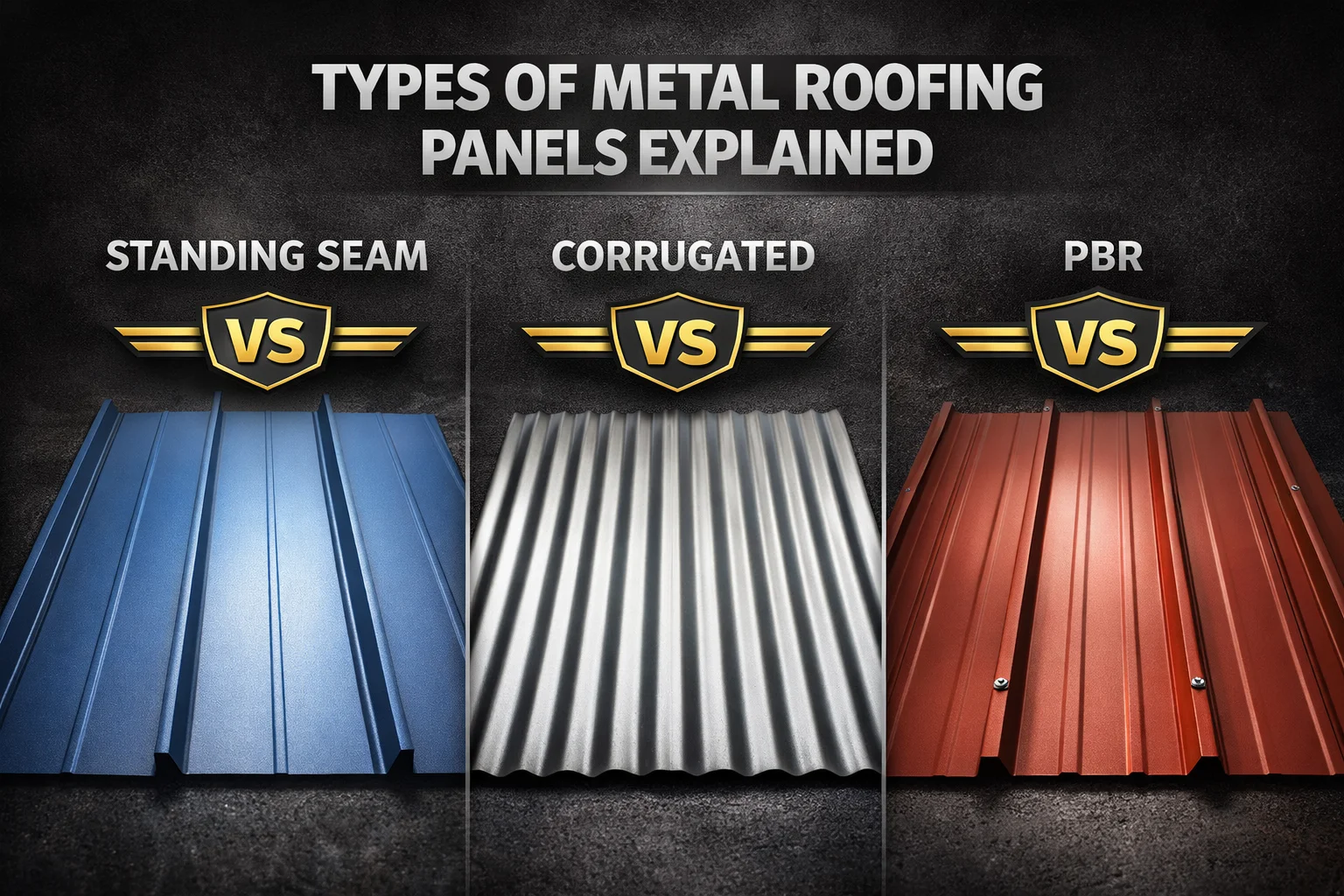
Types of Metal Roofing Panels Explained: Standing Seam vs Corrugated vs PBR
Choosing the right types of metal roofing panels is one of the most consequential decisions in any roofing project. The type of metal roofing panel you select affects performance, installation method, longevity, aesthetics, and cost. And the differences between panel types are significant enough to matter on every job, from a residential reroof to a large commercial structure.
This guide explains every major type of metal roofing panel available through Metal America, how they differ from one another, and which applications each is best suited for. Whether you’re comparing standing seam vs corrugated, deciding between PBR panel vs standing seam, or trying to understand exposed fastener vs hidden fastener systems, this is the reference you need.
The Two Families: Exposed Fastener vs Hidden Fastener
All metal roofing panels fall into one of two categories based on how they attach to the structure: exposed fastener panels and hidden fastener (concealed fastener) panels. Understanding this distinction is the foundation for every other comparison.
Exposed Fastener Panels
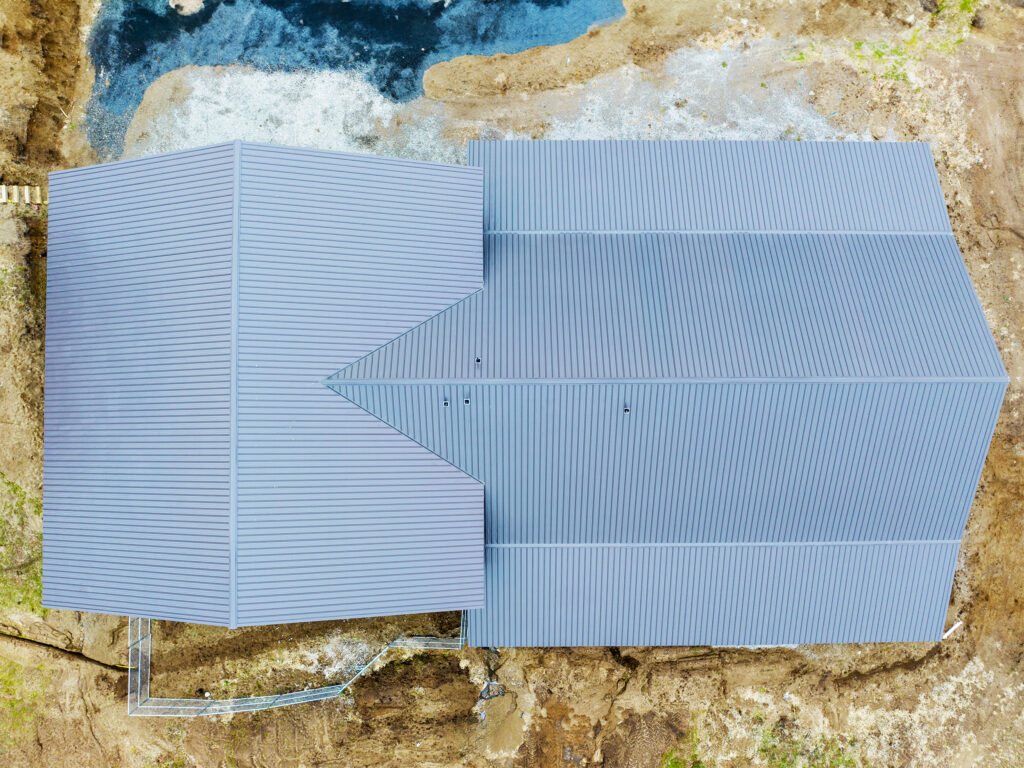
Exposed fastener panels are attached to the roof deck or purlins with screws that penetrate the face of the panel. The screw heads are visible on the finished roof surface and are covered with a rubber-gasketed washer to create a weather seal at each fastener point.
Exposed fastener systems are the most widely used metal roofing system in agricultural, commercial, and budget-conscious residential construction. They install quickly, require fewer specialized tools, and cost less per square foot than concealed fastener systems.
- Metal America exposed fastener profiles: Tuff Rib, PBR Panel, 7/8” Corrugated, 7.2 Panel
Hidden Fastener (Concealed Fastener / Standing Seam) Panels
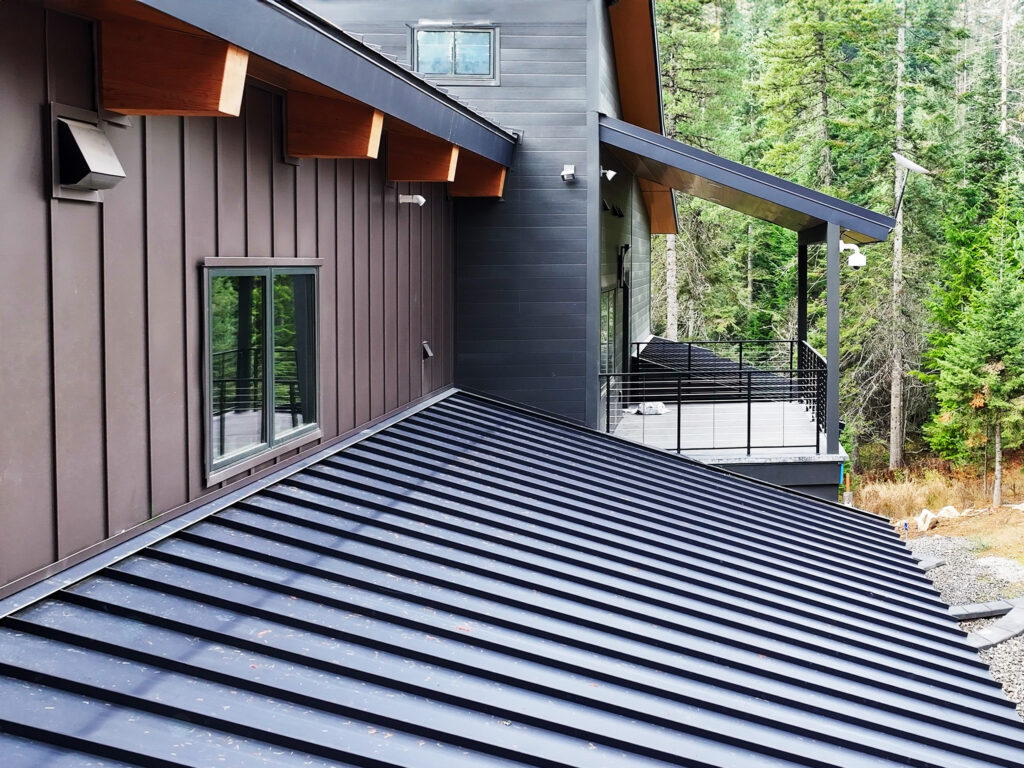
Hidden fastener panels use a clip or interlocking system that conceals the fastener beneath the panel seam. No screws penetrate the face of the panel. The result is a completely clean roof surface with no exposed hardware (and no exposed penetration points that can leak or corrode over time).
Standing seam is the dominant hidden fastener system. It is widely regarded as the highest-performing metal roofing system for residential and commercial applications and commands a premium over exposed fastener panels.
- Metal America hidden fastener profiles: QuickLoc™, 1.5” Snap Lock, 1.75” Snap Lock, Mechanically Seamed
| Quick Reference Exposed fastener = screw through the panel face, visible fastener heads, lower cost, faster install. Hidden fastener = concealed clip or seam system, no penetrations on the roof surface, higher performance, higher cost. |
Exposed Fastener vs Hidden Fastener: Side-by-Side
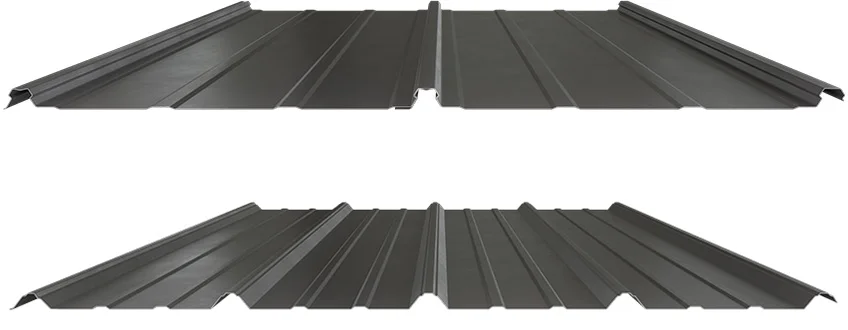
| Factor | Exposed Fastener | Hidden Fastener (Standing Seam) |
| Installation speed | Faster with fewer steps | Slower. Requires clips or seaming |
| Installed cost | Lower | Higher |
| Roof penetrations | Yes, at every fastener point | None on panel face |
| Leak risk over time | Higher as gaskets degrade | Lower. No face penetrations |
| Thermal movement | Panel is fixed at each fastener | Panel floats freely with better expansion/contraction |
| Appearance | Visible screw heads and ribs | Clean, unbroken surface |
| Recommended pitch | 1:12 minimum | 1:12 minimum (some profiles 3:12+) |
| Best applications | Agricultural, commercial, budget residential | Residential, architectural, commercial |
| Lifespan | 25–40 years typical | 40–60+ years typical |
| Metal America profiles | Tuff Rib, PBR, Corrugated, 7.2 Panel | QuickLoc™, 1.5” Snap Lock, 1.75” Snap Lock, Mechanically Seamed |
Standing Seam Metal Roofing: The Concealed Fastener System
Standing seam is the premium metal roofing system and the fastest-growing segment in residential and commercial metal roofing. The defining characteristic is the raised vertical seam that runs from ridge to eave. The panel edges interlock or snap together at this seam, and all fastening happens beneath it. No screws touch the surface of the roof.
The practical benefits of this approach are significant: there are no penetration points to seal, panels can expand and contract with temperature changes without stressing fastener points, and the finished appearance is clean and architectural rather than utilitarian.
Metal America Standing Seam Profiles
QuickLoc™
Best for: Residential reroof, barndominium, light commercial; projects where standing seam performance is desired at an accessible price point
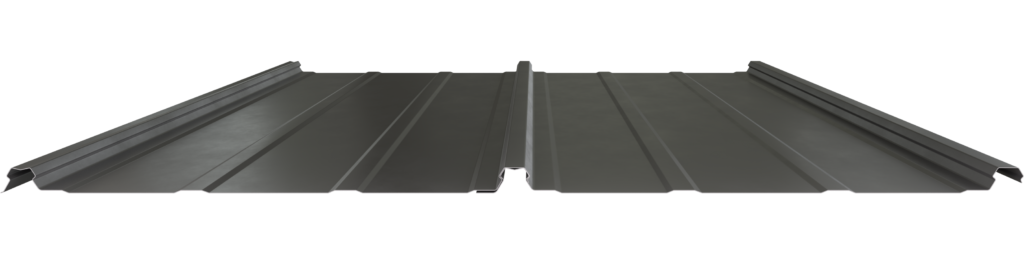
QuickLoc™ is Metal America’s proprietary hidden-fastener standing seam panel and the most popular profile in our lineup. It uses an interlocking snap system that installs cleanly and efficiently (faster than most standing seam alternatives) without sacrificing the core performance advantage of a concealed fastener system. Panels interlock at the seam, clips are hidden beneath, and the result is a fully clean roof surface.
QuickLoc™ is the right choice for the majority of residential and light commercial standing seam projects. If you’re building a home, shop, or barndominium and want the aesthetics and performance of standing seam without the cost of a mechanically seamed system, QuickLoc™ is the answer.
- Rib height: proprietary interlocking profile
- Minimum pitch: 3:12 recommended
- Available in all 44+ Metal America colors and wood-look finishes
- Link: metalamerica.com/quickloc/
1.5” Snap Lock
Best for: Residential roofing, moderate-slope commercial, where a traditional snap-lock profile and lower rib height are preferred
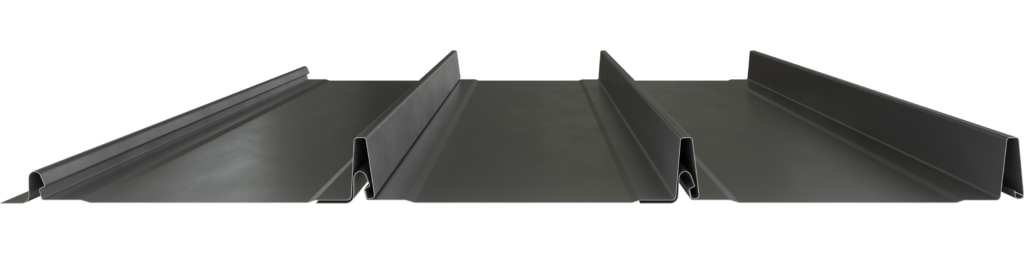
The 1.5” Snap Lock is a traditional concealed fastener panel with a 1.5-inch rib height. It snaps together at the seam without field seaming tools, making it accessible for a wide range of contractors. The lower profile gives it a cleaner, less pronounced look compared to taller rib options, which suits residential applications where a subtle profile is preferred.
- Rib height: 1.5 inches
- Minimum pitch: 3:12
- Available in all 44+ Metal America colors
- Link: metalamerica.com/1-5-snap-lock/
1.75” Snap Lock
Best for: Steeper-pitch residential and architectural applications where a bolder rib profile and enhanced water drainage are desired
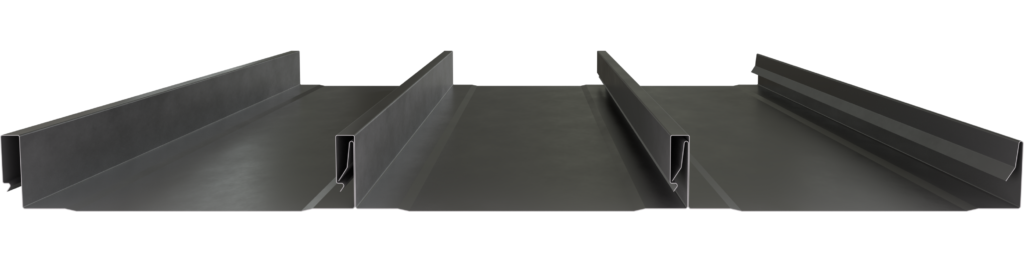
The 1.75” Snap Lock offers a taller rib height that improves water drainage and gives the roof a more pronounced, architectural appearance. It’s the right choice for steeper pitches and projects where the visual weight of the panel profile is part of the design intent. Installation is similar to the 1.5” version with a snap-together seam, concealed clips, no face fasteners.
- Rib height: 1.75 inches
- Minimum pitch: 3:12
- Available in all 44+ Metal America colors
- Link: metalamerica.com/1-75-snap-lock/
Mechanically Seamed
Best for: Commercial low-slope roofing, and architectural projects where maximum weather resistance and a fully locked seam are required

Mechanically seamed panels are the gold standard for low-slope commercial metal roofing. Unlike snap-lock profiles, mechanically seamed panels are field-seamed using a specialized seaming tool that mechanically folds and locks the seam after installation. The result is a double-locked watertight seam that outperforms any snap-together system, which is critical on low-slope roofs where water movement is slower and exposure time at seams is longer.
Mechanically seamed roofing is specified by architects and engineers on commercial projects where performance documentation, wind uplift ratings, and long-term watertightness are non-negotiable. It requires a higher skill level to install and commands a corresponding premium, but for the right application there is no better system.
- Rib height: 2 inches
- Minimum pitch: ¼:12 (low slope capable)
- Requires field seaming tool
- Available in all 44+ Metal America colors
- Link: metalamerica.com/mechanically-seamed/
Exposed Fastener Metal Roofing: The Workhorses
Exposed fastener panels are the most widely installed type of metal roofing in the Pacific Northwest, and for good reason. They are faster to install, cost less per square foot, and perform reliably for decades when properly installed. The trade-off is visible fasteners on the roof surface and a higher long-term maintenance consideration as gaskets age.
Tuff Rib
Best for: Metal buildings, shops, barns, agricultural structures, budget-conscious commercial roofing
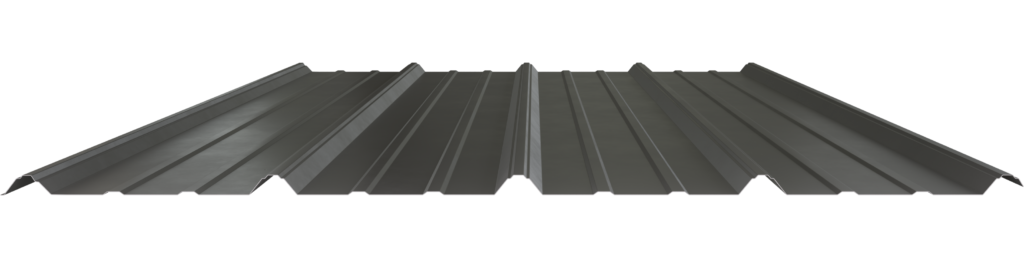
Tuff Rib is one of the most recognized metal roofing profiles in the Pacific Northwest. It is a structural panel, meaning it can span purlins without a continuous deck beneath it, which makes it the go-to choice for metal building and pole barn construction. The wide rib spacing and deep profile give it good structural strength and a fast, efficient installation.
For agricultural buildings, equipment storage, and any project where cost efficiency is the primary driver and aesthetics are secondary, Tuff Rib delivers. It’s the panel that built most of the barns in Idaho and Eastern Washington.
- Panel width: 36” coverage
- Rib height: 1.25 inches
- Minimum pitch: 1:12
- Available in all 44+ Metal America colors
- Link: metalamerica.com/tuff-rib/
PBR Panel (Purlin Bearing Rib)
Best for: Post-frame construction, commercial metal buildings, pole barns, and any structural roofing and siding application
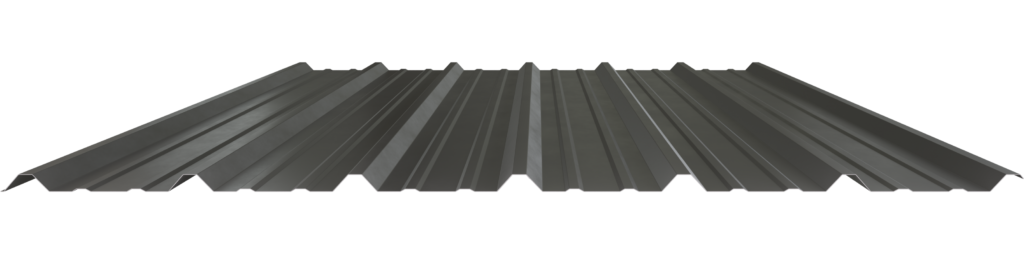
The PBR panel, or Purlin Bearing Rib, is the industry standard for post-frame and metal building construction. It is the most specified exposed fastener panel in commercial and agricultural metal building systems. When people ask about PBR panel vs standing seam, they’re typically comparing the structural efficiency and cost of PBR against the performance and aesthetics of standing seam. PBR wins on cost and installation speed; standing seam wins on long-term performance and appearance.
The PBR panel has a bearing leg at the lap that transfers loads directly to the purlin, improving structural performance at the overlap. This makes it the standard choice for engineered metal building systems where structural diaphragm performance matters.
- Panel width: 36” coverage
- Rib height: 1.25 inches
- Minimum pitch: 1:12
- Used for both roofing and siding
- Available in all 44+ Metal America colors and wood-look finishes
- Link: metalamerica.com/pbr-panel/
7/8” Corrugated
Best for: Modern farmhouses, event centers, wineries, retail facades, and architectural applications where corrugated metal’s distinctive look is part of the design
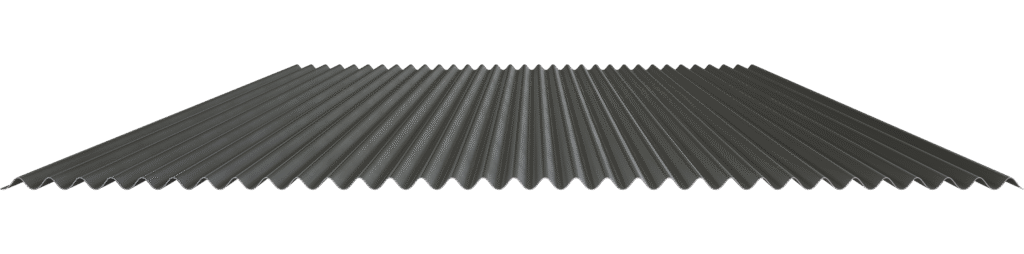
Corrugated metal roofing is the oldest metal roofing profile in existence and it has experienced a significant design renaissance in recent years. The 7/8” corrugated panel’s wave profile is visually distinctive in a way that flat-rib panels are not, and it has become a signature material in modern farmhouse, rustic commercial, and event venue architecture throughout the Pacific Northwest. Standing seam vs corrugated is often a design question as much as a performance one: corrugated has a character that standing seam does not, and for certain projects that character is exactly right.
Metal America’s 7/8” corrugated is available in standard steel and in Cor-Ten® weathering steel, which oxidizes to a warm brown patina over time and requires no paint or finish maintenance. Cor-Ten corrugated has become a signature material for high-design commercial and hospitality projects.
- Panel width: 26” coverage
- Rib profile: 7/8” deep wave corrugation
- Available in standard steel and Cor-Ten weathering steel
- Available in all 44+ standard Metal America colors
- Minimum pitch: 3:12
- Link: metalamerica.com/corrugated/
7.2 Panel
Best for: Structural metal building systems, wide-span commercial applications
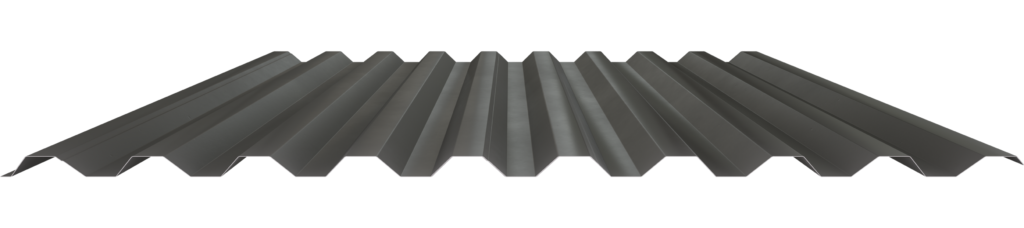
The 7.2 Panel is a wide-rib structural panel engineered for metal building systems that require wide coverage widths and strong structural diaphragm performance. At 7.2” wide between ribs, it offers efficient coverage on large commercial structures. It is a workhorse panel for industrial and agricultural applications where span and load requirements drive the specification.
- Panel width: 36” coverage
- Rib spacing: 7.2 inches
- Structural application panel
- Available in Metal America standard colors
- Link: metalamerica.com/7-2-panel/
Standing Seam vs Corrugated: Which Is Right for Your Project?
Standing seam vs corrugated is one of the most common comparisons buyers make when choosing a metal roof. They represent opposite ends of the metal roofing spectrum in terms of performance, aesthetics, cost, and application fit.
| Factor | Standing Seam | 7/8” Corrugated |
| Fastener system | Concealed. No face penetrations | Exposed. Visible screw heads |
| Appearance | Clean, linear, modern or architectural | Wave profile: rustic, farmhouse, industrial |
| Installed cost | Higher | Lower |
| Leak risk over time | Lowest of all metal profiles | Low, but dependent on gasket maintenance |
| Thermal movement | Panels float freely on clips | Fixed at each fastener |
| Minimum pitch | 3:12 | 3:12 |
| Cor-Ten option | No | Yes. Signature look |
| Best applications | Residential, commercial, architectural | Farmhouse, event venues, retail, hospitality |
| Design statement | Refined and minimal | Textured and characterful |
| Metal America profiles | QuickLoc™, Snap Lock, Mech. Seamed | 7/8” Corrugated (standard & Cor-Ten) |
When to choose standing seam: When long-term watertightness, clean appearance, and maximum lifespan are the priority. Best for permanent residential and commercial structures where the roof will be in place for 40+ years.
When to choose corrugated: When design character matters, budget is a consideration, or the project is a commercial or hospitality build where the corrugated aesthetic is part of the concept. Also the right choice when Cor-Ten’s weathering steel look is part of the design intent.
PBR Panel vs Standing Seam: The Contractor’s Dilemma
PBR panel vs standing seam is the most common comparison contractors face when specifying a metal roof for a new build. Both are proven systems. The decision comes down to application, budget, and priorities.
| Factor | PBR Panel | Standing Seam (QuickLoc™) |
| Fastener type | Exposed with a screw through panel face | Concealed due to a clip beneath seam |
| Installation speed | Faster | Moderate |
| Installed cost | Lower. Typically 30–50% less | Higher |
| Leak risk | Moderate. Gaskets age over time | Low. No face penetrations |
| Thermal expansion | Fixed at each fastener point | Panels float freely on clips |
| Appearance | Industrial, utilitarian | Architectural, clean |
| Use for siding | Yes, common for wall panels | Not typical |
| Structural (no deck) | Yes, spans purlins | Requires continuous deck or close purlin spacing |
| Best applications | Post-frame, agricultural, commercial builds | Residential, architectural, long-life commercial |
| Lifespan | 25–40 years typical | 40–60+ years typical |
When to choose PBR: Post-frame construction, pole barns, commercial metal buildings where structural diaphragm performance matters, and any project where installation speed and cost efficiency are the primary drivers.
When to choose standing seam: Permanent residential or commercial structures where you want the highest long-term performance, cleanest appearance, and a roof that will not require gasket maintenance or re-fastening over its lifetime.
| A Note on Cost The upfront cost difference between PBR and QuickLoc™ standing seam is real, typically 30–50% more for standing seam on materials and labor. Over a 40-year period, however, standing seam roofs typically require less maintenance and fewer interventions than exposed fastener systems, which can close the gap significantly in lifetime cost terms. For permanent structures, standing seam is almost always the better long-term investment. |
Quick Reference: Which Metal Roofing Panel Is Right for Your Project?
| Project Type | Recommended Panel | Why |
| Residential reroof (premium) | QuickLoc™ Standing Seam | Best performance, no face penetrations, 40+ yr lifespan |
| Residential reroof (value) | Tuff Rib or PBR Panel | Fast install, reliable, cost-effective |
| Barndominium | QuickLoc™ or 1.5” Snap Lock | Standing seam aesthetics at competitive price |
| Pole barn / agricultural | Tuff Rib or PBR Panel | Structural, fast install, budget-friendly |
| Commercial metal building | PBR Panel or Mech. Seamed | PBR for structural; mech. seamed for low-slope or premium spec |
| Low-slope commercial roof | Mechanically Seamed | Only system rated for very low pitch with full watertightness |
| Modern farmhouse / event venue | 7/8” Corrugated | Distinctive wave profile, available in Cor-Ten |
| Architectural / design project | 1.75” Snap Lock or Mech. Seamed | Taller profile, refined appearance, high-end spec |
| Budget residential or outbuilding | Tuff Rib | Lowest cost per square foot, fast install |
Frequently Asked Questions About Metal Roofing Panel Types
What is the best type of metal roofing panel?
For most permanent residential and commercial structures, standing seam, specifically QuickLoc™ or a snap-lock profile, is the best-performing metal roofing system. It offers the cleanest appearance, the lowest long-term leak risk, and the longest expected lifespan. For agricultural, post-frame, and budget-driven projects, PBR Panel or Tuff Rib are the right choices.
What is the difference between standing seam and corrugated metal roofing?
Standing seam uses a concealed fastener system where panels interlock at a raised seam with no screws on the panel surface. Corrugated metal uses exposed fasteners that penetrate the wave profile of the panel. Standing seam offers better long-term weather resistance and a cleaner appearance; corrugated offers a distinctive aesthetic character and lower cost.
Is PBR panel the same as exposed fastener?
Yes. PBR (Purlin Bearing Rib) is an exposed fastener panel — screws penetrate the face of the panel to attach it to the structure. PBR is a specific profile within the exposed fastener category, distinguished by its bearing leg at the panel lap which improves structural performance at overlaps.
Can standing seam panels be used for siding?
Standing seam panels are primarily designed for roofing applications. For wall cladding and siding, Metal America offers dedicated wall panel profiles including Board & Batten, Shiplap, Double Lap, and Flush Wall. PBR Panel is also commonly used as a wall panel on post-frame and agricultural structures.
What is the minimum roof pitch for metal panels?
Most exposed fastener panels (Tuff Rib, PBR, Corrugated) can be used on roofs as low as 1:12 pitch. Standing seam snap-lock profiles (QuickLoc™, 1.5” Snap Lock, 1.75” Snap Lock) are typically recommended at 3:12 minimum. Mechanically seamed panels can be used on pitches as low as ¼:12, making them the only system suitable for very low-slope roofs.
What is Cor-Ten metal roofing?
Cor-Ten (weathering steel) is a steel alloy that develops a stable rust-like patina when exposed to weather, eliminating the need for paint or coating. Metal America offers 7/8” Corrugated panels in Cor-Ten for projects where the natural oxidized steel look is part of the design. Cor-Ten is popular on modern farmhouses, event venues, and architectural commercial projects.
How long do metal roofing panels last?
Metal America panels with WeatherXL™ SMP coating carry a 40-year paint warranty. The expected service life of properly installed metal roofing ranges from 25–40 years for exposed fastener systems and 40–60+ years for standing seam systems. Metal roofing consistently outlasts asphalt shingles by a factor of two to three.
Where can I see Metal America panel profiles in person?
Both Metal America locations are walk-in friendly. You can see and handle panels, compare profiles side by side, and speak with staff about the right choice for your project. Post Falls, ID: 7728 Corn Maze Way (Mon–Thu 7 AM–4 PM, Fri 7 AM–2 PM). Spokane Valley, WA: 13520 E Nora Ave (Mon–Fri 8 AM–4 PM).
Find the Right Panel for Your Project
Not sure which panel is right for your roof? Visit one of our walk-in locations and speak with a Metal America expert. We’ll help you compare profiles, see samples in person, and get a quote for the right system for your project and budget.
- Phone: 855-638-2587
- Email: sales@metalamerica.com
- Quote Request: Form Below or visit metalamerica.com/contact/
- Post Falls, ID 7728 Corn Maze Way | Mon–Thu: 7 AM–4 PM, Fri: 7 AM–2 PM
- Spokane Valley, WA 13520 E Nora Ave | Mon–Fri: 8 AM–4 PM
Metal America® is a registered trademark. All panels manufactured at our Post Falls, ID facility. © 2026 Metal America. All rights reserved.
Get a Quote
Find the Best Panel for Your Next Project
Fill out the form below and our team will get back to you within 24 hours with pricing and availability.
E-mail
sales@metalamerica.com
Phone number
855-638-2587