
First Published: October 7, 2026 Last Update: October 7, 2026
How far apart should fence posts be? For most residential fences, the answer is 6 to 8 feet on center. Solid privacy fences sit at the tighter end of that range, open fences can stretch wider, and panel fences don’t give you a choice at all: the panel sets the spacing.
Here’s how the number changes by fence type, what should push you closer together, and how to lay out a run so you don’t end up with an odd short section at the end.
How Far Apart Should Fence Posts Be for Each Fence Type?
These are the typical ranges builders work to. They’re starting points, not engineering. Your fence manufacturer’s instructions and your local code come first.
|
Fence type |
Typical post spacing (on center) |
What sets it |
|---|---|---|
|
Wood privacy fence |
6 to 8 feet |
Rail length and wind load on solid boards |
|
Wood picket or rail fence |
About 8 feet |
Standard 8 foot rails |
|
Chain link |
Up to 10 feet |
Top rail and fabric tension |
|
Vinyl or other panel fences |
Usually 6 or 8 feet |
The manufactured panel width |
|
Metal panel privacy fence |
Set by the system |
Panel and rail length from the manufacturer |
|
Wire field fence on T-posts |
8 to 12 feet |
Wire type, terrain, and livestock pressure |
“On center” means you measure from the middle of one post to the middle of the next, not the gap between them. It matters more than you’d think: measure the clear gap by mistake and every section comes out a post width too long for your rails.
What Should Push Your Posts Closer Together
Wind on a solid fence
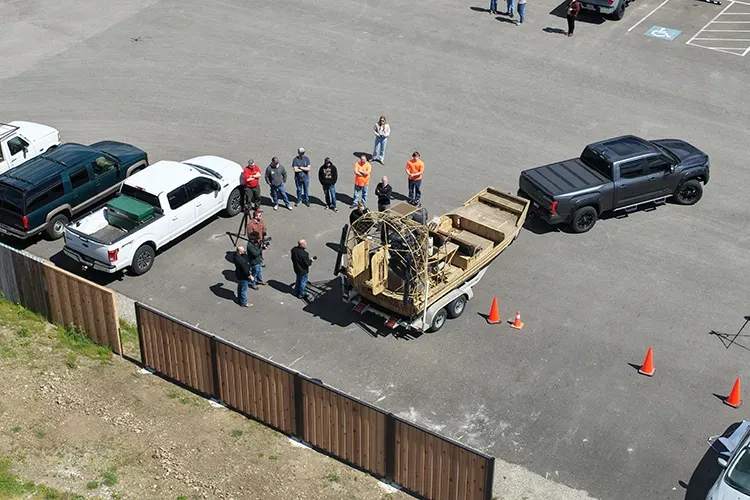
A privacy fence is a sail. Wind passes through pickets or wire, but a solid 6 foot fence catches all of it and hands the load to the posts. On an open or exposed lot, going from 8 foot spacing down to 6 puts more posts under the same wind.
Fence height
Taller fences catch more wind and have more leverage on the post. If you’re going above 6 feet, expect tighter spacing, a heavier post, a deeper hole, or all three. Many cities also cap fence height, so check before you build.
Soil and post depth
Spacing only works if the posts stay put. A common rule of thumb is to bury about a third of the post’s total length, and in cold country the footing should reach below the frost line so it doesn’t heave. Your local building department can tell you the frost depth for your area. In soft, sandy, or saturated soil, closer posts and deeper footings both help.
Before you dig anything, call 811 to have buried utilities marked. It’s free.
Slopes, corners, and gates
On a slope, measure spacing horizontally, not along the ground, or your sections will come up short. Corner, end, and gate posts carry more load than line posts, so they usually get a larger post or a bigger footing. Gate posts are spaced to the gate, not to the rest of the run.
Do Metal Posts Let You Space Them Wider?
Usually not. A steel post won’t rot at the ground line the way wood does, which is the main reason people use them, but the post isn’t the only limit. The rails or panels still have to span the gap without sagging, so an 8 foot rail keeps you at 8 feet no matter how strong the post is. Our article on a wood fence with metal posts covers what steel posts fix and what they don’t.
Post Spacing for a Metal Panel Fence
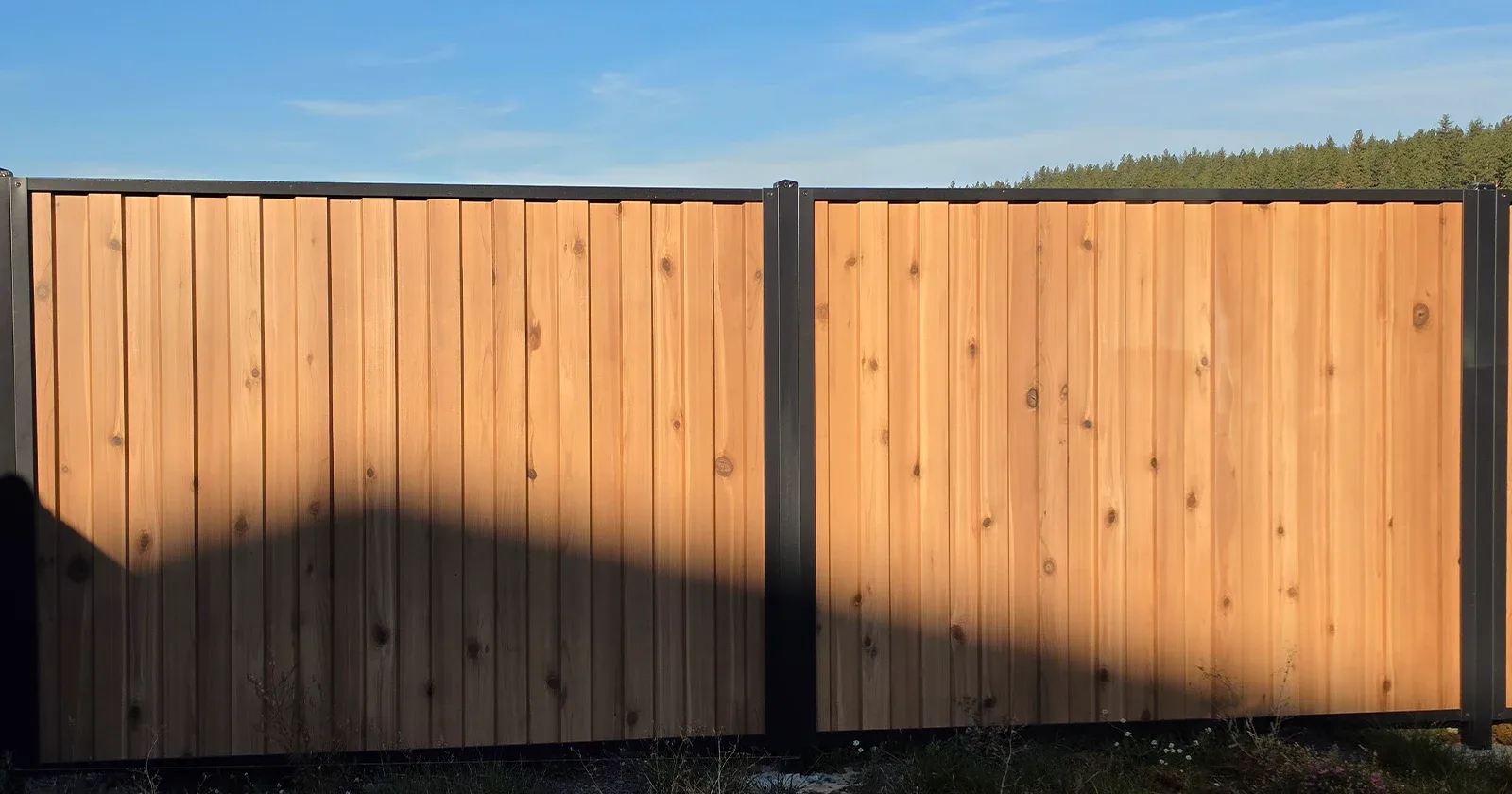
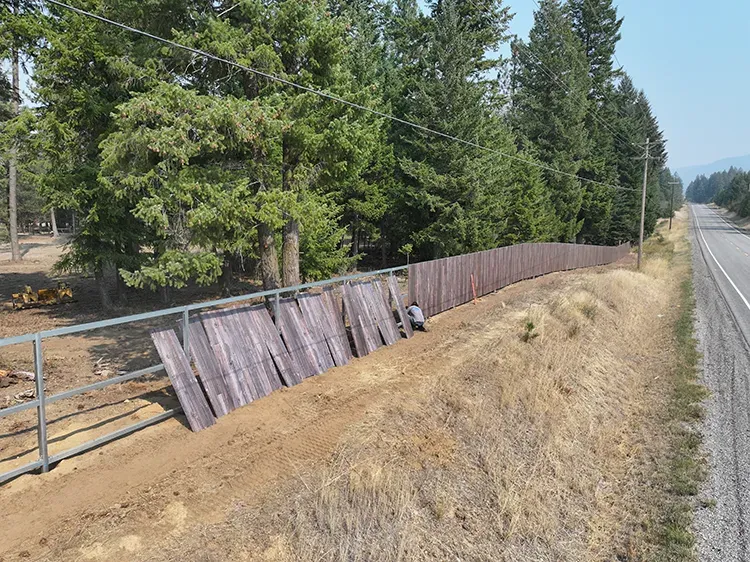
With a steel panel fence, you don’t pick the spacing. The system does. Panels and rails are made to a set length, and the posts go where the panel ends land. That’s good news for layout, since there’s no guessing, but it means you need the manufacturer’s layout before you set a single post.
If you’re weighing steel against wood for a privacy fence, start with our metal fence vs wood fence comparison. For the look, see the guide to a metal fence that looks like wood and the rundown of wood grain metal fence styles. And if height is the question, our black privacy fence 6ft guide covers what changes at 6 feet.
How to Lay Out a Fence Run
-
Set the fixed posts first. Mark your corners, ends, and both sides of every gate.
-
Measure each straight run between those fixed posts, horizontally.
-
Divide by your target spacing. A 50 foot run at 8 feet gives 6.25 sections. Round up to 7 sections.
-
Divide the run by that number. 50 feet over 7 sections is about 7 feet 2 inches on center. Even sections look better than six full ones and a 2 foot stub.
-
Run a string line and mark every post center before you dig the first hole.
With a panel fence you can’t shrink every section evenly, so plan for one cut panel instead, and put it where it’s least visible.
FAQ
Can fence posts be 10 feet apart?
For chain link and wire fences, yes. For a wood privacy fence, it’s too far: the rails will sag and the posts take more wind than they should. Stay at 8 feet or less.
Is 6 feet or 8 feet better for a privacy fence?
8 feet uses fewer posts and matches standard rail lengths. 6 feet is sturdier and worth it on windy sites, with taller fences, or in soft soil.
How far apart should posts be for a 6 foot fence?
6 to 8 feet on center for a wood fence. For a manufactured panel fence, use the spacing the manufacturer gives you for that panel.
The Bottom Line
Plan on 6 to 8 feet on center for most fences, go tighter for solid, tall, or wind-exposed runs, and let the panel decide when you’re building a panel system. Measure center to center, divide each run into even sections, and set your corners and gates first.
If you’re planning a steel privacy fence, give us a call or request a quote. We’ll give you the post layout for the panels you’re ordering, and we can send free finish samples.
Get a Quote
Find the Best Panel for Your Next Project
Fill out the form below and our team will get back to you within 24 hours with pricing and availability.
E-mail
sales@metalamerica.com
Phone number
855-638-2587