
First Published: October 2, 2026 Last Update: October 2, 2026
A wood fence with metal posts is a hybrid: steel posts set in concrete, with wood rails and pickets fastened to them using brackets. People build them for one simple reason. Posts are where wood fences fail first, because the part sitting in wet soil rots long before the boards above it do. Swap the posts for steel and you’ve fixed the weakest link.
The honest answer is that steel posts are a real upgrade over wood posts, but they don’t fix everything. The pickets and rails are still wood, so you’re still staining, replacing boards, and living with a fence that can burn. Here’s how the hybrid stacks up, and when it makes more sense to go all-metal.
Why People Build a Wood Fence With Metal Posts
A wood post sits in the ground year-round, and the few inches right at the soil line stay damp longer than anything else on the fence. That’s where rot starts. In the Inland Northwest, where fall rain and spring snowmelt keep the ground wet for months, it doesn’t take long. Once a post goes soft at the base, the fence leans, the gate sags, and the next windstorm finishes the job.
Steel posts don’t rot, don’t feed termites or carpenter ants, and don’t twist as they dry out. Put wood pickets on them and you keep the look of a traditional fence while taking the most common failure point off the table.
What Metal Posts Don’t Fix
Everything above the posts is still wood, and wood behaves like wood:
-
Maintenance. Pickets and rails still need stain or sealer to hold their color, and boards still warp, split, and pop fasteners as they cycle through wet and dry seasons.
-
Wind. Strong posts help, but weathered or loose boards can still blow out in a big storm.
-
Fire. Steel posts don’t change how a wood fence burns, because the fuel is the boards. A burning fence can carry fire right to the side of your house. We explain how that happens in are wood fences a fire hazard, and CAL FIRE’s home hardening guidance covers why fences attached to a house matter so much.
There’s also a lifespan mismatch. A steel post can outlast the wood bolted to it, so you may end up replacing pickets and rails more than once on the same set of posts.
Wood Fence With Metal Posts vs. an All-Metal Fence
|
Wood fence with metal posts |
All-metal fence |
|
|---|---|---|
|
Posts |
Steel |
Steel square tube |
|
Pickets and rails |
Wood |
Steel panels |
|
Rot and insects |
Posts protected, boards exposed |
No rot or insect damage anywhere |
|
Ongoing maintenance |
Stain or seal the boards on a schedule |
No painting, staining, or sealing |
|
Fire |
Boards are combustible |
Non-combustible |
|
Look |
Real wood that weathers and grays |
Wood-grain printed steel that holds its color |
|
Upfront cost |
Typically lower |
Typically higher |
How an All-Steel Fence Handles the Same Problems
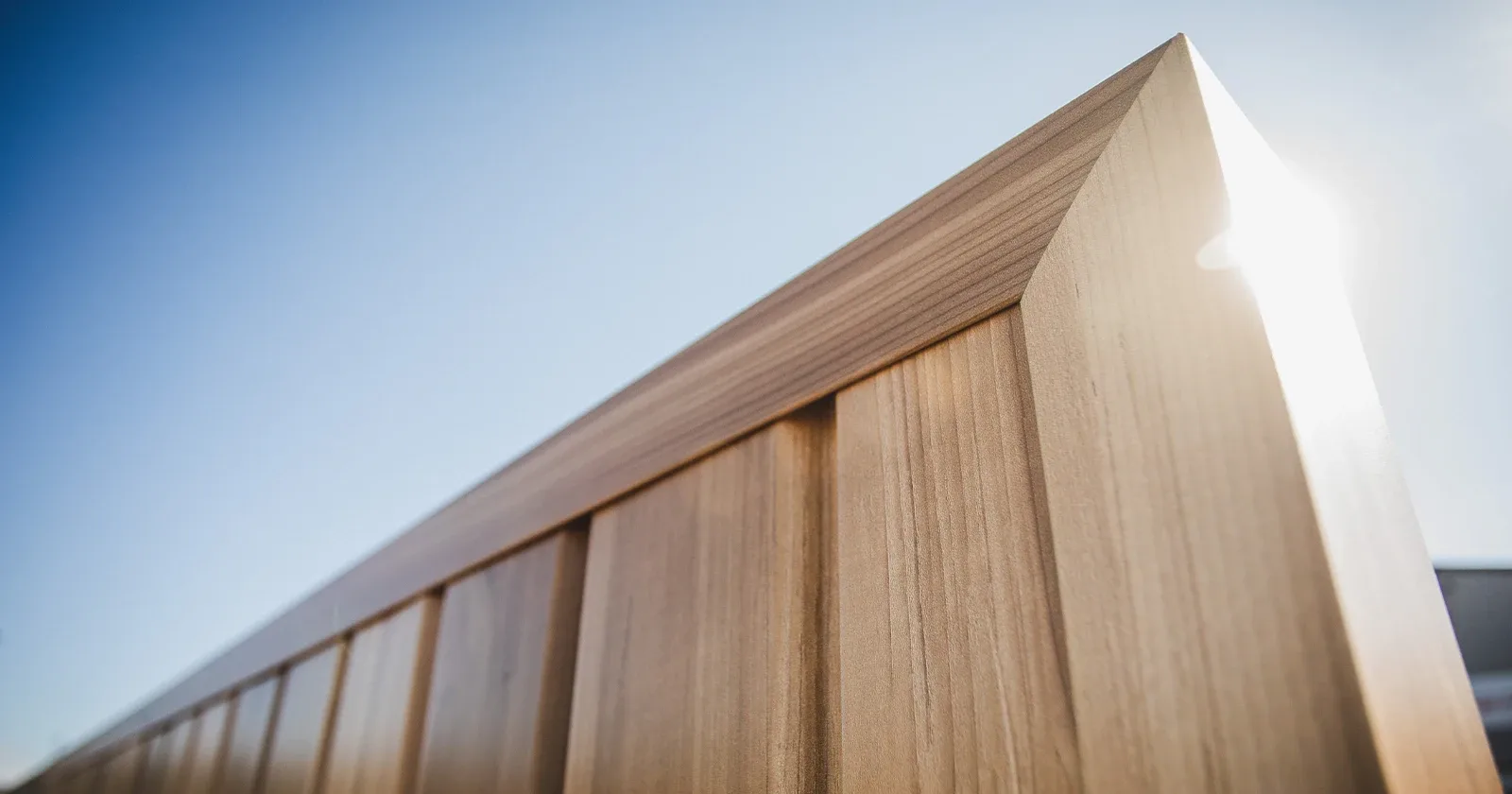
If the reason you’re looking at metal posts is to stop fighting rot, it’s worth pricing out a fence that’s steel from top to bottom. Every Metal America fence is built entirely from steel: square tube posts cemented into the ground, rolled steel panels, and a factory-applied finish. The panels mount to a 2.5-inch square tube steel post and frame system, and the fence is engineered to withstand 115 mph wind shear.
You don’t give up the wood look. Our fence panels carry wood-grain prints made from digitally enhanced scans of real wood, in finishes like Smooth Cedar, Barnwood, Walnut, and Burnt Wood Charcoal. The print goes on both sides, so your neighbors get the good side too. You can compare the options in wood grain metal fence styles and finishes, or get the full rundown in our metal fence that looks like wood buyer’s guide.
When Each Option Makes Sense
A wood fence with metal posts is a good fit if:
-
You want real wood and you don’t mind staining it every few years.
-
Upfront budget is the deciding factor.
-
You’re repairing an existing wood fence and only the posts have failed.
An all-metal fence is the better call if:
-
You’re done with recurring fence maintenance.
-
You live in wildfire country, or the fence ties into your house. Wildfire programs and IBHS recommend noncombustible fencing within five feet of a building, which we cover in non combustible fence.
-
You want the fence to look the same in 20 years as it does the day it goes in.
-
You’re planning a tall, solid privacy run, like a 6ft black privacy fence, where wind load puts more stress on every board.
FAQ
Are metal fence posts better than wood posts?
For durability, yes. Steel doesn’t rot at the soil line or attract insects, which is where most wood fences fail. Wood posts are cheaper and easier to fasten boards to, but they’re usually the first thing you’ll replace.
Can you attach wood pickets to steel posts?
Yes. Brackets fasten to the post and hold the wood rails, and the pickets attach to the rails the same way they would on a wood-post fence.
How long does a wood fence with metal posts last?
The posts often outlast the boards. The wood portion lasts about as long as you keep up with staining and repairs, so plan on replacing pickets and rails at some point while the posts stay put.
Is an all-metal fence more expensive?
Upfront, usually yes. Once you add up years of stain, board replacements, and eventual rebuilds on a wood fence, the gap narrows. We break down the long-term math in metal fence vs. wood fence.
The Bottom Line
A wood fence with metal posts is a smart fix for the post-rot problem, and it’s a reasonable choice if you love real wood and don’t mind the upkeep. If what you really want is a fence you never have to think about again, the posts are only half the job. An all-steel fence takes rot, pests, peeling, and fire off the list entirely. If you’d like to see the wood-grain finishes in person, give us a call or request free samples and a quote.
Get a Quote
Find the Best Panel for Your Next Project
Fill out the form below and our team will get back to you within 24 hours with pricing and availability.
E-mail
sales@metalamerica.com
Phone number
855-638-2587