
First Published: May 5, 2026 Last Update: June 23, 2026
When you’re comparing a metal fence vs. a wood fence, most buyers start with price and end up surprised by the math once they factor in the years ahead. Wood fences are familiar, widely available, and often cheaper upfront. Metal fences cost more to install but tend to cost significantly less to own over time. Which one actually wins depends on what matters most to you.
This article breaks down the real comparison across all the dimensions that matter: lifespan, maintenance, wind and fire performance, appearance over time, and long-term cost. By the end, you’ll have a clear picture of where each option makes sense.
Lifespan: How Long Does Each Fence Actually Last?
Wood Fence Lifespan
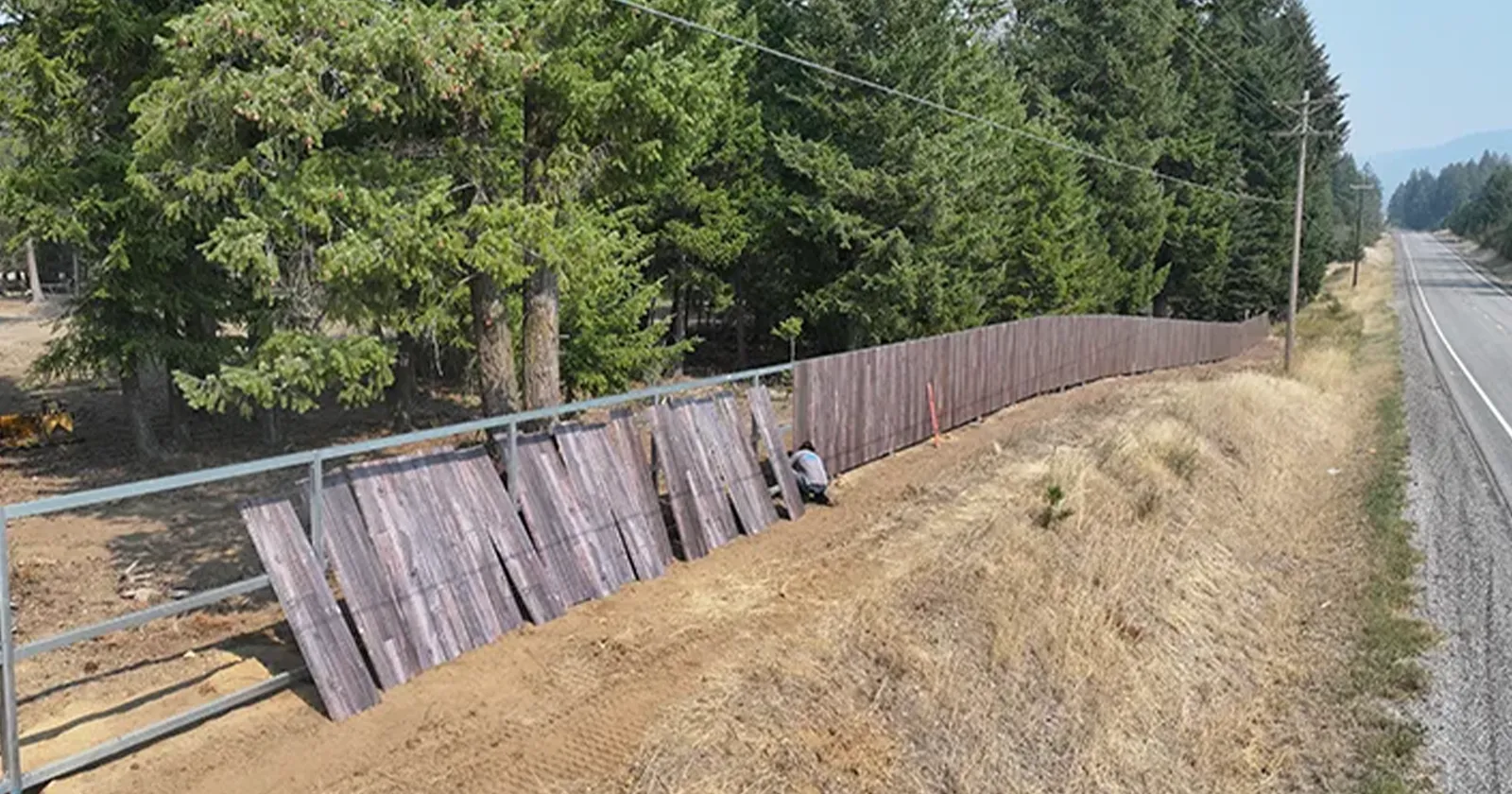
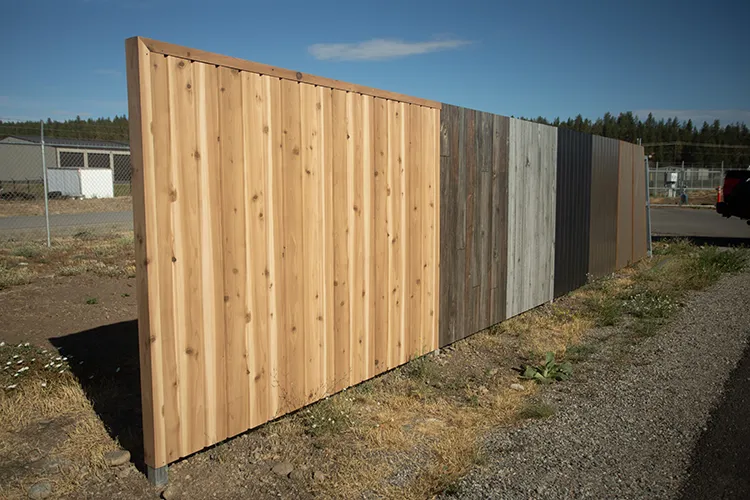
A quality wood fence installed with pressure-treated posts and cedar or redwood boards typically lasts somewhere between 10 and 20 years. That’s assuming regular maintenance. In wet climates or areas with heavy insect pressure, the lifespan can be shorter. The posts are almost always the first failure point, because even treated wood posts in contact with soil eventually rot, especially at or below the soil line. When that happens, you’re looking at post replacement, re-leveling the fence sections, or a full rebuild.
Metal Fence Lifespan
A properly installed steel fence system with a quality painted finish and steel posts does not have a comparable failure timeline. Steel doesn’t rot. It doesn’t absorb moisture, swell, crack, or break down the way wood does. The useful life of a steel fence system in good condition is measured in decades, not years. For homeowners who are planning to stay in their home for a long time, or who want to stop thinking about the fence entirely, this is a meaningful difference.
Maintenance: What Does Each Fence Ask of You Every Year?
Wood Fence Maintenance Requirements
Wood fences need attention on a regular cycle. Most experts recommend cleaning, inspecting, and resealing or repainting every one to three years depending on your climate. Skipping this cycle speeds up deterioration. Here’s what wood fence maintenance typically looks like over time:
- Year 1 to 3: Inspect posts, re-drive any loose fasteners, clean and reseal or repaint
- Year 3 to 7: Address any early rot at post bases, replace damaged boards, repaint faded sections
- Year 7 to 12: Consider post replacement if rot is advancing, rebuild sections as needed
- Year 10 to 20: Full fence rebuild or replacement typically required
The time and cost of this maintenance adds up significantly over the life of the fence. If you’re hiring someone to do the maintenance work, those costs compound quickly.
Metal Fence Maintenance Requirements
A steel fence with a factory-applied finish requires no regular maintenance cycle. There is no painting, staining, sealing, or board replacement. The panels hold their color and finish for decades. The only maintenance that applies is what you’d do for any outdoor structure: occasionally rinse off dirt and debris, and check that posts are still properly anchored after any significant weather event.
For busy homeowners, that zero-maintenance reality is one of the most compelling arguments for steel.
Wind Performance: Which Fence Holds Up in a Storm?
Wood Fences in High Wind
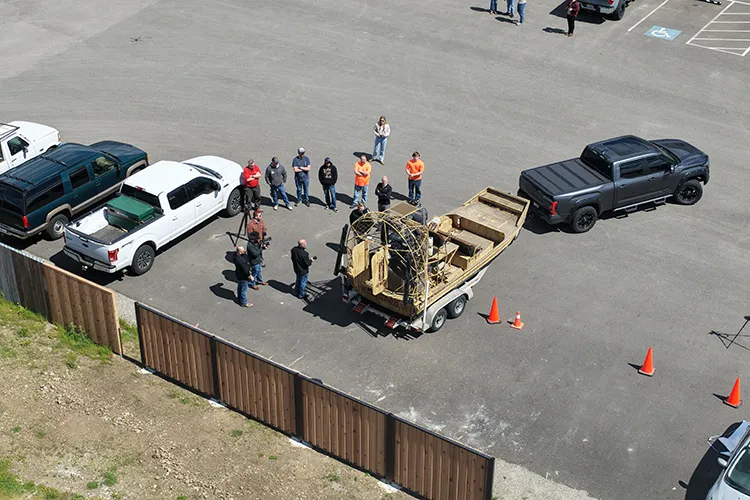
Wood fence panels and gates are relatively vulnerable to high-wind events. A standard 6-foot wood privacy fence with 4×4 posts can fail in sustained winds well below 60 mph if the posts have any rot, if the soil conditions are soft, or if the fence line creates a sail effect. Even newer wood fences can lose boards and sections in significant wind events. Insurance claim data consistently shows wood fencing as one of the most common residential property losses during storms.
Metal America Steel Fence Wind Performance
Metal America’s wood grain steel fence panels are tested and rated to withstand 115 mph wind shear. This isn’t a theoretical spec. The panels and structural system have been put through real-world testing conditions to validate that rating. For homeowners in areas of Idaho, Washington, Oregon, and Montana that see high-wind events, chinook conditions, or severe storm systems, this is a substantial performance difference.
Fire Resistance: An Increasingly Important Factor
If you live in a wildfire-prone area, the combustibility of your fence is worth thinking about carefully. Many homes in the Pacific Northwest and Inland Northwest are in or near wildfire risk zones, and fencing can play a real role in how fire behaves around your property.
Wood Fencing and Fire
Wood fencing is essentially continuous fuel. A burning wood fence can carry fire directly to your home, particularly if the fence is attached to or runs adjacent to the structure. This is a recognized fire risk factor in wildland-urban interface (WUI) zones, and many fire safety guidelines specifically address wood fence placement and materials near structures.
Metal Fencing and Fire
Steel is non-combustible. A metal fence won’t carry flame, won’t ignite from ember shower the way wood does, and won’t contribute to fire spread along your property line. For homeowners in areas with real wildfire risk, this is a meaningful safety consideration that goes beyond aesthetics and durability.
Appearance Over Time: Honest Assessment
How Wood Fences Age
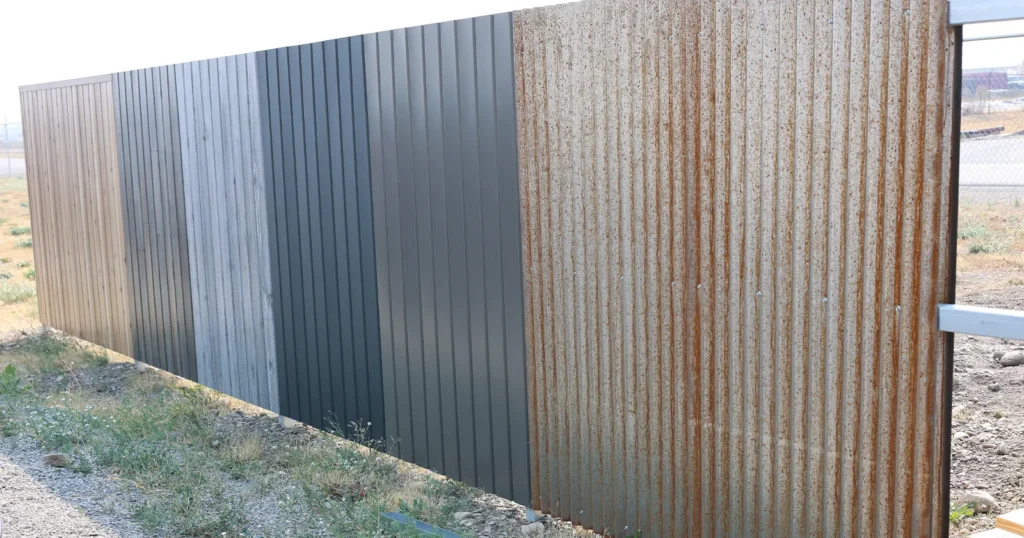
Wood fences look best when they’re new. Within the first few years, depending on sun exposure and moisture, the wood begins to gray, fade, and show weathering. Without regular maintenance, this progresses to visible board warping, nail popping, gaps between boards, and the general tired look of an aging fence. Even well-maintained wood fences show their age by the time they’re 10 or 12 years old.
How Metal America’s Wood Look Fence Ages
The premium coating on Metal America’s fence panels is designed for long-term UV resistance and color stability. The fence looks the same in year 10 as it did in year one, because there’s nothing for weather to degrade in the way it degrades wood. The grain, the color, the panel geometry… all of it holds. For homeowners who care about curb appeal and property appearance over the long term, this is a significant quality-of-life difference.
The Appearance Advantage: Looks Like Real Wood on Both Sides
One aspect of Metal America’s wood grain fence that genuinely sets it apart from other fencing options is the double-sided finish. Both the front and back of every panel carry the same high-definition wood grain print. When a neighbor or passerby looks at your fence from the outside, they see the same warm wood grain texture you see from inside your yard.
Most wood-look fence products on the market are single-sided. The finish faces one direction, and the back of the panel is raw or painted metal. That’s not the case here. The double-sided printing is something Metal America specifically invested in, and it shows in how the finished fence looks from every angle.
Cost Comparison: Upfront vs. Lifetime
A full cost comparison between metal and wood fencing requires looking at the total cost of ownership, not just the installation price.
| Cost Factor | Wood Fence | Metal Wood Look Fence |
| Installation cost | Lower upfront | Higher upfront |
| Annual maintenance | Time and material cost every 1 to 3 years | None required |
| Board/panel replacement | Common over life of fence | Not expected |
| Post replacement | Likely at 10 to 15 years | Not expected |
| Full replacement | Expected at 10 to 20 years | Not expected in typical lifespan |
| Total 20-year cost | Often comparable or higher once maintenance is included | Higher upfront, lower total cost |
The upfront cost of a metal fence is typically higher than a comparable wood fence. But when you add up 20 years of maintenance, partial replacements, and eventual full replacement for a wood fence, the lifetime costs frequently end up in the same range or higher for wood. And that calculation doesn’t account for the time and hassle of maintenance, which has real value.
Which Fence Is Right for Your Property?
Choose a Metal Wood Look Fence If:
- You want a fence that genuinely looks like wood but requires nothing from you after installation
- You’re in a wildfire risk area and want a non-combustible fence barrier
- Your property sees high-wind events and fence performance in storms matters
- You want the fence to look just as good from the outside as from your backyard
- You plan to stay in your home for many years and want to stop worrying about the fence
A Wood Fence May Make Sense If:
- Your priority is the lowest possible upfront installation cost
- You’re fencing a property temporarily or expect to significantly change the layout
- You or someone in your household genuinely enjoys maintenance projects
See the Metal Fence Options
If you’re ready to take a closer look at wood grain steel fence panels, Metal America’s full fence line is available at metalamerica.com/fences. You can explore panel profiles, wood grain finish options, and contact our team for a free estimate on your project.
Get a Quote
Find the Best Panel for Your Next Project
Fill out the form below and our team will get back to you within 24 hours with pricing and availability.
E-mail
sales@metalamerica.com
Phone number
855-638-2587