
First Published: June 16, 2026 Last Update: June 18, 2026
Corrugated metal roofing has been protecting buildings for well over a century, and it is more popular today than it has ever been. If you picture the wavy tin sheets nailed to an old barn, you are only seeing part of the story. Modern corrugated panels are stronger, better looking, and longer lasting than anything from the past, and they work just as well on a brand new home or commercial building as they do on a farm shed.
At Metal America in Post Falls, Idaho, we roll form corrugated panels for customers all across the Pacific Northwest, and we get a lot of questions about how these panels work, where they fit, and how to pick the right one. This guide pulls all of that together in one place. By the end you will understand the different profiles, the gauges, the finishes, and exactly when corrugated is the smart choice for your roof or your walls.
What Is Corrugated Metal Roofing?
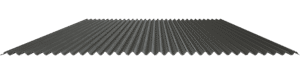
Corrugated metal roofing is a metal panel formed with a repeating wavy or ribbed pattern that runs the length of the sheet. That pattern is not just for looks. The corrugation adds rigidity and strength to what would otherwise be a thin, floppy piece of steel, which lets the panel span longer distances and shed water and snow efficiently. The result is a roofing material that is lightweight, tough, and remarkably affordable.
The panels are fastened directly through the face of the metal into the roof structure using exposed screws with weather sealing washers. This is what the industry calls an exposed fastener system, and it is the main reason corrugated roofing is so budget friendly. There is no hidden clip system or special seaming equipment required, so installation is straightforward and fast.
Most corrugated roofing today is made from steel coated with a protective paint system. At Metal America we finish our panels with Sherwin-Williams WeatherXL SMP coatings, which hold their color and resist fading, chalking, and corrosion for decades. That is a huge upgrade over the bare galvanized look that many people still associate with the term corrugated.
The Classic Corrugated Profile
The most recognizable corrugated profile is the rounded, sinusoidal wave. The two most common versions are the 1/2 inch corrugated and the deeper 7/8 inch corrugated. The number refers to the height of the rib. The taller the rib, the stronger the panel and the more dramatic the shadow line it creates across a roof or wall.
Our 7/8 inch corrugated panel is one of the most popular products we make. It carries that timeless agricultural look while delivering the strength needed for real world roofing and siding jobs. If you want a deep dive into the specs, coverage, and installation details of that specific panel, take a look at our dedicated guide to 7/8 inch corrugated metal panels.
Corrugated Metal Panels: Profiles and Coverage
When people say corrugated metal panels, they are usually talking about the wavy profile, but the term gets used loosely to describe a whole family of exposed fastener panels. It helps to know what you are actually buying. Here is how the common corrugated and corrugated adjacent profiles compare.
| Profile | Rib Height | Look | Typical Use |
| 1/2 inch corrugated | 1/2 inch | Subtle, classic wave | Accent walls, light roofing, residential siding |
| 7/8 inch corrugated | 7/8 inch | Deep, traditional wave | Roofing, agricultural siding, barns, modern exteriors |
| Tuff Rib | Roughly 3/4 inch | Trapezoidal rib | Pole barn roofing and siding, budget projects |
| PBR panel | Roughly 3/4 inch | Trapezoidal rib with purlin bearing leg | Commercial, warehouse, and structural roofing |
Tuff Rib and PBR are technically ribbed panels rather than true corrugated panels, but buyers shopping for corrugated often end up comparing all of them, so it is worth knowing the difference. If you are trying to decide between the wavy corrugated look and a ribbed panel, our guide on corrugated versus ribbed metal panels breaks down PBR, Tuff Rib, and corrugated side by side.
Coverage matters too. Each panel has a net coverage width after the overlap is accounted for, and that figure determines how many panels you need for a given job. When you order from us, we help you calculate exact panel counts and lengths so you are not stuck guessing or buying extra.
Corrugated Steel Roofing Gauges Explained
Corrugated steel roofing comes in several thicknesses, measured in gauge. The lower the gauge number, the thicker and stronger the steel. This is one of the most important decisions you will make because it affects durability, span, and price. Here is a quick rundown of the gauges we work with for corrugated panels.
- 29 gauge: The lightest and most economical option. Great for agricultural buildings, sheds, and budget conscious projects where the panel is well supported.
- 26 gauge: The most common all around choice. A noticeable step up in strength and dent resistance, well suited to residential roofing and siding.
- 24 gauge: A heavier, premium gauge favored for commercial work, longer spans, and projects in high wind or heavy snow areas.
- 22 gauge: The thickest option, used where maximum strength and longevity are the priority.
For most homeowners and farm buildings here in the Pacific Northwest, 26 gauge hits the sweet spot of strength and value. Commercial buyers and anyone dealing with serious snow loads often move up to 24 gauge. We are happy to walk you through which gauge makes sense for your specific building.
Corrugated Metal Roofing Panels for Agricultural and Residential Use
Corrugated metal roofing panels are wildly versatile, which is exactly why they have stayed popular for so long. The same basic panel that has covered barns for generations now shows up on modern farmhouses, mountain cabins, and contemporary commercial buildings.
Agricultural and Farm Buildings
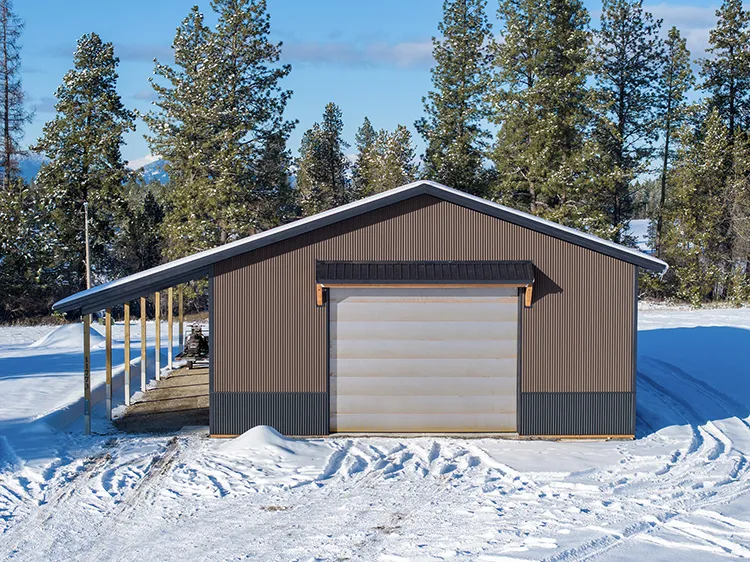
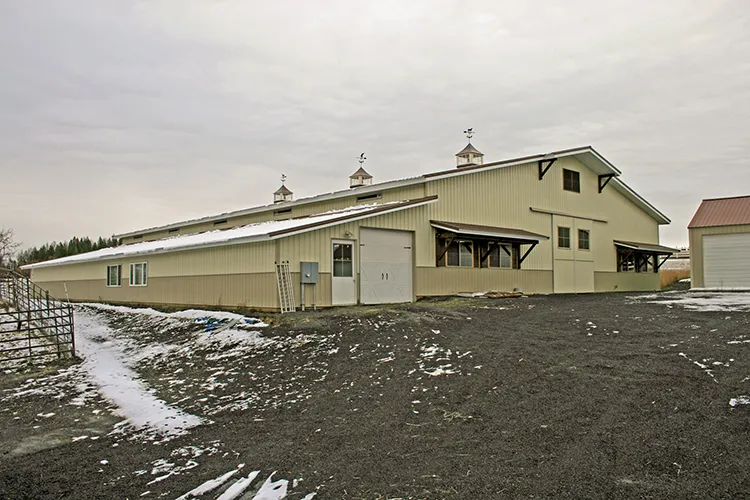
On the agricultural side, corrugated panels are the workhorse of pole barns, equipment storage, hay sheds, and livestock buildings. They are affordable per square foot, they go up fast, and they hold up to decades of weather and abuse. For farmers and ranchers who need to cover a lot of square footage without breaking the budget, corrugated is hard to beat.
Residential and Modern Builds
On the residential side, corrugated has become a favorite of designers chasing the modern farmhouse and rustic industrial look. A corrugated roof on a home reads as both nostalgic and current at the same time, and it pairs beautifully with board and batten or wood look siding. The exposed fastener look that some people once considered too rugged for a house is now a sought after design feature.
Corrugated Metal Siding: Walls That Last
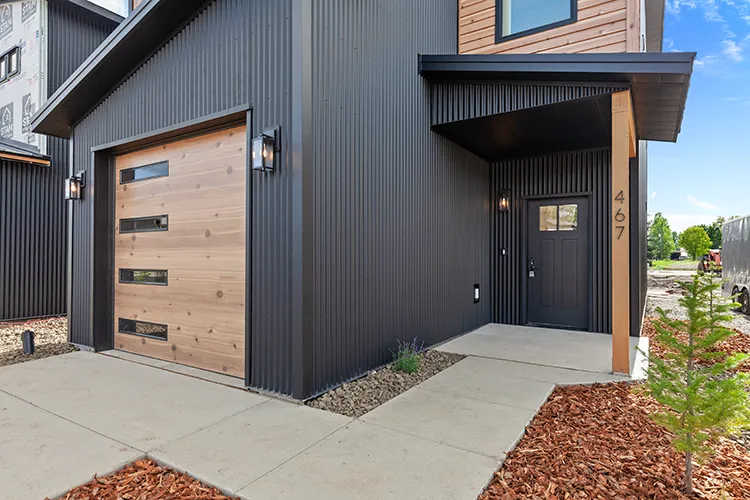
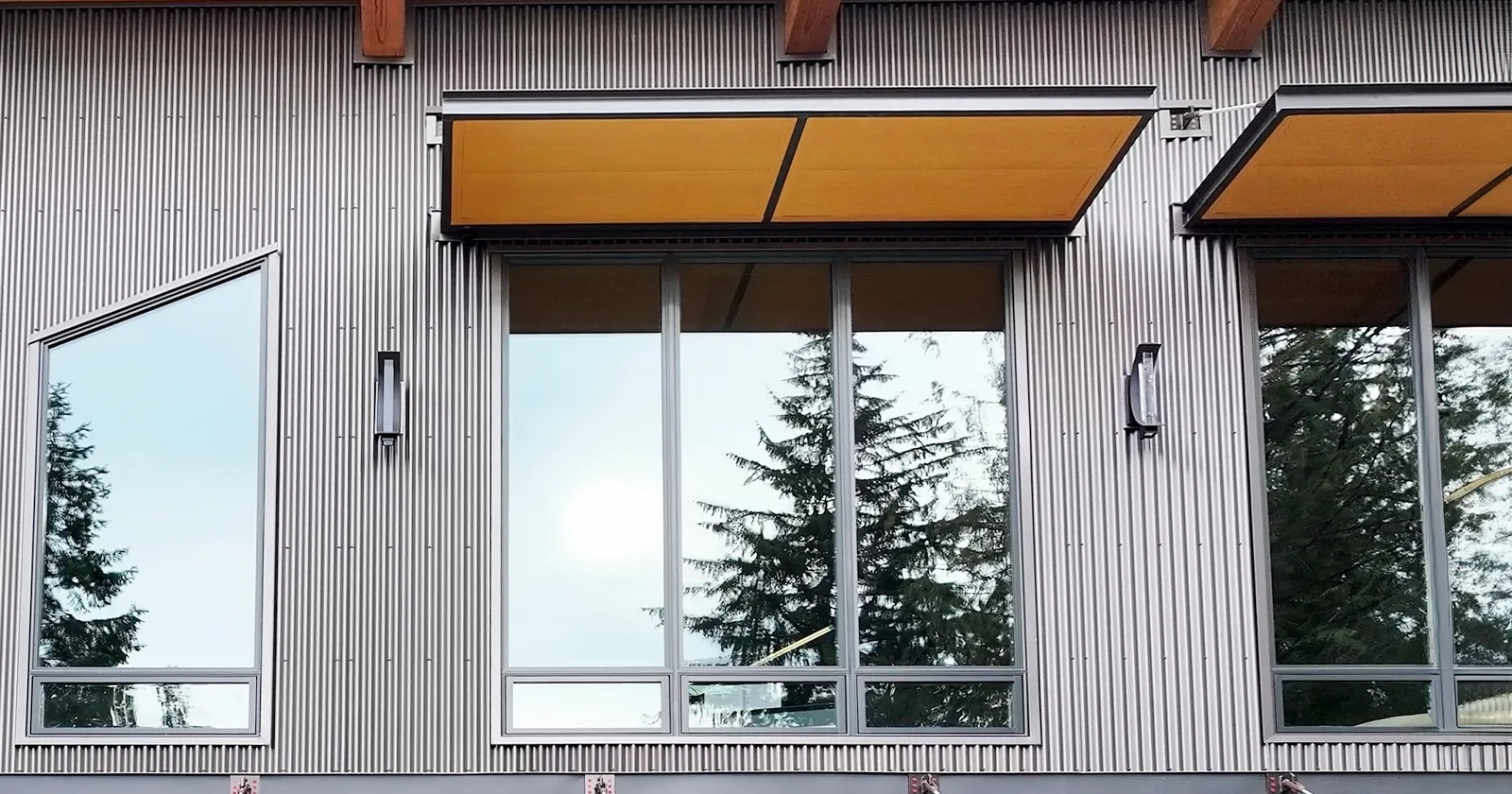
Corrugated metal siding takes the same proven panel and turns it on its side, literally. Run vertically or horizontally on a wall, corrugated panels create a textured, shadow rich exterior that looks fantastic and shrugs off weather. Metal siding will not rot, will not attract insects, and will not need repainting every few years the way wood does.
Corrugated siding works on everything from a working barn to a sleek modern home to a commercial storefront. It is a popular choice for accent walls too, where a panel or two of corrugated metal adds instant texture to an entryway, a feature wall, or even an interior space. If walls are your main interest, our full breakdown of corrugated metal siding styles, gauges, and design ideas goes deeper on the siding specific details.
One of the great things about using corrugated for both roof and walls is that you can match or intentionally contrast finishes for a cohesive design. With our range of WeatherXL colors and specialty finishes, including wood look prints and Cor-Ten weathering steel, you have a lot of room to create exactly the look you want.
Corrugated Metal Building Panels for Commercial Projects
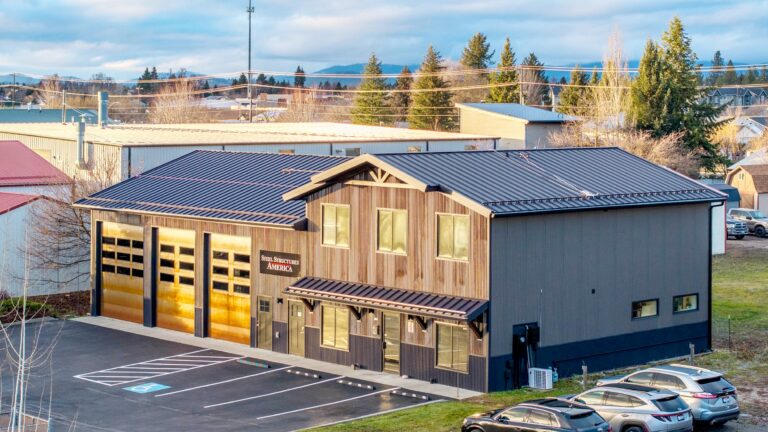
Corrugated metal building panels are not just for farms and houses. Commercial and industrial builders rely on corrugated and ribbed panels to cover warehouses, retail buildings, storage facilities, and light industrial structures. The combination of low material cost, fast installation, and long service life makes corrugated a smart choice when you are covering a large building envelope.
For heavier commercial roofing, many builders step up to a PBR panel, which adds a purlin bearing leg for better structural performance over open framing. For walls, corrugated and ribbed panels both deliver a clean, durable commercial exterior. Whatever the application, the exposed fastener design keeps costs predictable and installation simple, which matters a lot when project schedules are tight.
How to Buy Corrugated Metal Panels
When you are ready to find corrugated metal panels for sale, a few details will make your shopping much easier. Knowing these ahead of time helps you get an accurate quote and the right material the first time.
- Profile: Decide whether you want the classic 7/8 inch corrugated wave or a ribbed profile like Tuff Rib or PBR.
- Gauge: Choose your thickness based on the building, the span, and your local weather. 26 gauge is a solid default for most projects.
- Color and finish: Pick from painted WeatherXL colors, bare galvanized, weathering steel, or specialty wood look prints.
- Panel length: We cut panels to length, so measure carefully or let us help you figure out the right dimensions.
- Trim and fasteners: Do not forget matching trim, ridge caps, closures, and color matched screws to finish the job right.
Because we roll form panels right here in Post Falls, Idaho, we can deliver custom cut corrugated panels quickly to customers throughout Idaho, Washington, Oregon, and Montana. Buying from a local manufacturer means shorter lead times, less freight cost, and someone you can actually talk to when you have a question.
Why Choose Corrugated Metal?
Corrugated metal roofing and siding earns its popularity for a lot of good reasons. It is one of the most affordable metal panel options on the market. It installs quickly with simple exposed fasteners. It stands up to wind, rain, snow, and sun for decades, and a quality painted finish keeps it looking sharp the whole time. It is fully recyclable, which makes it a genuinely sustainable building material. And it delivers that distinctive corrugated look that works on everything from a barn to a custom home.
Whether you are roofing a pole barn, residing a farmhouse, or wrapping a commercial building, corrugated panels give you a tough, attractive, budget friendly solution that will outlast just about anything else you could put up.
Get Corrugated Metal Panels from Metal America
Metal America manufactures corrugated metal roofing and siding panels in Post Falls, Idaho, and supplies homeowners, farmers, contractors, and commercial builders across the Pacific Northwest. We offer the classic 7/8 inch corrugated profile along with a full lineup of ribbed panels, standing seam systems, trim, and specialty finishes, all backed by Sherwin-Williams WeatherXL coatings.
If you are weighing your options, our supporting guides can help you go deeper. Learn the full specs in our 7/8 inch corrugated metal panels article, explore wall applications in our corrugated metal siding guide, or compare panel styles in our corrugated versus ribbed metal panels breakdown. When you are ready, reach out and we will help you pick the right panel, gauge, and finish, then cut it to length and get it to your job site.
Get a Quote
Find the Best Panel for Your Next Project
Fill out the form below and our team will get back to you within 24 hours with pricing and availability.
E-mail
sales@metalamerica.com
Phone number
855-638-2587