
First Published: June 12, 2026 Last Update: June 12, 2026
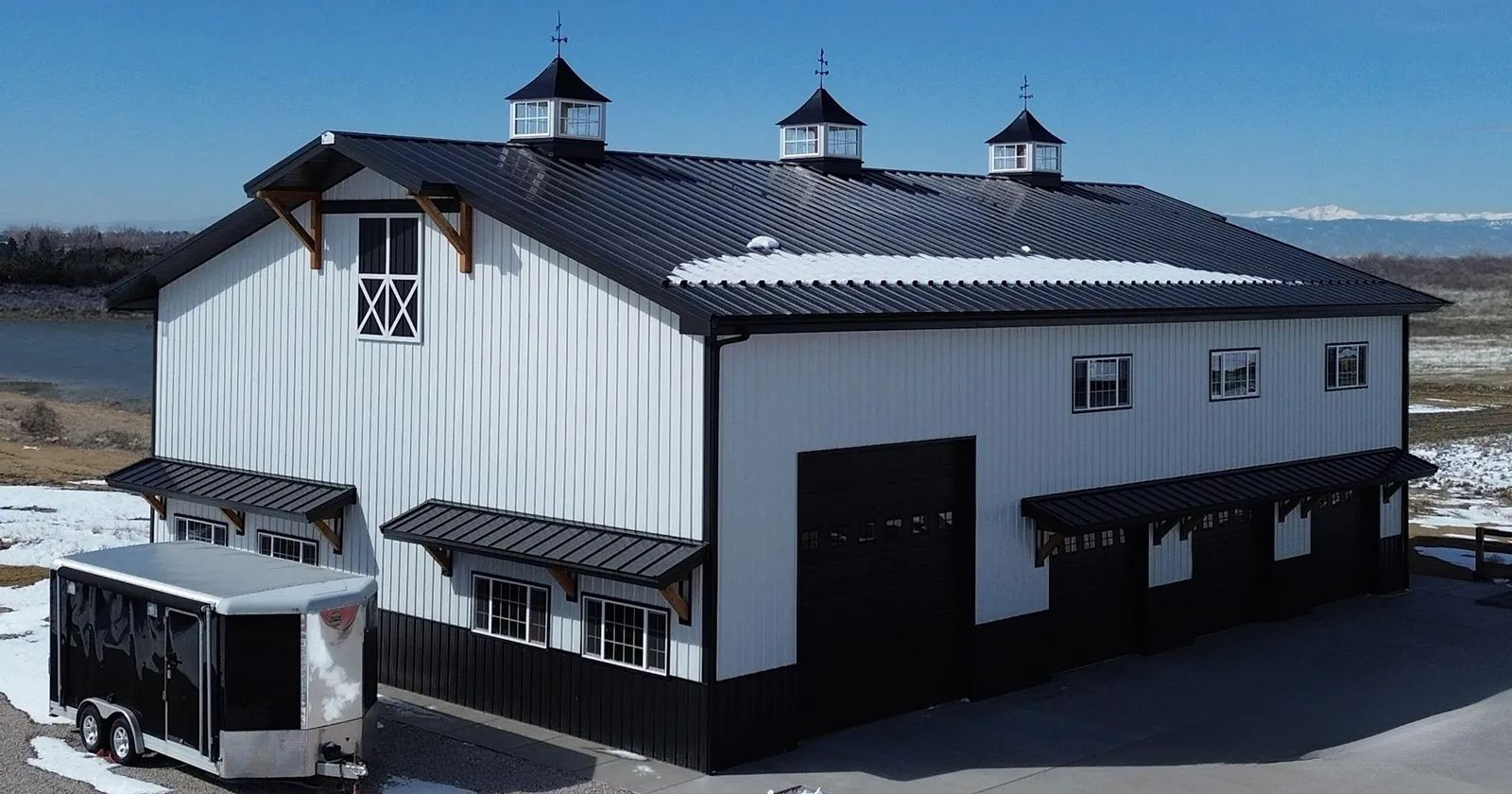
Modern farmhouse metal siding has become one of the most searched exterior design topics over the last several years, and for good reason. The look is clean without being cold, rural without being rustic, and durable in a way that most other siding materials simply cannot match. If you are designing a home exterior that draws from the modern farmhouse aesthetic, metal panels give you a material that genuinely delivers on the look and performs in Pacific Northwest conditions for decades.
This article is about the design side of that decision. We cover the panel profiles that define the modern farmhouse exterior, how to combine them effectively, what two-tone color strategies work best, and where wainscot and accent wall details make the biggest difference.
What Makes a Modern Farmhouse Metal Exterior
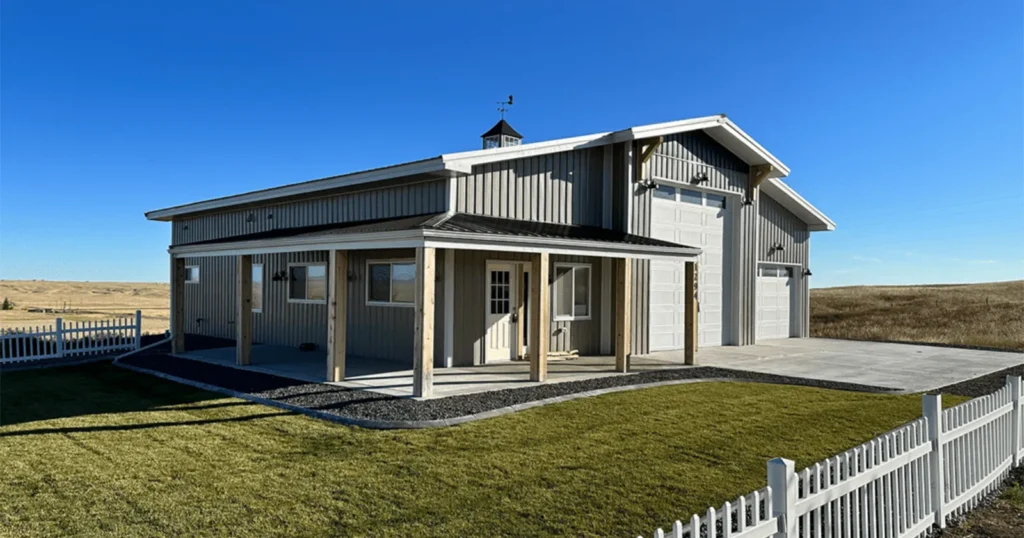
The modern farmhouse style draws from the visual vocabulary of traditional agricultural buildings while filtering it through a cleaner, more contemporary lens. The result is a design language built on a few consistent elements: strong vertical lines, honest materials, layered texture, and a restrained color palette.
Metal siding fits this language naturally. Board and batten panels bring the vertical shadow-line detail that defines the farmhouse look. Shiplap panels introduce horizontal layering. Wainscot sections add visual grounding and material contrast. And the matte-finish SMP paint coatings available on steel panels have exactly the chalky, low-sheen quality that modern farmhouse design favors over glossy surfaces.
The other thing metal siding brings to the modern farmhouse equation is authenticity. The material is genuinely associated with farm buildings, working structures, and rural architecture. Using it on a farmhouse-inspired home is not a stylistic imitation. It is using the original material in a more refined context.
Board and Batten Metal Siding for the Farmhouse Exterior
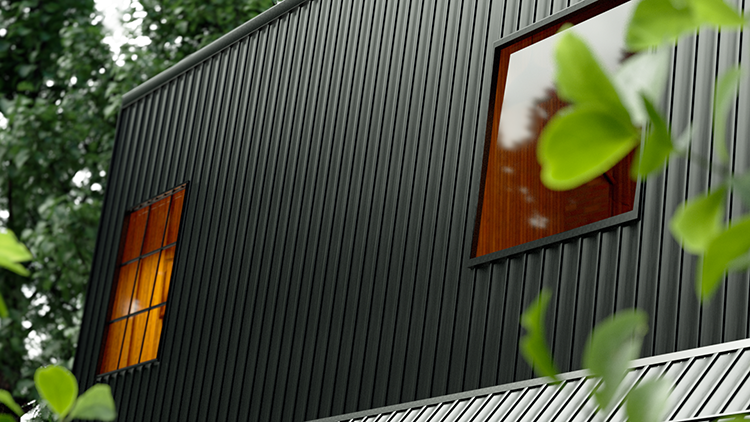
Board and batten is the single most recognizable element of the modern farmhouse exterior, and in metal form it delivers the look with significantly more durability than wood or engineered wood alternatives.
The profile works by creating a vertical siding field with raised ribs spaced across the panel face. The ribs cast shadow lines that create a sense of depth and texture on the wall surface. From a distance, the effect reads as classic board and batten wood siding. Up close, the crisp steel edges and uniform profile reveal the material for what it is.
How to Use Board and Batten on a Farmhouse Exterior
On a single-story farmhouse, board and batten on all exterior walls is a strong, unified approach. On a two-story home or a building with multiple wing configurations, using board and batten on the upper story or on prominent wall planes with a contrasting material below gives the exterior more visual hierarchy.
Common applications for board and batten metal on farmhouse exteriors include:
- Full exterior field on single-story homes and outbuildings
- Upper story or gable cladding on two-story homes
- Primary wall field with a contrasting wainscot section below
- Accent wall on a garage face or entry projection
- Detached shop, garage, or studio structures matching the main house
Orientation and Panel Spacing
Board and batten metal siding is installed vertically, which naturally draws the eye upward and makes a building feel taller and more slender than horizontal siding profiles. On a farmhouse with generous roof overhangs and a strong horizontal roofline, the vertical siding creates a counterpoint that gives the exterior energy and tension.
The rib spacing on the panel determines how tight or open the board-and-batten rhythm looks on the wall. Tighter spacing creates a busier texture that reads well on larger wall planes. Wider spacing has a simpler, more graphic quality that works on smaller buildings or cleaner architectural styles.
Metal Shiplap for the Farmhouse Exterior
Metal shiplap brings the horizontal layering that is the other major visual element of the modern farmhouse exterior. Where board and batten is vertical and structured, shiplap is horizontal and relaxed. The two profiles work as complements, and combining them on a single exterior is one of the most effective design strategies available.
Where Shiplap Metal Siding Works Best
On a farmhouse exterior, metal shiplap is particularly effective in these applications:
- Full exterior field on ranch-style or low-profile homes where the horizontal emphasis reinforces the building’s proportions
- Accent band or zone on a building that primarily uses board and batten, such as a horizontal shiplap section under a gable end or above a wainscot
- Covered porch ceilings and soffits, where the horizontal profile creates a clean, residential quality
- Interior accent walls, mudroom ceilings, and kitchen backsplash areas on farmhouse-interior renovation projects
- Garage and outbuilding exteriors that need to match the house without copying it exactly
Mixing Board and Batten with Shiplap
One of the most commonly executed modern farmhouse exterior combinations is board and batten on the primary wall field with a shiplap horizontal accent band at a specific height. The transition point where the two profiles meet is typically defined by a trim piece or a color change, and that detail becomes a design feature in itself.
A few ways this combination typically plays out:
- Vertical board and batten on the upper two-thirds of the wall, horizontal shiplap on the lower wainscot section, separated by a belt-course trim piece
- Horizontal shiplap on the main wall field, vertical board and batten on gable triangles
- Board and batten on the house exterior, shiplap on a detached garage or studio to create family resemblance without exact repetition
Metal Wainscot Design Ideas for Farmhouse Exteriors
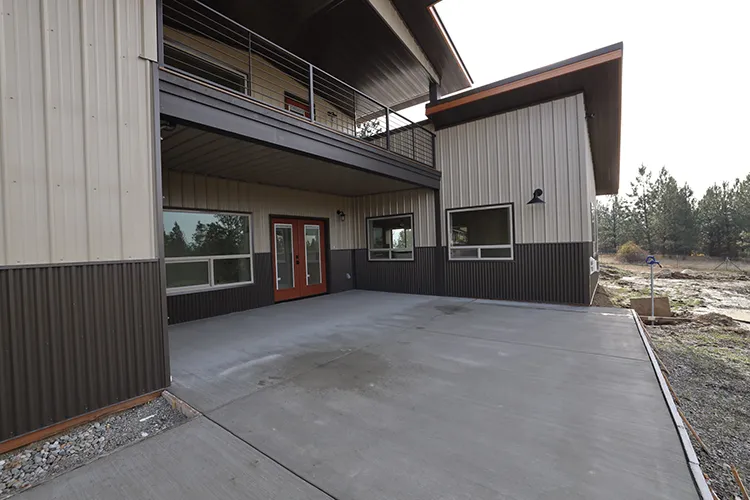
Metal wainscot ideas are one of the most searched farmhouse exterior design topics, and the reason is simple: a wainscot detail is one of the highest-impact design moves you can make on a home exterior. It adds visual grounding, introduces material contrast, and gives the building a layered, crafted appearance that a single-material exterior cannot achieve.
What Is a Metal Wainscot?
A wainscot is a lower zone of siding that runs around the base of the building, typically differentiated from the upper field by a change in panel profile, color, or both. Historically, wainscoting on farm buildings used heavier materials at the base to resist moisture, livestock contact, and equipment impact. On a modern farmhouse, the wainscot is primarily a design detail, though it still provides some practical protection for the lower wall section.
Wainscot Height and Proportions
The most common wainscot heights on modern farmhouse exteriors run from 30 inches to 48 inches off finished grade. The right height for your building depends on the wall height and the proportions you are trying to achieve:
- 30 to 36 inches: A relatively modest wainscot that reads more as a base detail than a dominant element. Works well on single-story homes with 8-foot wall heights.
- 36 to 48 inches: A more substantial wainscot that creates a clear visual division of the wall. Appropriate for buildings with 9- to 12-foot wall heights.
- 48 to 60 inches: A generous wainscot that becomes a major design statement. Most effective on tall-walled barndominiums or buildings with architectural details above the wainscot line.
Wainscot Panel Profile and Color Options
The most common approach on modern farmhouse exteriors is to use a different panel profile for the wainscot than for the field above. Popular combinations include:
- Corrugated metal wainscot below board and batten field: The contrast between the wavy corrugated profile and the clean vertical board and batten creates a textural layering that reads as authentically rural-modern.
- Shiplap wainscot below board and batten field: Mixing horizontal and vertical orientations at the wainscot transition creates a strong horizontal line that defines the building base.
- Dark wainscot below a lighter field: Using the same panel profile but changing the color at the wainscot line is a simpler, cleaner approach that works well on homes where you want the material change to be subtle.
- Ribbed or PBR panel wainscot below a board and batten field: On a more utilitarian farmhouse or working property, a ribbed panel wainscot reads as honest and functional.
Metal Siding Accent Wall Ideas for Farmhouse Homes
Accent walls on farmhouse exteriors are most effective when they take advantage of the building’s natural geometry: a projecting entry bay, a gable end triangle, a covered porch end wall, or a chimney chase. These are the places where a change in material, color, or panel profile creates the most visual impact for the least material cost.
Wood-Look Metal Panels as Accent Surfaces
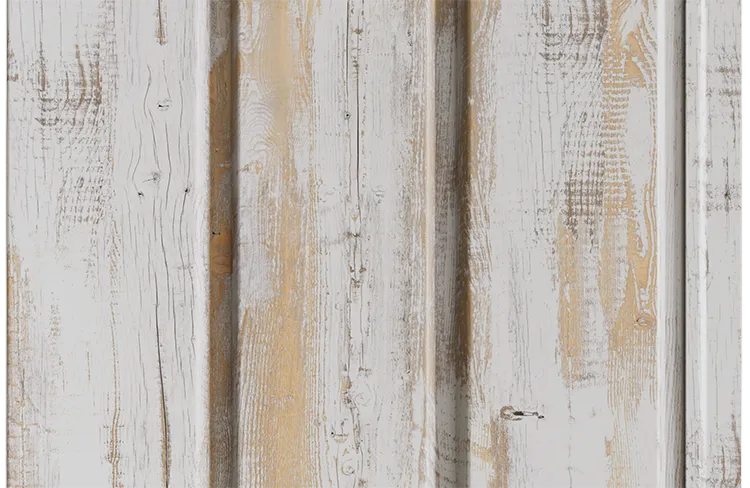
One of the strongest farmhouse accent wall moves is to use a wood-print metal panel on a specific surface. Metal America’s wood-look panels replicate the texture and color variation of barnwood, cedar, and other natural materials on a steel substrate. On a gable end, a covered porch ceiling, or a single projecting wall plane, a wood-print panel introduces the warmth and natural quality of real wood without the maintenance, moisture vulnerability, or longevity limits of actual timber.
The visual contrast between a painted metal field and a wood-look metal accent is one of the most effective design combinations in modern farmhouse exterior design. It reads as layered and considered rather than all-one-material, and it creates a natural focal point on the building face.
Contrasting Trim as a Design Tool
On a modern farmhouse exterior, trim is not just a finishing detail. It is part of the design. Contrasting trim colors that clearly define window and door openings, corner transitions, and roofline edges give an exterior a precision and finish that painted trim in the same color as the siding cannot achieve.
Common contrasting trim strategies on farmhouse exteriors:
- White trim on a dark charcoal or slate field: Classic, high-contrast, clean
- Black trim on a white or light gray field: Contemporary and graphic
- Dark brown or bronze trim on a tan or warm gray field: Earthy and understated
- Natural wood-look trim elements paired with painted metal siding: Brings genuine warmth and material contrast
Two-Tone Metal Siding Color Combinations for the Farmhouse Look
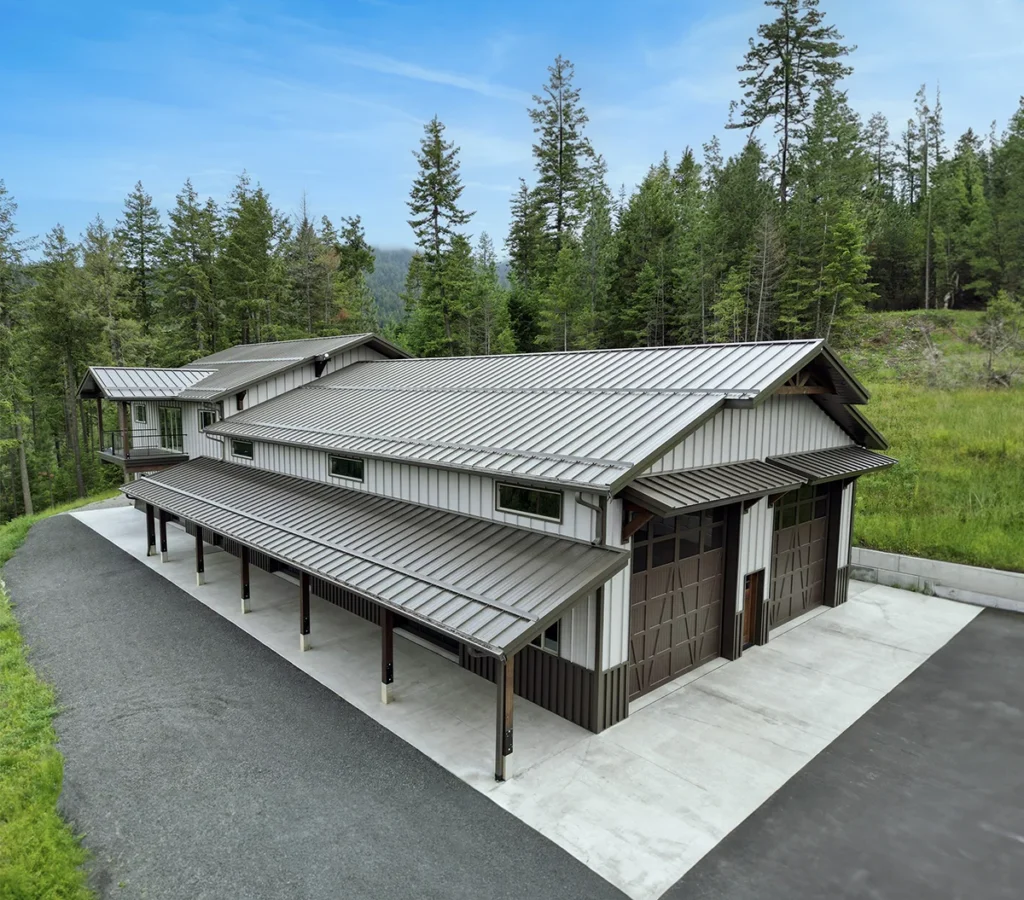
Two-tone metal siding is one of the defining features of the modern farmhouse exterior, and it is worth thinking through carefully before committing to a color combination. The goal is a pairing where the two colors are clearly related but clearly different, creating contrast without conflict.
| Color Combination | Character | Works Best On |
| White field / Charcoal trim and wainscot | Classic modern farmhouse, crisp and clean | Single-story homes, cottages, guest structures |
| Light gray field / Black trim | Contemporary and graphic, strong presence | Two-story homes, bold architectural massing |
| Warm tan or sand / Dark bronze trim | Earthy and rural, blends with natural landscapes | Rural sites, acreage properties |
| Soft green / White trim | Cottage character, gentle and approachable | Smaller homes, garden studios, detached garages |
| Barn red / Black trim | Traditional rural character, strong visual identity | Working properties, farms with agricultural context |
| Slate blue / White trim | Coastal and farmhouse hybrid character | Pacific Northwest sites, contemporary rural homes |
| Charcoal field / Wood-look accent panels | Contemporary and layered, design-forward | Barndominiums, custom homes, premium builds |
Getting the Details Right: Trim, Corners, and Transitions
The design ideas above only reach their potential if the execution is clean. On a metal siding exterior, clean execution comes down to the trim. Properly fitted corner trim, continuous drip edge at the top of wainscot sections, tight window and door surrounds, and coordinated base trim are the details that separate a polished modern farmhouse exterior from one that just has the right panel profiles.
Metal America provides matching trim packages in all panel colors. When you are planning a farmhouse exterior with multiple panel profiles or color zones, making sure your trim package accounts for every transition point before the panels go up is the step that prevents the most field headaches.
A few trim details worth thinking through specifically for a farmhouse exterior:
- Belt-course trim at the wainscot-to-field transition: This is the horizontal trim piece that defines the top edge of the wainscot. A dark belt course on a lighter field, or a light belt course on a dark field, becomes a clean horizontal line that reads from the road.
- Corner trim profile: On a farmhouse exterior where clean lines matter, the corner trim profile should be crisp and flush with the panel face rather than projecting or fussy.
- Window and door surrounds: Bold surrounds in a contrasting color around windows and doors reinforce the farmhouse character and give the wall openings a finished, designed quality.
Why Metal Delivers on the Modern Farmhouse Look
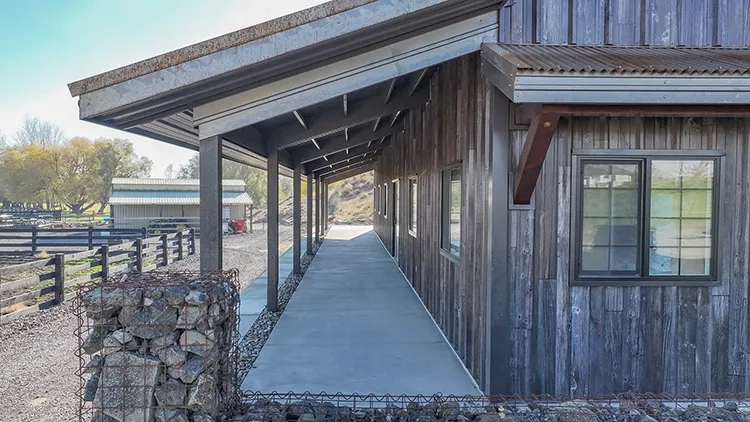
The modern farmhouse exterior is not just a visual style. It implies a set of values: durability, honest materials, connection to the land, and a rejection of the disposable. Metal siding, when it is done well, genuinely delivers on those values rather than just imitating them.
A board and batten metal exterior on a farmhouse home in northern Idaho or eastern Washington is the same material that has been used on working agricultural buildings in those regions for generations. It holds up in the rain, sheds snow, handles freeze-thaw cycles, and keeps its color across decades with the right coatings. The modern farmhouse look built from metal siding is not a trend chasing a style. It is using a material that was always appropriate for this architecture and finally getting the credit for it.
If you are working through exterior design decisions for a farmhouse home, barndominium, or rural property in the Pacific Northwest, Metal America’s team in Post Falls can help you match panel profiles, color combinations, and trim packages to the design you have in mind. Their panels are roll-formed locally, which means custom lengths and short lead times for projects across Idaho, Washington, Oregon, and Montana.
Get a Quote
Find the Best Panel for Your Next Project
Fill out the form below and our team will get back to you within 24 hours with pricing and availability.
E-mail
sales@metalamerica.com
Phone number
855-638-2587