
First Published: August 27, 2026 Last Update: August 27, 2026
Aluminum siding is a durable, low-maintenance alternative to wood, vinyl, and fiber cement. It won’t rot, dent easily, or fade as quickly as traditional siding materials, and it’s fireproof in a region where wildfire is a growing concern. But aluminum siding comes in multiple profiles and finishes, and not every choice works for every building. Here’s what you need to know to choose the right panel for your project.
What Is Aluminum Siding?
Aluminum siding is a thin sheet of aluminum, usually 0.024 to 0.032 inches thick, coated with a paint finish and installed vertically or horizontally on a building’s exterior. Aluminum doesn’t rust like steel, so it doesn’t need a substrate like Galvalume. It’s lighter weight than steel, which makes installation faster and cheaper, and it costs less per square foot than most premium siding materials.
Metal America manufactures aluminum siding at our Post Falls, Idaho and Spokane Valley, Washington facilities in multiple profiles and 40+ solid colors. We also offer wood-look prints for homeowners who want the durability of metal with the warmth of wood appearance.
Aluminum Siding Profiles and Styles
Aluminum siding comes in five basic profiles that each suit different aesthetics and building types:
Corrugated has visible ribs running along the panel and reads industrial or agricultural. It’s the most economical profile and works well on barns, sheds, and modern industrial homes.
PBR (Painted Ribbed) has taller, narrower ribs for a more refined look than corrugated. It suits both agricultural and residential applications and is the workhorse of metal siding.
Board and Batten uses vertical ribs spaced like traditional wood battens over flat panels, creating a farmhouse or contemporary look. It costs more than corrugated but reads more upscale.
Shiplap mimics the horizontal joints of traditional shiplap wood siding. It’s popular on barndominiums and modern farmhouses and works in vertical or horizontal orientation.
Flush Wall (also called Soffit) is a smooth, flat panel with no visible ribs. It’s the most expensive aluminum siding profile but delivers a clean, modern appearance.
Aluminum Siding vs. Steel Siding
The biggest difference: aluminum doesn’t rust. Steel needs a substrate like Galvalume or a paint system strong enough to protect bare metal. That adds cost and maintenance risk if the paint gets damaged. Aluminum siding only needs the paint finish itself.
Steel is tougher. A hail stone or impact will dent aluminum more easily than steel. If you’re in a high-hail region or you build in an industrial area where debris is common, steel might be the better choice. In the Pacific Northwest, where impacts are rare, aluminum is often the economical answer.
Cost-wise, aluminum is usually 10 to 20 percent cheaper than steel siding in the same profile and gauge.
Color and Finish Options for Aluminum Siding
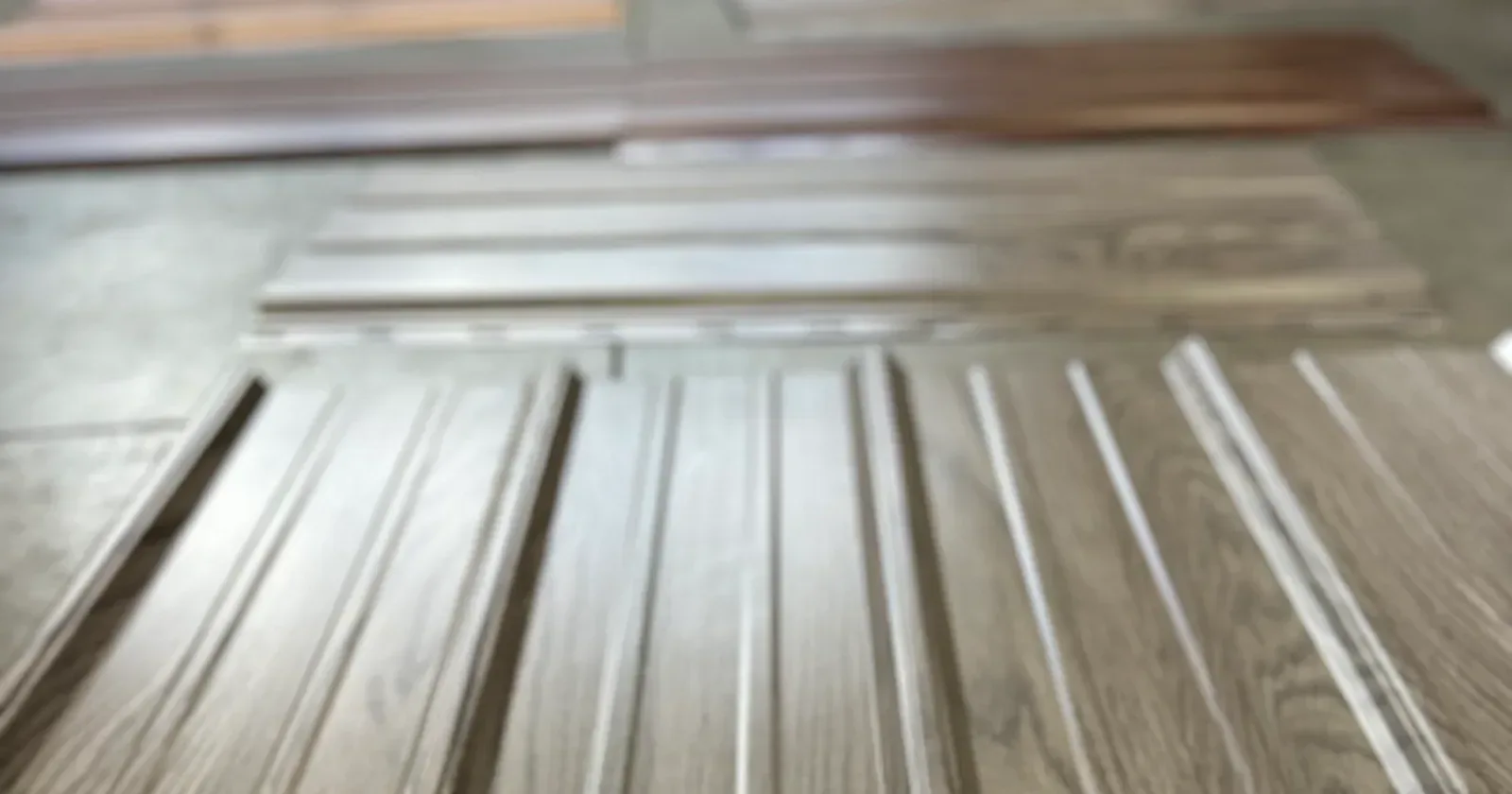
Aluminum siding comes in solid colors, metallic finishes, and wood-look prints. Solid colors work for any style. Wood-look finishes like Smooth Cedar, Barnwood, and Chippy White let you get the appearance of real wood without the rot and maintenance that comes with it.
Finishes vary by manufacturer. Premium paint systems last longer and fade less than basic ones. Metal America uses a polyester or SMP finish depending on your application, both backed by a 40-year paint warranty.
Durability and Weather Resistance
Aluminum siding lasts 30 to 40 years with minimal maintenance, and longer if you care for it. It won’t rot, warp, or split like wood. It resists impact better than vinyl but not as well as steel. Rain runs off quickly thanks to the smooth panel surface, and snow slides better than on wood or fiber cement.
In the wet Pacific Northwest climate, non-combustible siding like aluminum is a smart choice. It won’t absorb moisture the way wood does, so mold and mildew risk is low. And if you’re concerned about wildfire, aluminum is genuinely non-combustible, meeting ICC code requirements for fire-resistant construction.
Aluminum Siding Maintenance
Maintenance is straightforward. Rinse the panels annually to remove dirt and pollen, especially in the Pacific Northwest where damp conditions encourage organic growth. That’s it. No repainting, no sealing, no replacement pieces. The finish is built to hold color for decades.
If a panel gets dented, you can remove and replace just that section without disturbing the rest of the siding. That’s another advantage over some siding materials where damage means replacing a whole wall.
Cost of Aluminum Siding
Aluminum siding typically costs $3 to $6 per square foot delivered, depending on profile and finish. Installation adds $2 to $4 per square foot if you hire a contractor. Compare that to wood siding at $5 to $8 plus installation, vinyl at $3 to $5 plus installation, or fiber cement at $8 to $12 plus installation.
On a 2,000 square foot home, aluminum siding with installation might run $10,000 to $20,000. Wood or fiber cement runs higher. Vinyl runs lower but won’t last as long, so the cost per year of life is similar across materials.
Aluminum Siding for Commercial and Agricultural Buildings
Aluminum siding works just as well on barns, shops, and commercial structures as on homes. A corrugated or PBR profile in a neutral color is economical and durable on an agricultural building. Metal siding for pole barns is one of the most common applications, and aluminum is a popular choice because the lower weight reduces structural load and the cost is right.
Design Ideas and Color Pairings
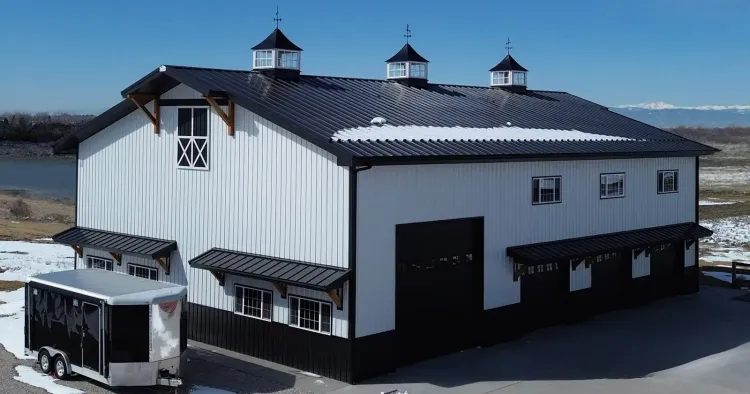
Aluminum siding pairs well with metal roofing panels in contrasting or coordinated colors. A white siding with a dark roof is classic. White siding with a charcoal or black roof reads modern and clean. For a monochromatic look, match the siding and roof color for a unified appearance.
Trim choices matter too. Metal trim in a contrasting color frames the siding, while matched trim creates a seamless look. Metal trim and flashing in white or a bright accent color adds definition, while trim that matches the siding recedes visually.
FAQ on Aluminum Siding
Is aluminum siding as strong as steel siding?
No. Aluminum is softer and dents more easily. Steel is stronger and resists impact better. For most residential and light commercial uses, aluminum is plenty durable, but if you’re concerned about impact damage, steel is the better choice.
Does aluminum siding need painting?
Not for at least 40 years, assuming quality paint when it’s made. If you want to change color sooner, you can paint aluminum siding, but it’s an expensive project and you’ll need to repaint it periodically after that.
Can I install aluminum siding over old siding?
Yes, over wood or vinyl, but not over asbestos siding (hazmat removal required). Remove any loose or rotted material underneath first. Aluminum siding is light enough that it won’t stress your framing if you install it over existing material.
Aluminum siding is a durable, affordable, and low-maintenance choice for residential and commercial projects across the Pacific Northwest. Metal America manufactures aluminum siding panels in multiple profiles and finishes, all designed for the wet climate and occasional harsh weather of Idaho, Washington, Oregon, and Montana. Get a quote or request samples, and we’ll help you find the right finish and color for your project.
]]>Get a Quote
Find the Best Panel for Your Next Project
Fill out the form below and our team will get back to you within 24 hours with pricing and availability.
E-mail
sales@metalamerica.com
Phone number
855-638-2587