
First Published: August 15, 2026 Last Update: August 15, 2026
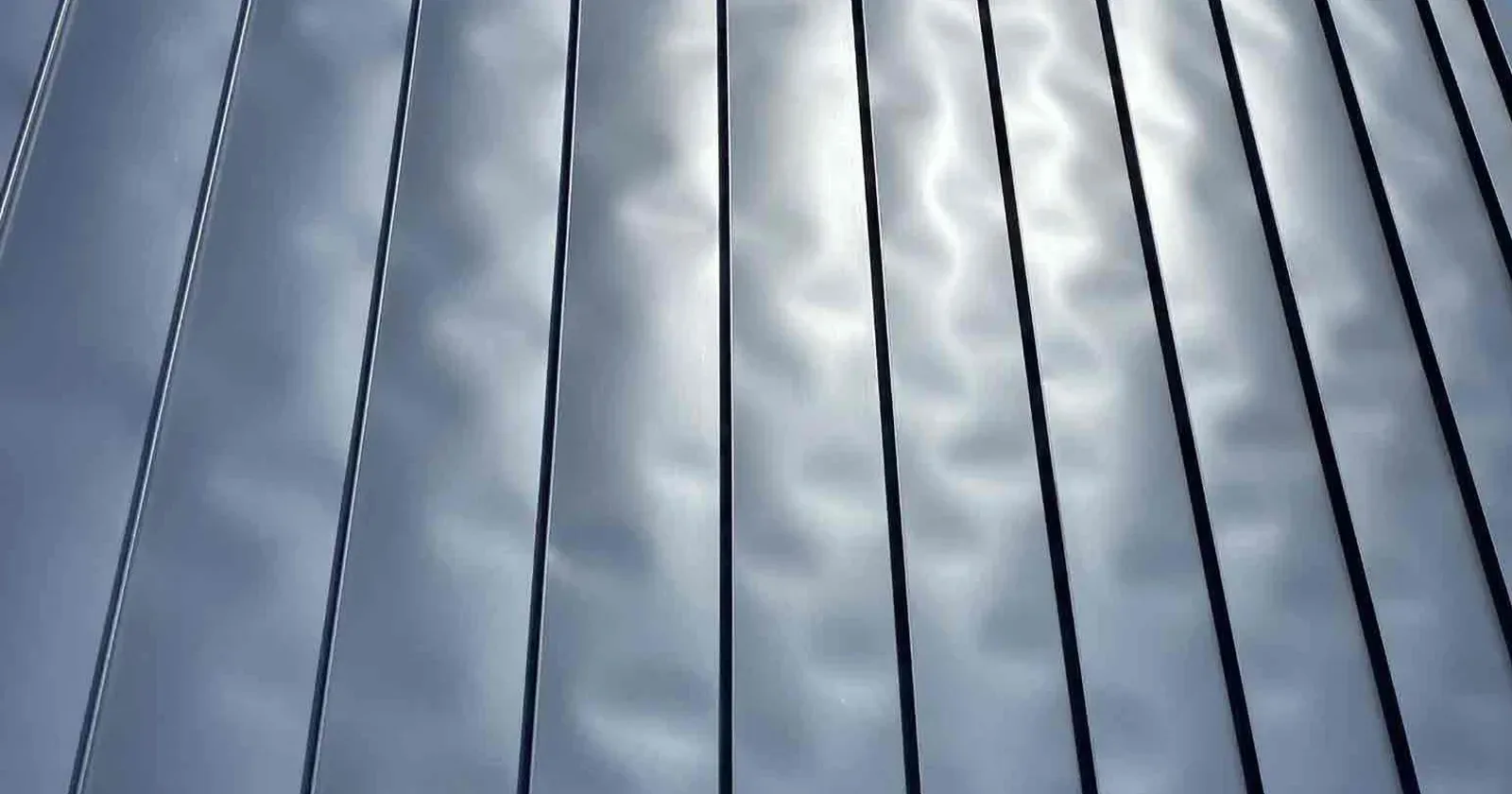
Oil canning is the gentle waviness you see in the flat part of a metal panel, usually when low light rakes across the roof. It’s an appearance issue, not a structural one. A panel showing it is still shedding water, still carrying snow, and still under its paint warranty.
That’s worth saying up front, because oil canning turns up on almost every flat metal panel ever rolled, including the expensive ones. It isn’t a sign somebody cut corners. What you can control is how much of it you notice, and that comes down to profile, gauge, color, and the crew doing the install.
What oil canning is, and what it isn’t
Steel wants to be flat, but it never comes off the coil perfectly flat. Any leftover stress in the metal shows up as a slight ripple once the panel is stretched across a roof and locked down. That ripple is oil canning. The name comes from the old-fashioned oil can with a bottom you could pop in and out with your thumb.
Here’s what it isn’t: a defect, a leak risk, or a warranty claim. Nearly every metal panel manufacturer in the country, ours included, treats it as an inherent characteristic of light gauge flat metal rather than a fault. If your installer told you the roof would be dead flat under every lighting condition, that was the wrong promise to make.
What causes oil canning
Stress in the coil
Steel coil is wound, unwound, slit, and formed before it ever reaches your roof. Uneven tension across the width of the coil, or a slight thickness variation, leaves stress in the metal that releases as waviness later. Better coil and a well maintained roll former reduce it, and this is one reason we roll our own panels in Post Falls instead of drop shipping somebody else’s.
The substrate underneath
Panels telegraph whatever they’re sitting on. A deck with a high seam, a purlin that’s out of plane, a bowed rafter, or a lumpy layer of underlayment will all print through the panel. On a re-roof over existing decking, this is usually the single biggest cause.
Fastening and installation
Over-driven screws pull the panel down into a dimple. Clips set too tight on a standing seam roof stop the panel from moving. Panels forced into alignment because a run started out of square end up carrying that stress the whole way up the roof. None of this is exotic, it’s just craftsmanship.
Thermal movement
A dark roof in July moves a lot. If a standing seam system can’t float, that expansion has nowhere to go and shows up as waviness. This is why concealed clip systems are designed to slide, and why pinning one down in the wrong spot causes trouble.
Which panels show it most
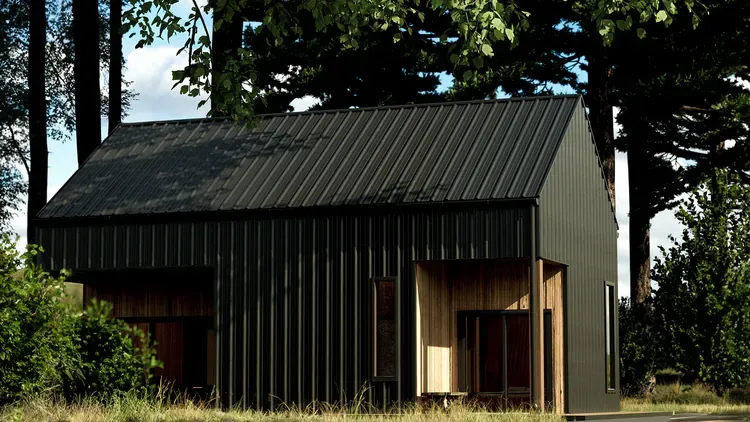
Wide, flat areas show oil canning. Broken up surfaces hide it. That single rule explains most of what you’ll see in the field.
-
Standing seam shows it the most, because the pan between the seams is a broad flat plane. Our QuickLoc standing seam panel and the Snap Lock profiles all fall in this group.
-
Exposed fastener ribbed panels like Tuff Rib and PBR show less, because the ribs are closer together and break the surface up.
-
7/8″ Corrugated shows the least of anything we roll. There’s no flat area for a ripple to live in. If you want to compare the profiles head to head, our guide to corrugated vs ribbed metal panels lays them out.
Narrower panels also help. A 16″ wide standing seam pan gives waviness less room to develop than a 20″ pan of the same steel.
How to keep oil canning to a minimum
Add striations or a pencil rib
Striations are the light ribs rolled into the flat of a standing seam pan. They stiffen the pan and break up the reflection, which is the most effective single thing you can do. If your roof is going to be highly visible, ask for them.
Go up a gauge
Heavier steel resists deformation better. We roll 22, 24, 26, and 29 gauge. 26 gauge is our most popular, and 24 gauge is the best balance of strength and cost for most jobs. On a prominent standing seam roof, 24 gauge is money well spent.
Pick a finish that hides it
Gloss is the enemy here. A high gloss dark color acts like a mirror and shows every ripple, while a low gloss or matte finish scatters the light instead of reflecting it. Lighter colors and textured finishes hide it best. If you’re weighing colors, our guides to popular dark metal roof colors and the full steel roof panel lineup are a good place to start.
Get the deck flat first
No panel fixes a wavy substrate. Shim, plane, or re-sheet before the metal goes on. On a re-roof, take the time to check the plane of the existing deck rather than assuming it’s still true.
Hire a crew that’s done it before
Correct screw torque, clips that are allowed to float, square starting runs, and careful handling on the ground all matter. We roll the steel and don’t install it, so our advice on vetting a steel roofing contractor is neutral. Ask to see a standing seam roof they finished a couple of years ago and look at it in low afternoon light.
FAQ
Is oil canning covered under warranty?
Almost never. Panel and paint warranties across the industry treat it as an inherent characteristic of formed flat metal, not a manufacturing defect. Read the specific warranty you’re given before you order.
Does oil canning get worse over time?
It doesn’t progress the way rust or a failed fastener gasket does. It looks worse or better through the day as the sun angle and panel temperature change, which is why people often notice it weeks after the job is finished.
Can you fix oil canning on a roof that’s already installed?
Not really, and attempts usually make it worse. If it’s tied to a specific problem, like a screw driven through a high spot or a clip pinned wrong, correcting that one thing can help. Widespread waviness across a finished roof isn’t something you flatten out after the fact.
Does standing seam always oil can?
Some degree of it is normal on any flat pan system. Striations, a narrower pan, and heavier gauge together bring it down to the point where most people never notice.
The bottom line
Oil canning is cosmetic, it’s normal, and it’s largely predictable. If you’re putting a standing seam roof somewhere prominent, spec striations, step up to 24 gauge, pick a lower gloss color, and make sure the deck is flat before the first panel goes down. Do those four things and you’ve handled most of it. For the full picture on concealed fastener systems, see our guide to standing seam metal roofing.
We roll panels in Post Falls, Idaho and Spokane Valley, Washington, and we’re happy to talk profiles and gauges before you order. Give us a call or request free samples so you can see the finishes in real light.
For broader industry technical guidance on metal panel systems, the Metal Construction Association publishes reference material worth a look.
Get a Quote
Find the Best Panel for Your Next Project
Fill out the form below and our team will get back to you within 24 hours with pricing and availability.
E-mail
sales@metalamerica.com
Phone number
855-638-2587