
First Published: August 3, 2026 Last Update: August 3, 2026
Yes. Wood fences are a fire hazard, and the reason is more specific than “wood burns.” A wood fence is a continuous line of dry fuel that runs from the edge of your property directly to the side of your house. In a wildfire, that’s a delivery system.
How a wood fence puts a house at risk
Most homes lost in wildland-urban interface fires aren’t consumed by a wall of flame rolling through. They’re ignited by embers, which can travel a mile or more ahead of the fire itself and land in whatever will take them.
The sequence looks like this:
- An ember lands on a wood fence somewhere out on the property line.
- It smolders in a dry board, a gap, or accumulated debris at the base.
- The fence catches, and flame travels along it.
- It arrives at your siding, your deck, or your eaves, with flame contact right where the house is most vulnerable.
You cleared brush all summer to build defensible space. A wood fence walks fire straight across it.
Treated and stained wood doesn’t solve it
Pressure treatment protects against rot and insects. It does nothing meaningful for fire. Fire retardant treated lumber does help, but it slows ignition rather than preventing it, and the protection can fade with years of weather exposure.
Stains and sealers are worse than neutral. Many are oil-based and flammable in their own right.
What to do if you’ve got a wood fence now
If replacing the whole run isn’t in the cards this year, these help:
- Replace the last five feet where the fence meets the house with a non combustible section. That’s the single highest-value swap you can make, because it breaks the fuel path right where it matters.
- Clear debris from the base of the fence. Leaves and needles packed against the bottom board are ideal ember catchers.
- Move woodpiles, and keep vegetation off the fence line.
- Use metal gate hardware and posts when anything gets replaced.
CAL FIRE’s home hardening guidance covers the rest of the structure and is worth an hour of your time.
The replacement most people land on
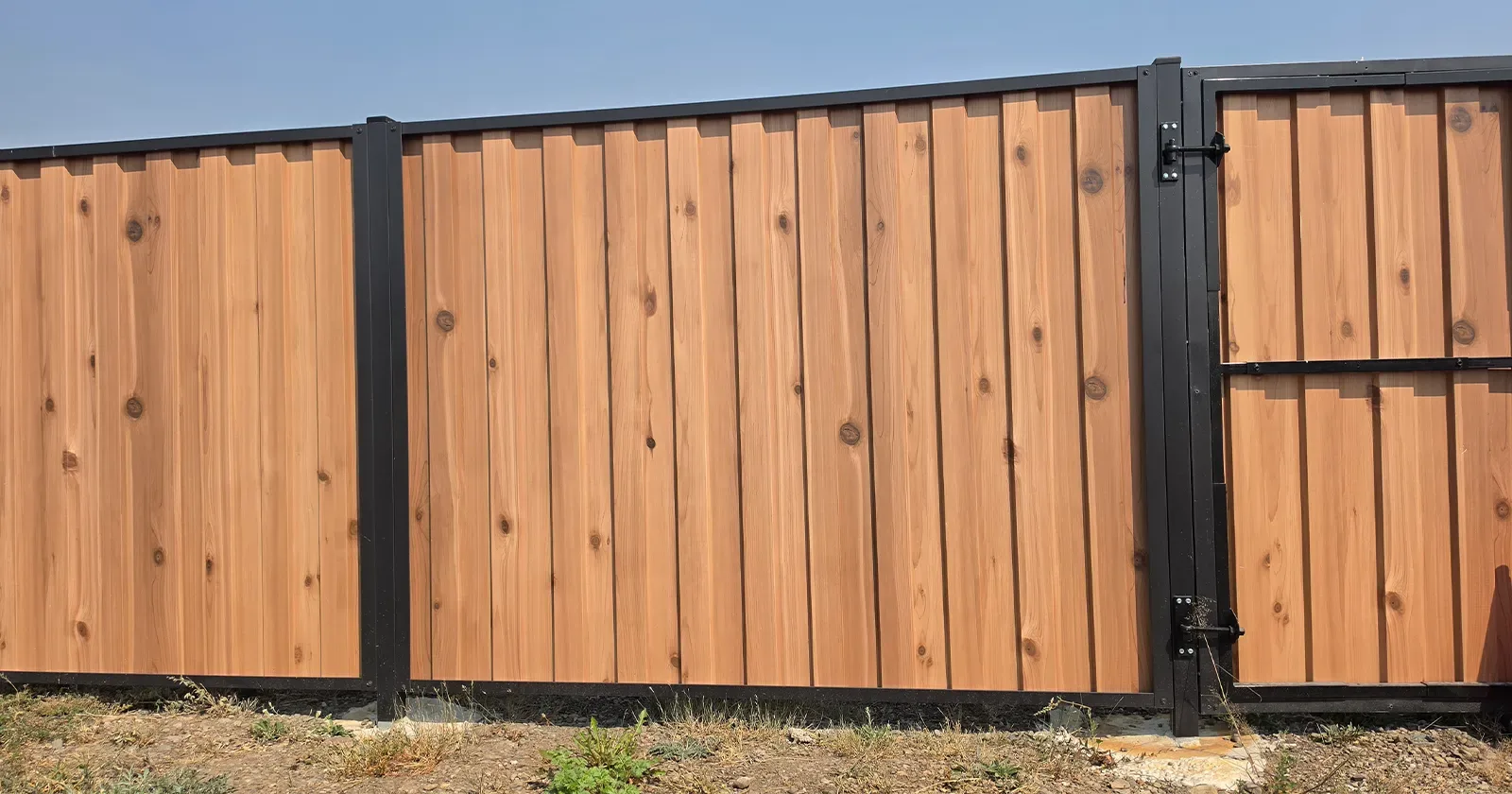
Steel. It’s non combustible, it’s Class A rated, and it won’t carry flame to your house. Our panels also carry a wood grain print on both sides of the steel, so you’re not trading the look of a cedar fence for a chain link one. If you’re weighing options, we compare every fence material in our guide to the best fireproof fencing, and there’s a full metal and wood fence breakdown covering cost and maintenance too.
Worth being straight about the limits: steel won’t burn, but it isn’t indestructible either. Our article on whether metal fencing is truly fireproof covers where that line sits.
The bottom line
A wood fence is a fire hazard, and it’s a hazard that points at your house. If you’re in fire country, that’s a good reason to build the next one out of something that won’t burn.
Take a look at profiles and finishes in our 3D fence builder, then request a free estimate or call us at 855-638-2587. We roll the panels ourselves in Post Falls and Spokane Valley, so you can get a straight answer about your specific property line.
Get a Quote
Find the Best Panel for Your Next Project
Fill out the form below and our team will get back to you within 24 hours with pricing and availability.
E-mail
sales@metalamerica.com
Phone number
855-638-2587