
First Published: August 3, 2026 Last Update: August 3, 2026
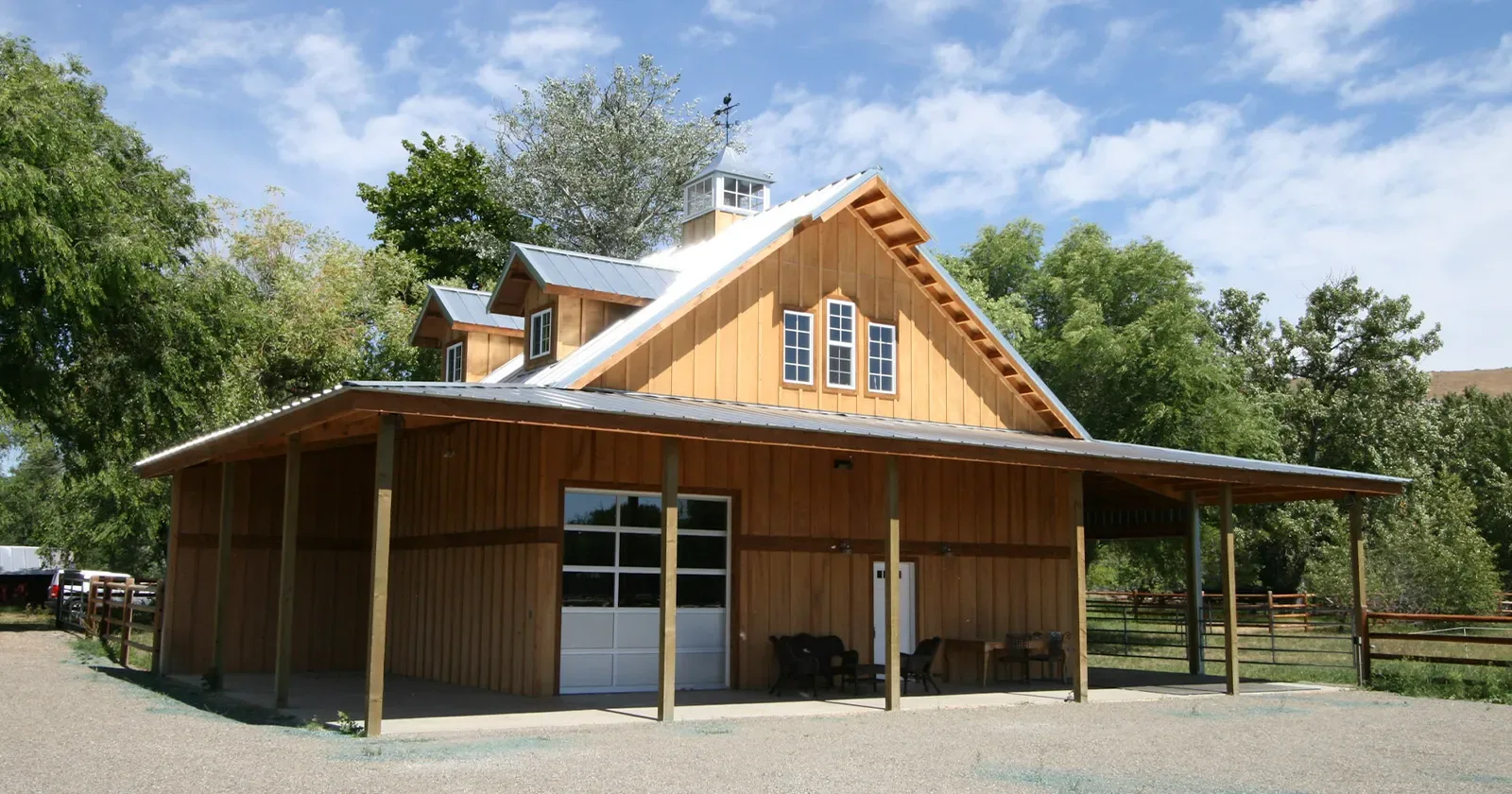
Non combustible siding is cladding that won’t ignite from embers or radiant heat, because there’s no fuel in it. Steel, brick, stone and stucco all qualify. Wood, vinyl, engineered wood and composite don’t.
If you’re re-siding a house in fire country, that distinction does more work than almost any other choice you’ll make on the exterior.
Why siding is an ember problem, not a flame problem
Houses in wildland-urban interface fires usually don’t burn because a wall of flame arrived. They burn because embers arrived first, sometimes a mile ahead of the fire, and found something willing to catch.
Siding is a large, vertical, continuous surface. When embers pile up in a corner, at a joint, or behind trim, combustible siding gives them somewhere to work. Non combustible siding gives them nothing. That’s the whole mechanism.
Radiant heat is the second half of it. A neighbor’s house or a fence burning 30 feet away puts out enough heat to ignite wood or melt vinyl without any direct flame contact. Steel doesn’t care.
The options, ranked honestly
| Material | Non combustible? | Tradeoff |
|---|---|---|
| Steel | Yes | Needs a competent installer for a clean result |
| Brick / stone | Yes | Highest cost, structural considerations |
| Stucco | Yes | Cracks in freeze-thaw climates, needs upkeep |
| Fiber cement | Close, not technically | Heavy, needs repainting, contains cellulose |
| Engineered wood | No | Combustible despite the marketing |
| Vinyl | No | Melts and deforms before it even burns |
| Wood | No | The material we’re all trying to move away from here |
Fiber cement deserves a note. It contains cellulose fiber, so it often doesn’t pass the ASTM E136 test that defines non combustible, but it performs well enough in practice that codes accept it broadly in fire-exposed areas. It’s a reasonable choice. It’s just not the same category as steel, and it’s a lot heavier to hang. Our three-way comparison of metal, wood and fiber cement siding gets into the full picture on cost and maintenance.
Steel siding without the industrial look
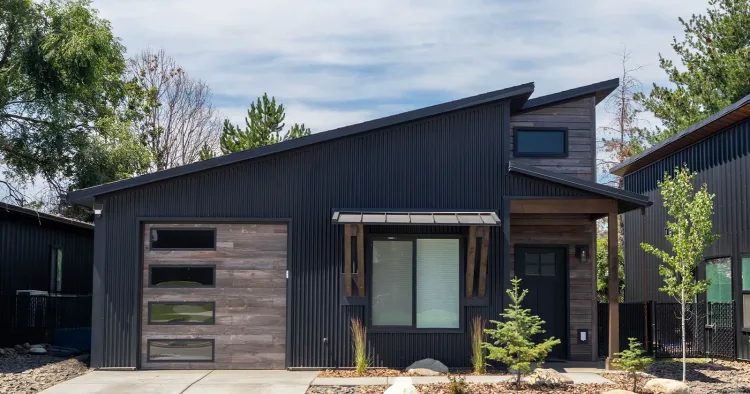
The old objection to steel siding was that it looked like a warehouse. That’s no longer the tradeoff.
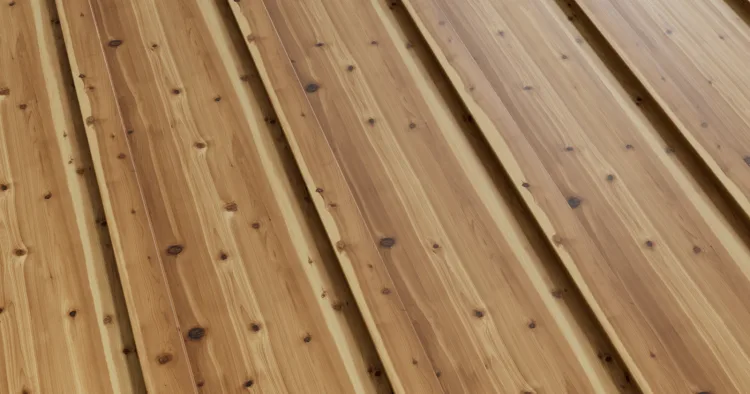
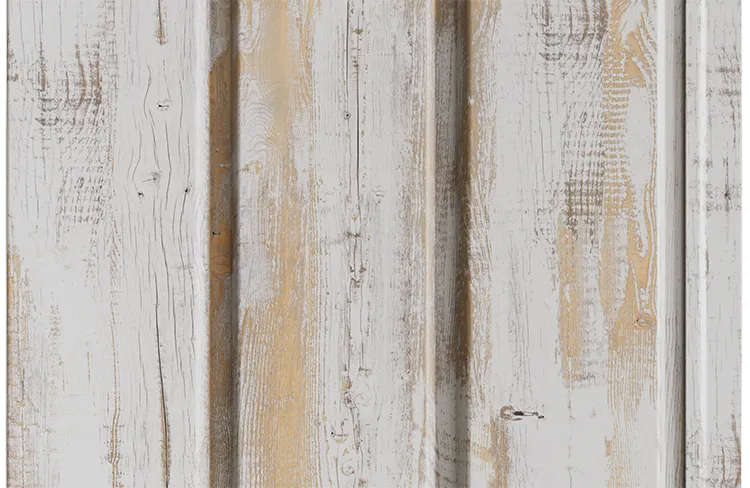
Our wall panel profiles cover a lot of ground: Board and Batten, Shiplap, Flush Wall, Double Lap, and the exposed fastener profiles like Tuff Rib and 7/8 inch Corrugated. Finishes run to 44 solid colors plus eleven wood-look prints including Smooth Cedar, Barnwood, Walnut, Burnt Wood Charcoal, and Chippy White.
So you can build a modern farmhouse or a barndominium that reads as cedar board and batten from the driveway and is non combustible steel in the assembly. That’s a genuinely new option compared to what was available fifteen years ago.
On gauge: 26 is our most popular for siding, and 24 gives the best balance of strength and cost if you want more rigidity. Neither changes the fire story, since both are steel.
Siding is one layer, not the whole answer
We’d rather you hear this from us than find out the hard way. Non combustible siding won’t save a house that loses on the other fronts:
- Roof. The largest horizontal ember target you own. A metal roof is non combustible too.
- Vents. Embers get pulled into attics through unscreened vents constantly. Ember-resistant vents are cheap and high-value.
- Decks and fences. Both attach directly to the wall. A wood fence tied to steel siding still walks fire to your house, which is why we make non combustible fencing as well.
- The first five feet. Keep it clear of bark mulch, woodpiles, and shrubs.
CAL FIRE’s home hardening guide is the best free walkthrough of the full list.
If you’re rebuilding in the Spokane area
The fires that started in Spokane County on August 1, 2026 destroyed roughly 700 structures and displaced about 65,000 people. Many of those families are still waiting to get back to their properties.
When rebuilding does start, material choice is one of the few parts of the process that’s fully within your control. Our Spokane Valley location is at 13520 E Nora Ave, and we roll panels in Post Falls. If you’re at that stage and want to look at options in person, come by or call.
The bottom line
Non combustible siding means steel, brick, stone or stucco. Steel gives you the fire performance without the weight, the cost, or the maintenance of the masonry options, and it now comes in finishes that look like the wood you’d otherwise have chosen.
Browse the full lineup in our guide to metal siding for homes, or see how it stacks up in our steel and wood siding comparison. When you’re ready to talk specifics, call 855-638-2587 or request a quote and free samples. Seeing a wood grain finish in your own hand is usually what settles it.
Get a Quote
Find the Best Panel for Your Next Project
Fill out the form below and our team will get back to you within 24 hours with pricing and availability.
E-mail
sales@metalamerica.com
Phone number
855-638-2587