
First Published: May 12, 2026 Last Update: May 12, 2026
Finding a reliable metal roofing panel supplier is one of the most consequential business decisions a roofing or general contractor makes, and it rarely gets the deliberate attention it deserves. Most contractors end up with their current supplier through convenience, a cold call, or whatever distributor was closest when they needed panels for their first metal job. That works until it doesn’t, and when a supplier lets you down on a job site, the fallout lands on you, not them.
This guide is for contractors who are either evaluating their first metal panel supplier or seriously considering a switch. It covers the criteria that actually matter, the questions worth asking before you place a first order, and the red flags that should send you looking elsewhere. At the end, we’ll explain specifically what Metal America offers contractors in the Pacific Northwest and how to get set up.
Why This Decision Matters More Than Most Contractors Realize
Panels are panels, right? Not quite. Metal roofing panels look similar on a spec sheet, but the supply relationship behind them has real consequences for your business that don’t show up until something goes wrong.
A Panel Order Gone Wrong Affects Your Client Relationship, Not Just the Job
When panels arrive late, arrive in the wrong lengths, or arrive in a color that doesn’t match what was ordered, you’re the one explaining it to the building owner or homeowner. The supplier doesn’t attend that conversation. You do. And in a relationship business like contracting, that kind of friction costs you referrals and repeat work long after the specific job is finished.
Panel Quality Affects Your Warranty Exposure
If a panel coating fails prematurely, a fastener hole leaks, or a panel profile is inconsistent enough to create installation problems, the warranty claim comes back to the installing contractor first. A supplier whose panels are backed by a genuine manufacturer warranty from a recognized coating manufacturer gives you a defensible position. A supplier who can’t name their coating system or doesn’t carry a meaningful paint warranty leaves you exposed.
Lead Time Reliability Affects Your Scheduling Credibility
Contractors build reputations around their ability to hit schedules. When a supplier quotes you a 10-day lead time and delivers at 18 days without warning, you’ve either broken your promise to a client or you’ve been scrambling to fill the gap in a way that costs you money. Supplier lead time reliability is directly connected to your professional credibility on every job.
The Evaluation Framework: What to Look For
Here is a practical framework for evaluating any metal panel supplier before committing to a first order.
1. Do They Manufacture In-House or Distribute From Elsewhere?
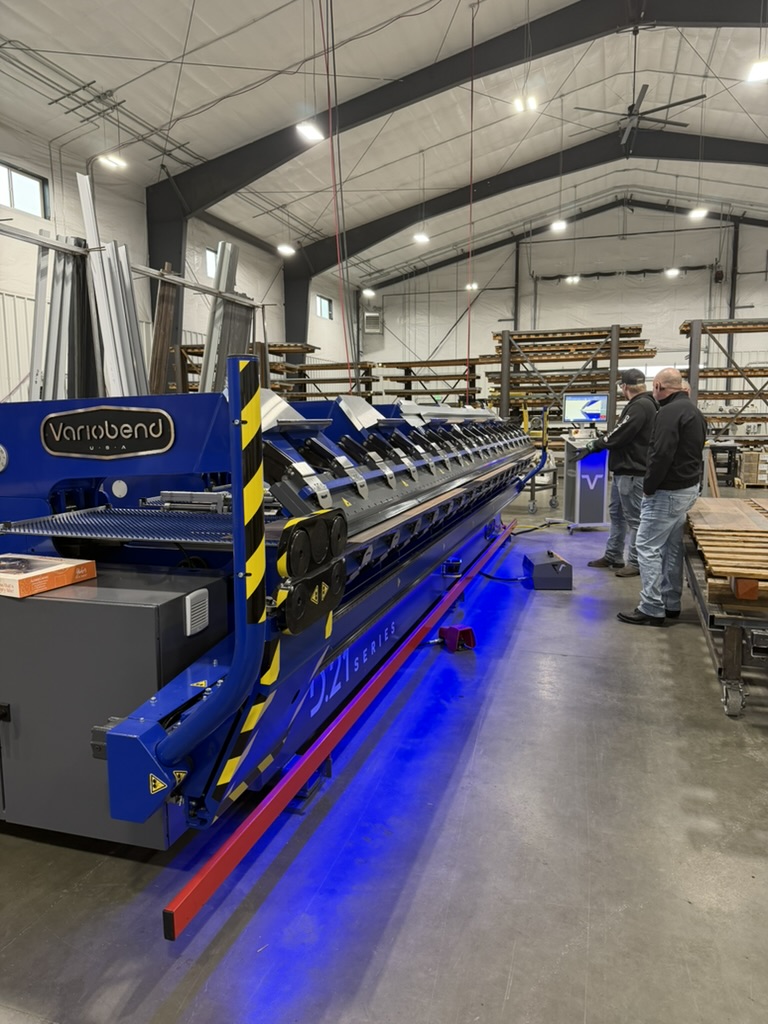
This is the most important question to ask, and the answer changes everything about how the supply relationship works. A manufacturer who forms panels in-house controls the production process directly. If there is a problem with a panel, they can address it quickly. If you need a custom length, they can form it. If you need a specific run of panels for color consistency, they can manage that through a single production run.
A distributor re-orders panels from a distant manufacturer and resells them. They have less control over production timelines, less ability to customize, and less accountability when something goes wrong because the problem originated upstream of them. For contractors, in-house manufacturing is the meaningfully better setup.
- Ask directly: Do you form your own panels, or do you source them from a mill?
- Follow up: Where is your forming equipment located?
- Red flag: Vague answers, references to multiple mills, or inability to tell you where panels are physically made.
2. Can They Cut Panels to Custom Lengths?
Metal roofing panels for residential and commercial applications almost always need to be cut to specific project dimensions. Fixed-length panels that you cut on site introduce waste, create potential for error on site, and add labor time. A supplier with custom-cut capability produces panels to your exact measurements, which simplifies installation and improves the finished product.
- Ask: Can you cut panels to the exact lengths I specify per project?
- Ask: What is your maximum panel length?
- Red flag: Fixed-length panels only, or significant minimums on custom-cut orders that don’t fit a typical project scale.
3. Do They Supply a Complete Trim Package in Matching Colors?
A roofing job is not just panels. Ridge cap, rake trim, eave trim, hip and valley flashing, and transition pieces all need to be present, correctly detailed, and color-matched to the field panels. A supplier who only sells panels forces you to source trim elsewhere, which introduces color matching risk and splits your procurement across multiple vendors.
- Ask: Do you supply trim and flashing components for all your panel profiles?
- Ask: Do trim and panels come from the same production run and color batch?
- Red flag: Trim available only in standard colors, not matched to panel production. Or no trim supply at all.
4. What Coating System Do They Use and What Warranty Backs It?
The coating on a metal panel is not a minor detail. It determines how long the panel holds its color, how it performs in UV exposure, and whether you have a defensible warranty position if a client calls years after installation with a finish complaint. The industry standard for quality coatings is a named paint system from a recognized coatings manufacturer backed by a written warranty.
- Ask: What paint system is on your panels?
- Ask: Who manufactures the coating and what warranty covers it?
- Ask: Is the warranty transferable to the building owner?
- Red flag: Generic or unnamed coating systems. Warranties shorter than 25 to 30 years on standard colors. Inability to provide warranty documentation.
5. What Are Their Actual Lead Times and How Do They Communicate Changes?
There is a difference between the lead time a supplier quotes to win your business and the lead time they actually deliver against consistently. The only way to know which you’re dealing with is to ask specifically and then verify with other contractors who use them.
- Ask: What is your current lead time for a standard panel order?
- Ask: What is your lead time for custom colors or specialty finishes?
- Ask: How do you communicate if lead times change after an order is placed?
- Red flag: Vague lead time ranges rather than specific commitments. No proactive communication process for delays. Other contractors reporting consistent misses.
6. Do They Offer Contractor-Specific Pricing?
A supplier who treats a roofing contractor placing regular orders the same as a homeowner buying panels for a single project is not set up to be a serious supply partner for your business. Contractor pricing that reflects your volume and repeat business relationship is a standard expectation, not a special ask.
- Ask: Do you have a contractor pricing program?
- Ask: How does pricing work for repeat accounts vs. first-time orders?
- Red flag: One-size-fits-all pricing with no accommodation for contractor relationships.
7. Do They Know the Region You Work In?
A supplier who understands your climate, your local code environment, and the specific applications you’re working on is more useful than one who treats every order as a generic transaction. In the Pacific Northwest, that means a supplier who understands snow load considerations, the wind exposure zones common in Idaho and Eastern Washington, the prevalence of barndominium and agricultural projects in the region, and the specific panel profiles those applications demand.
- Ask: Who are your typical contractor clients in this region?
- Ask: Are you familiar with local building code requirements for metal roofing in Idaho / Washington / Oregon / Montana?
- Red flag: No meaningful knowledge of your region’s climate or code requirements. Sales pitch that sounds identical to what any national distributor would say.
Red Flags That Tell You to Keep Looking
| Red Flag | What It Usually Means |
| Cannot tell you where panels are manufactured | Distributor, not manufacturer. Less control, more delays. |
| No named coating system or warranty | Low-cost panels with an unverifiable finish claim. |
| Vague or shifting lead times | Production or logistics problems they’re not disclosing. |
| No trim supply capability | Incomplete supply relationship. Sourcing risk on every job. |
| No contractor pricing program | Not set up to be a real supply partner for your business. |
| No proactive communication on order changes | You find out about problems when it’s too late to adjust. |
| Can’t reference other contractor clients in your region | Limited regional experience or no existing contractor relationships. |
| Minimum order sizes that don’t fit typical project scale | Not designed for the residential and light commercial contractor market. |
Questions to Ask Before Placing a First Order

Beyond the framework above, here are specific questions worth asking any new supplier before committing to a first order on a real job.
- What is the gauge tolerance on your panels? How consistent is actual thickness to nominal spec?
- How do you handle a panel that arrives damaged or out of spec?
- Can I pick up will-call, or is everything delivered?
- Who is my specific contact for orders and questions; not a general customer service line?
- How do you handle a situation where a color is temporarily out of production?
- What is your process for matching panels on a phased project where panels are ordered in multiple stages?
- Do you offer on-site roll forming for large or remote projects?
Testing a New Supplier Before Going All In
If you’re switching suppliers and have an upcoming project, it’s worth placing a smaller first order to test the relationship before committing a large job to a vendor you haven’t worked with. This is not about distrust. It’s basic business practice. A small first order tells you a lot about how a supplier operates: how clearly they communicate, how accurate the panels are to spec, how the packaging arrives, and how responsive they are if you have a question during the order process.
Use the first order as a test of the process, not just the product. A supplier who impresses on a small order is almost certainly going to perform well on a large one. One who creates friction or delivers surprises on a small order is telling you something important about what larger orders will look like.
Why Metal America Is Built for Contractor Relationships
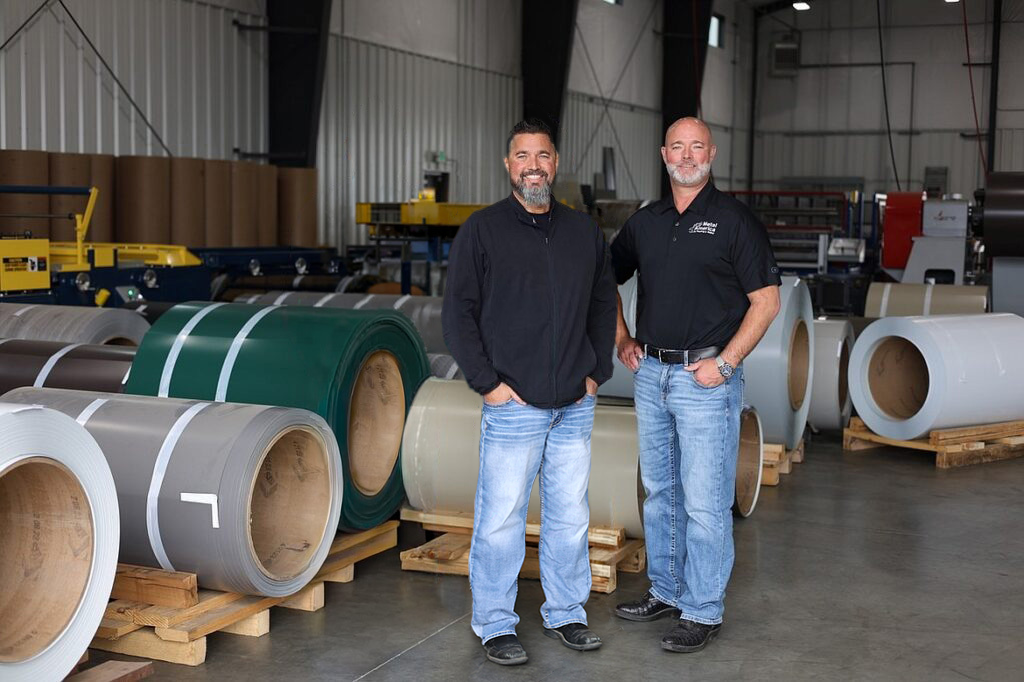
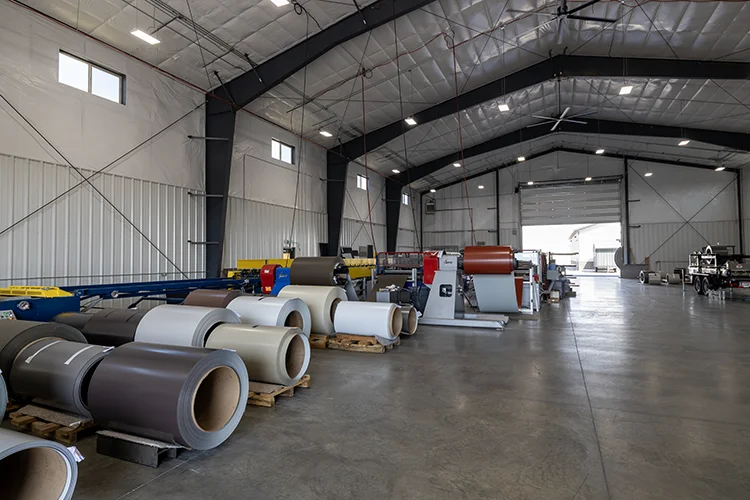
Metal America manufactures metal roofing and siding panels in-house at its Post Falls, Idaho facility, with a second location in Spokane Valley, Washington. The company works directly with roofing contractors, general contractors, barndominium contractors, and builder clients throughout Idaho, Washington, Oregon, and Montana.
Here’s how Metal America addresses each of the evaluation criteria in this article:
- In-house manufacturing: All panels are roll formed at the Post Falls facility. Metal America owns and operates its forming equipment.
- Custom-length capability: Panels are cut to exact project specifications. Maximum panel length of 45 feet on standing seam panels.
- Complete trim packages: Ridge, rake, eave, hip, valley, and transition trim available for all panel profiles in matching colors.
- Named coating system with documented warranty: Sherwin-Williams WeatherXL SMP coating with a 40-year paint warranty on standard colors.
- Consistent lead times with proactive communication: The team communicates lead time clearly at the time of order and proactively if anything changes.
- Contractor pricing: Contractor accounts are set up with pricing that reflects the relationship, not one-time retail rates.
- Regional expertise: Metal America serves Idaho, Washington, Oregon, and Montana and understands the specific climate demands, code environments, and project types common in the Pacific Northwest.
- On-site roll forming: Available for large or remote projects where factory delivery of long panels is impractical.
How to Get Set Up With Metal America
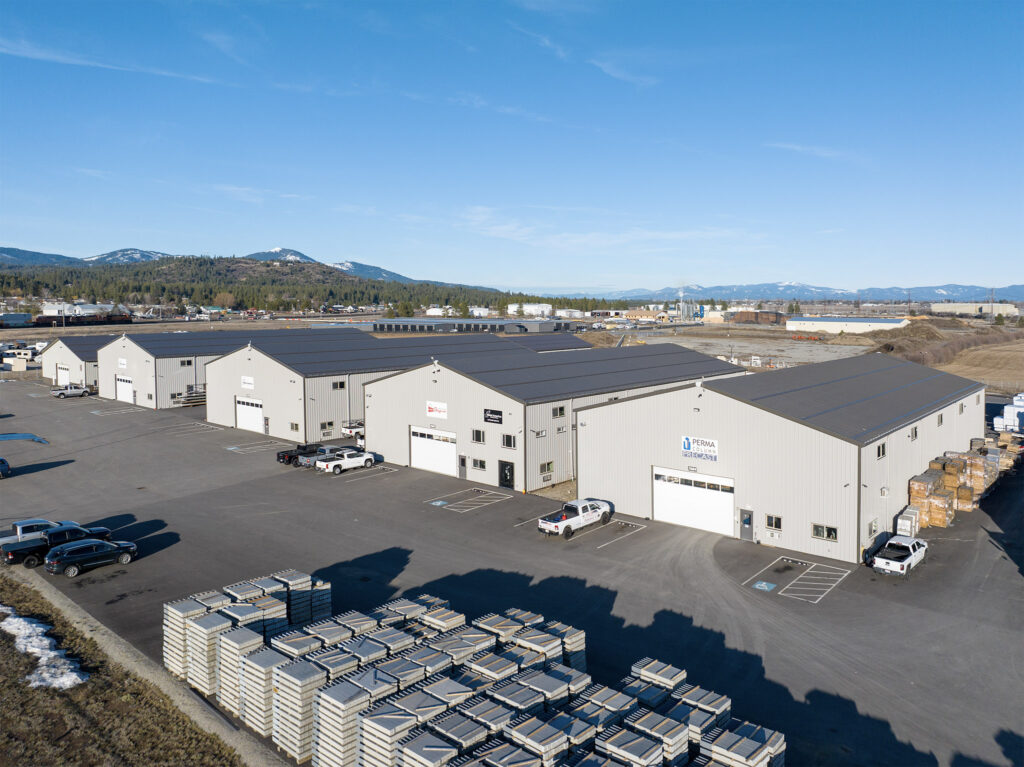
Roofing contractors, general contractors, and builder clients who want to discuss the Metal America supply relationship can reach the team at metalamerica.com or by calling the Post Falls or Spokane Valley facility directly at 855-638-2587. The team can walk through your typical project types, discuss panel options, confirm lead times, and get you set up with contractor pricing on your first order.
For contractors who want to evaluate a specific panel before committing to a full order, samples and spec sheets are available on request through the website.
Get a Quote
Find the Best Panel for Your Next Project
Fill out the form below and our team will get back to you within 24 hours with pricing and availability.
E-mail
sales@metalamerica.com
Phone number
855-638-2587