
First Published: April 7, 2026 Last Update: June 26, 2026
Standing seam vs. exposed fastener is the single most common question people ask when they start shopping for metal roofing panels. Both systems use steel panels. Both last significantly longer than asphalt shingles. But they work differently, they perform differently over time, and they are designed for different types of projects. Getting this choice wrong means either overpaying for a system you did not need or installing the wrong panel on a building where it is going to cause problems.
This article explains exactly how each system works and where each one belongs.
How Exposed Fastener Metal Roofing Works
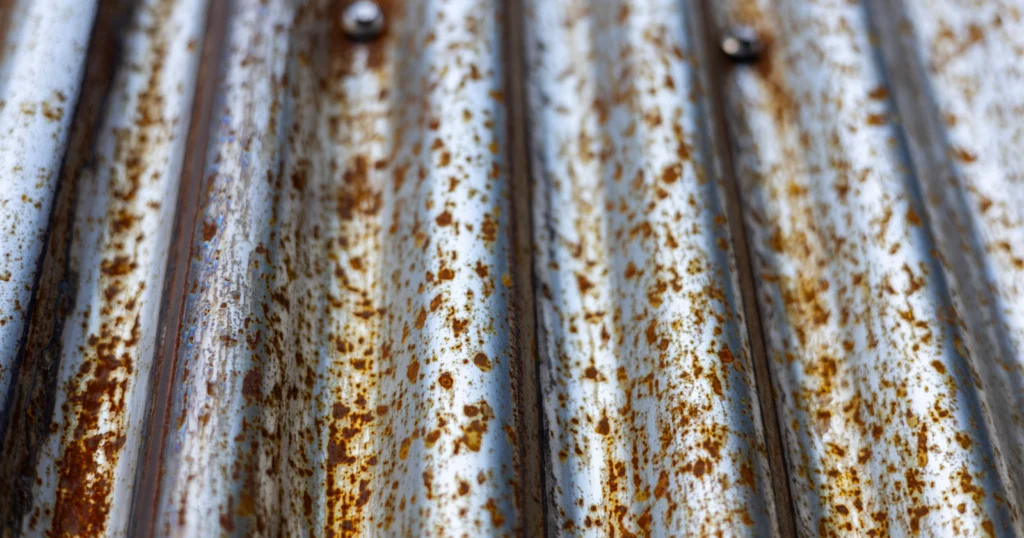
Exposed fastener panels are screwed down through the face of the panel directly into the roof deck or purlins beneath. The screw heads sit on top of the panel, visible from the outside. A neoprene washer under each screw head compresses against the metal to form a weatherproof seal around each penetration.
This is a fast system to install. It requires no special tooling, the panels lay flat and are straightforward to handle, and contractors who are new to metal roofing can get up to speed on it quickly. The material cost is lower than standing seam, and the installation time is shorter.
The tradeoff is long-term maintenance. Neoprene gaskets degrade over time, especially in climates with intense UV exposure, wide temperature swings, or heavy freeze-thaw cycles. As the gaskets wear, the seals around the fastener penetrations can loosen, which can allow water infiltration if the roof is not periodically inspected and re-fastened where needed.
The other factor worth understanding is thermal movement. Steel expands and contracts with temperature. On an exposed fastener system, the panels are fixed to the substrate through the face, which restricts that movement. Over years of thermal cycling, this can cause panels to slightly elongate the holes around fasteners, reducing the integrity of the seal. It is not a reason to avoid exposed fastener systems on the right project, but it is something to factor in when choosing a panel for a large commercial span or a high-performance residential application.
Exposed Fastener Panel Options from Metal America
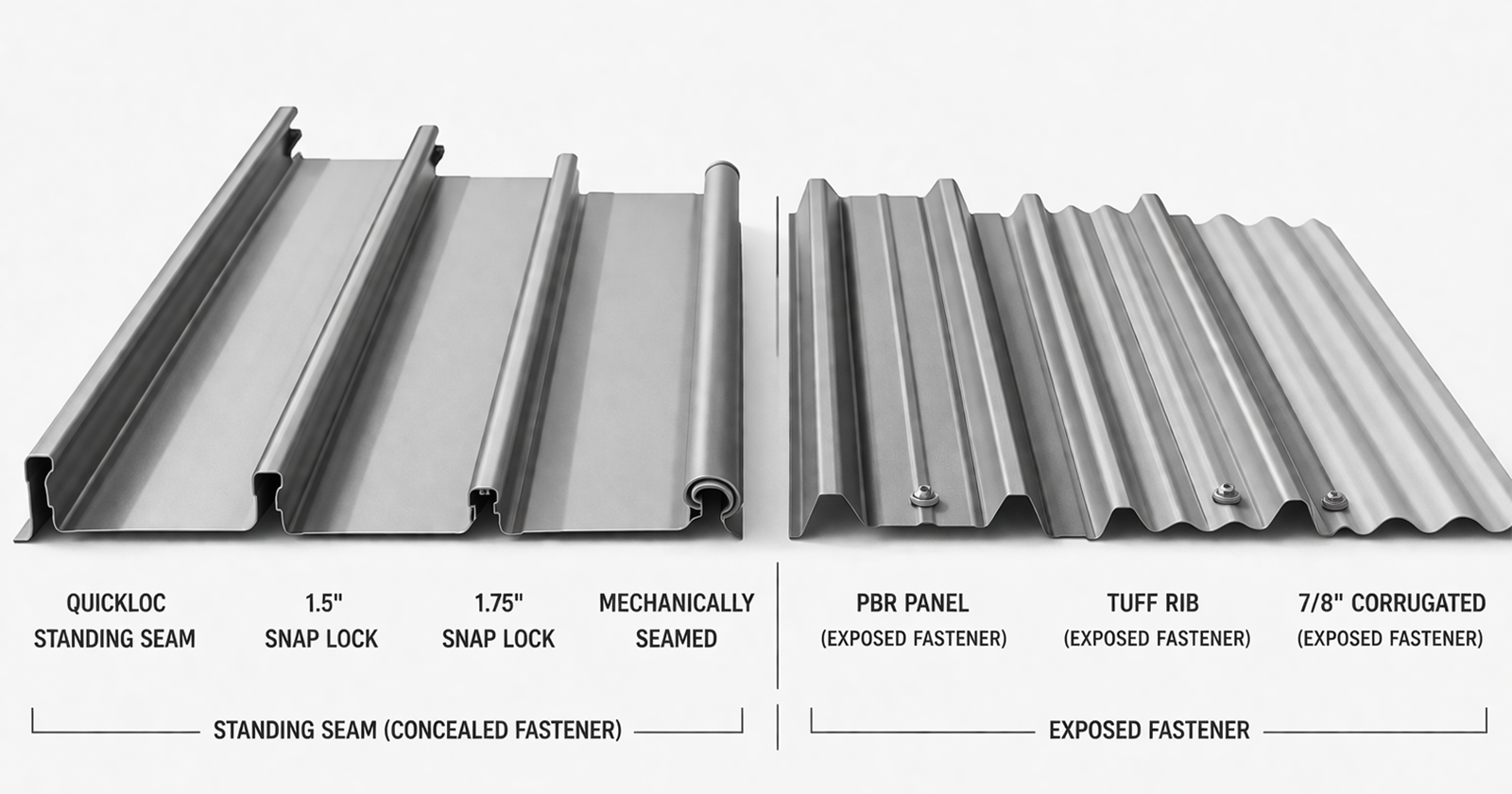
Metal America carries three exposed fastener panel profiles:
- PBR Panel: A purlin-bearing rib panel that is the industry standard for commercial and agricultural buildings. Strong, efficient, and widely used across Idaho, Washington, Oregon, and Montana.
- Tuff Rib: A ribbed panel popular for pole barns, farm shops, and agricultural storage. Similar performance to PBR with a slightly different profile.
- 7/8″ Corrugated: The classic corrugated wave profile, available in heavier gauges for agricultural and commercial use and lighter gauges for accent or design applications.
PBR is such a popular choice that we have an article specifically dedicated to comparing PBR panels vs standing seam.
How Standing Seam Metal Roofing Works
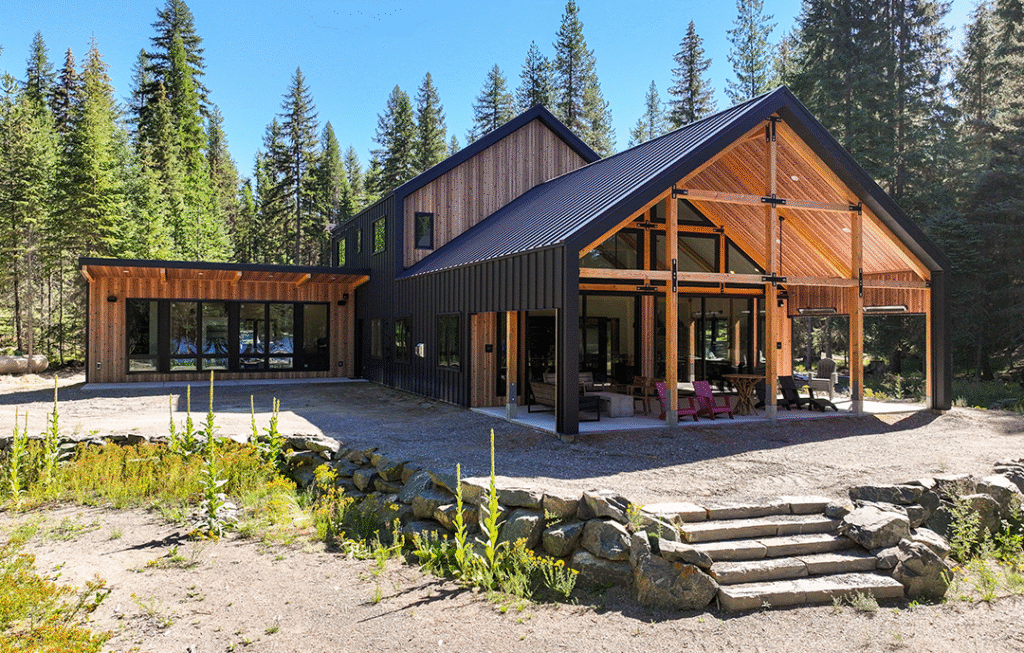
Standing seam metal roofing uses a completely different attachment method. Instead of screwing through the face of the panel, hidden clips are fastened to the substrate and the panel edges snap or lock over those clips at the raised seams. The fasteners are never exposed to the weather. The only thing visible from outside are the raised seams running vertically up the roof.
Because the panels attach through clips rather than fixed face screws, they are free to float and move slightly as the metal expands and contracts with temperature changes. This is called a floating clip system, and it is what allows standing seam to handle thermal movement without stressing the attachment points over time.

The result is a roof that is more watertight over its service life, requires less maintenance, and holds up better on large spans or in climates with significant temperature variation.
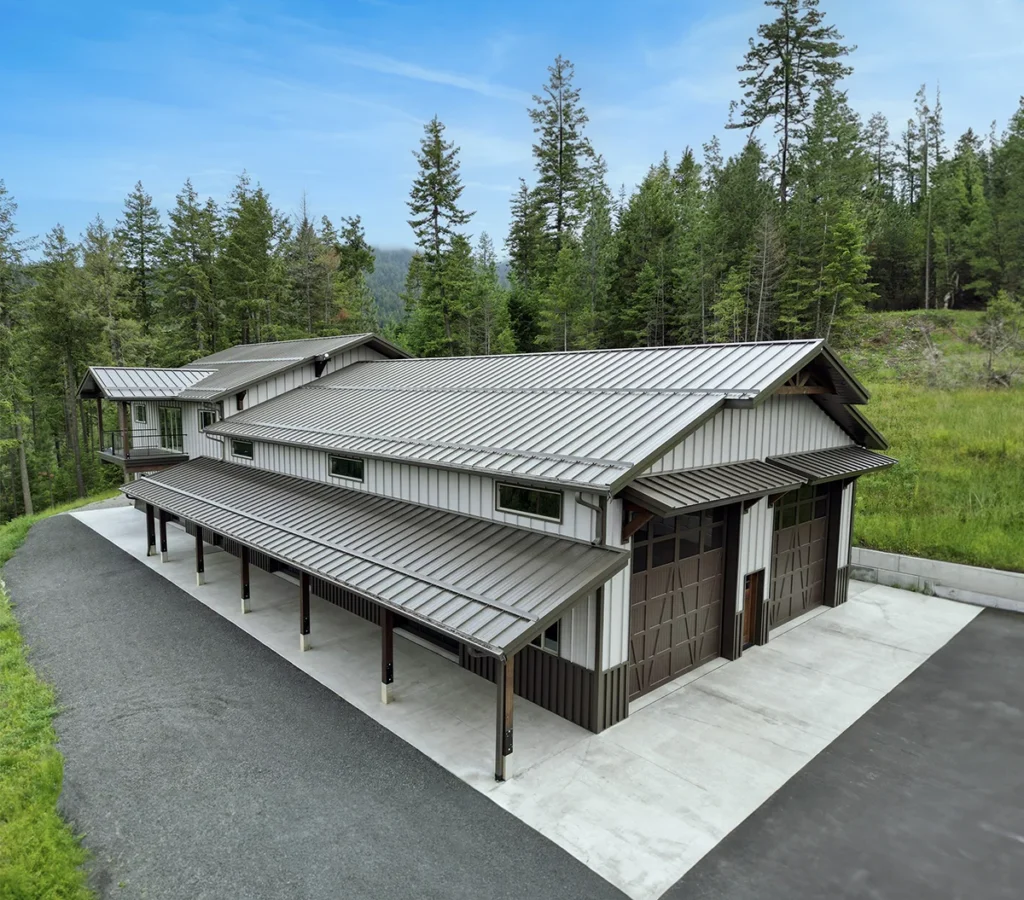
Standing seam also looks distinctly different. The clean raised seam lines and absence of visible fasteners give it the premium appearance that has made it the standard for custom homes, barndominiums, and high-end commercial buildings.
Standing Seam Panel Options from Metal America
Metal America carries four standing seam profiles:
- QuickLoc: The most popular standing seam panel in the lineup. A snap-together interlocking seam system available in 24 and 26 gauge. Fast to install without sacrificing performance. Best for residential, barndominium, and standard commercial applications.
- 1.5″ Snap Lock: A snap lock standing seam profile for standard residential and light commercial pitches.
- 1.75″ Snap Lock: A slightly taller seam profile, well suited to steeper residential roofs.
- Mechanically Seamed: The premium tier. A seaming tool rolls the panel edges into a folded mechanical lock, which is the most watertight connection available. Required for low-slope applications and large commercial spans. Available in 22 and 24 gauge.
We wrote a separate article to read about Quickloc Standing Seam panels in depth.
Side-by-Side Comparison
| Feature | Standing Seam | Exposed Fastener |
| Fastener visibility | Hidden inside seam | Visible on panel face |
| Thermal movement | Free-floating clips allow movement | Fixed through panel face; restricted movement |
| Installation speed | Moderate; clip-based system | Fast; straightforward screw-down |
| Material cost | Higher | Lower |
| Maintenance over time | Minimal | Periodic gasket inspection recommended |
| Low-slope suitability | Yes (mechanically seamed) | No |
| Appearance | Clean, modern, premium | Functional; visible screw pattern |
| Best for | Homes, barndominiums, commercial | Ag buildings, shops, pole barns |
| Gauge range (Metal America) | 22, 24, 26 | 26, 29 (22 available in corrugated) |
Which System Is Right for Your Project?
Choose Standing Seam If:
- You are building a custom home, barndominium, or residential structure where appearance matters.
- You want a long-service-life roof with minimal maintenance requirements.
- The roof will be on a large commercial or industrial span.
- The application is low-slope (use mechanically seamed specifically).
- The building is in a climate with wide temperature swings, like inland Idaho or Montana.
Choose Exposed Fastener If:
- You are building a pole barn, farm shop, agricultural storage, or equipment building.
- Budget and installation speed are the primary drivers.
- The building is a functional structure where premium aesthetics are not a requirement.
- You are comfortable with periodic roof maintenance over the building’s life.
What About Corrugated vs. Standing Seam?
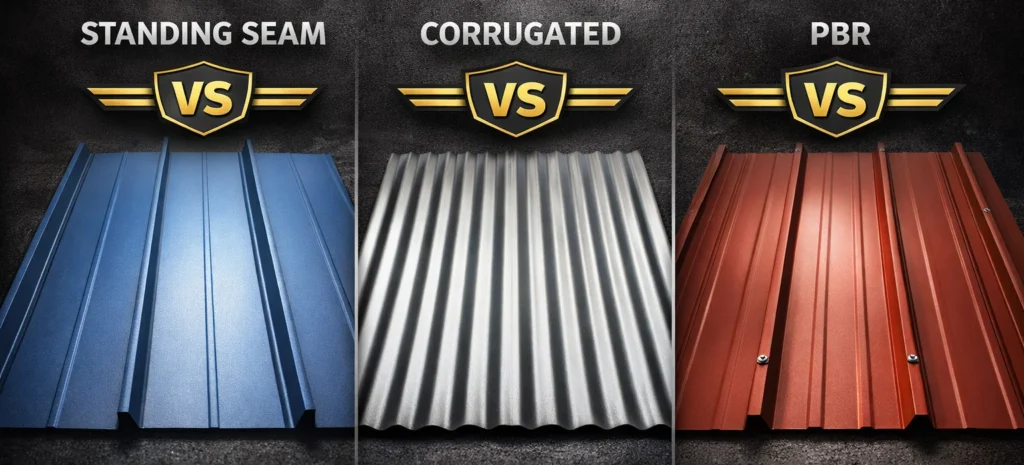
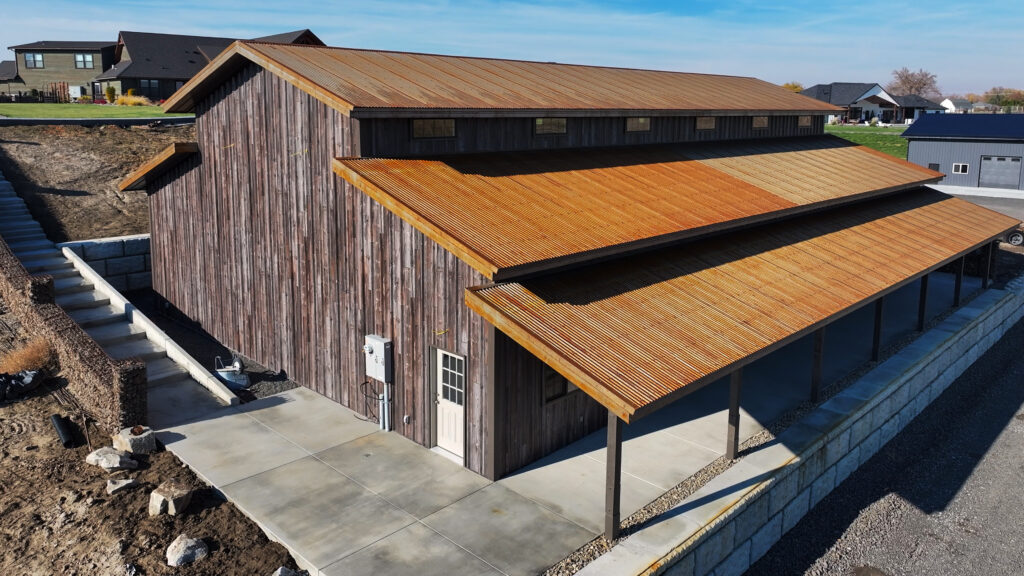
Corrugated metal panels are a type of exposed fastener panel, so the same comparison applies. Corrugated is a great choice for agricultural buildings, rustic or industrial design aesthetics, and budget-conscious projects where the classic ribbed profile is acceptable. Standing seam is the right call for projects where a cleaner look and concealed fastener performance are the goal.
For more info on the differences between these panels, see our article on the types of metal roofing panels.
A Note on Gauge
Whichever system you choose, gauge matters. Standing seam panels in 24 gauge are a meaningful upgrade over 26 gauge for any project where long-term performance is the priority. For exposed fastener agricultural panels, 29 gauge works well for lighter-duty applications and 26 gauge adds dent resistance and longevity on projects where the building will be in active use.
Ready to Choose Your Panel System?
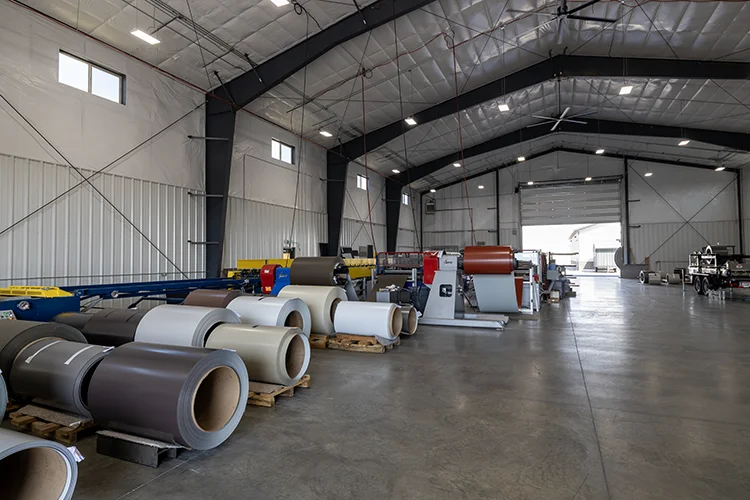
Metal America supplies both standing seam and exposed fastener panels from our manufacturing facility in Post Falls, Idaho. We fabricate panels to custom lengths for your project and supply the complete trim package to match. Contact us to discuss your project or read more about your metal roofing options here.
Get a Quote
Find the Best Panel for Your Next Project
Fill out the form below and our team will get back to you within 24 hours with pricing and availability.
E-mail
sales@metalamerica.com
Phone number
855-638-2587