
First Published: July 31, 2026 Last Update: July 31, 2026
Vertical metal siding runs top to bottom instead of side to side, and it’s become the default look on modern farmhouses, barndominiums, and shops across the Northwest. The short version: vertical panels shed water fast, emphasize height, and install efficiently over girts, which is why they dominate on post-frame buildings.
Here’s which profiles run vertically, where the look works, and how to decide between vertical and horizontal before you order.
Which profiles count as vertical metal siding
Not every wall panel runs the same direction, and the profile you pick largely decides the orientation.
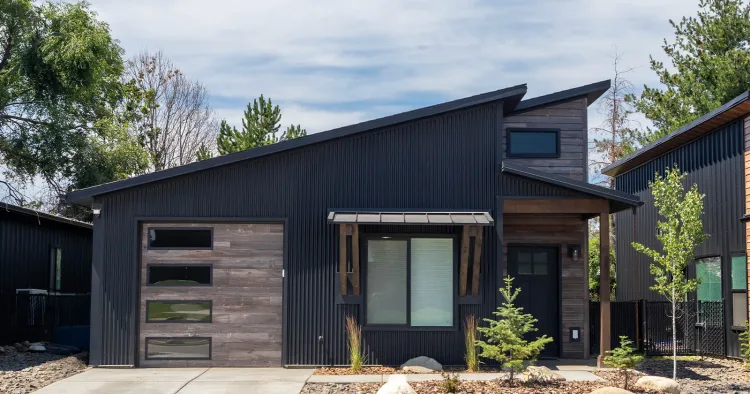
Board and Batten is the dedicated vertical profile, and it’s the one most people picture. Wide flat sections separated by raised battens, mimicking traditional milled board and batten woodwork. It’s the backbone of the modern farmhouse look. We’ve covered it in depth in our guide to board and batten metal siding, which is the place to go if you’ve already settled on this profile.
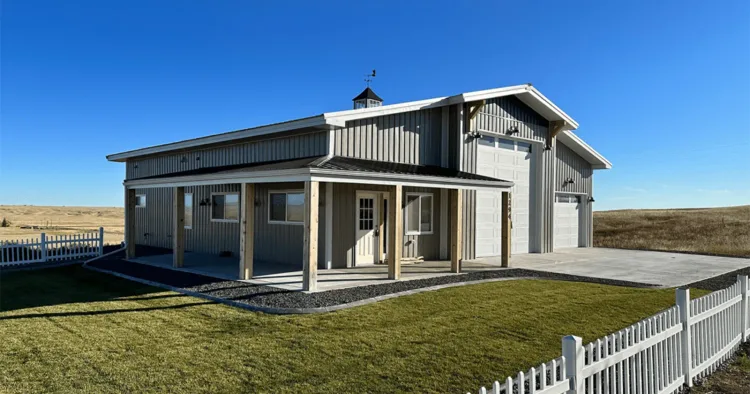
Ribbed exposed-fastener panels like Tuff Rib and PBR Panel are usually run vertically when they’re used as wall cladding on shops, ag buildings, and post-frame structures. They’re economical, fast to hang, and they carry the same finishes as the rest of the line.
Shiplap and Double Lap are the horizontal profiles. If you want the look of lapped wood siding running side to side, that’s where you go, and it’s a different aesthetic entirely.
Corrugated can be run either direction depending on the building and the look you’re after.
If you’re not sure which family you’re shopping in, our overview of metal siding panel types lays out the full range.
Why vertical panels perform well here
The Inland Northwest is hard on exteriors. Wet winters, dry summers, real snow load, and wildfire risk in a lot of the region.
Vertical panels give water a straight path down. There are no horizontal laps for water to sit in and work behind, which matters through a long wet season and through the freeze-thaw cycling that follows. On post-frame buildings, vertical panels also span horizontal girts directly, so you’re not adding furring just to hang siding.
Steel doesn’t rot, and it won’t feed a fire the way wood cladding does. If you’re weighing materials rather than orientations, our comparison of steel siding versus wood siding goes through durability and maintenance side by side.
Finishes: vertical doesn’t mean industrial
This is where a lot of people’s assumptions are out of date. Vertical metal siding doesn’t have to read as a farm building.
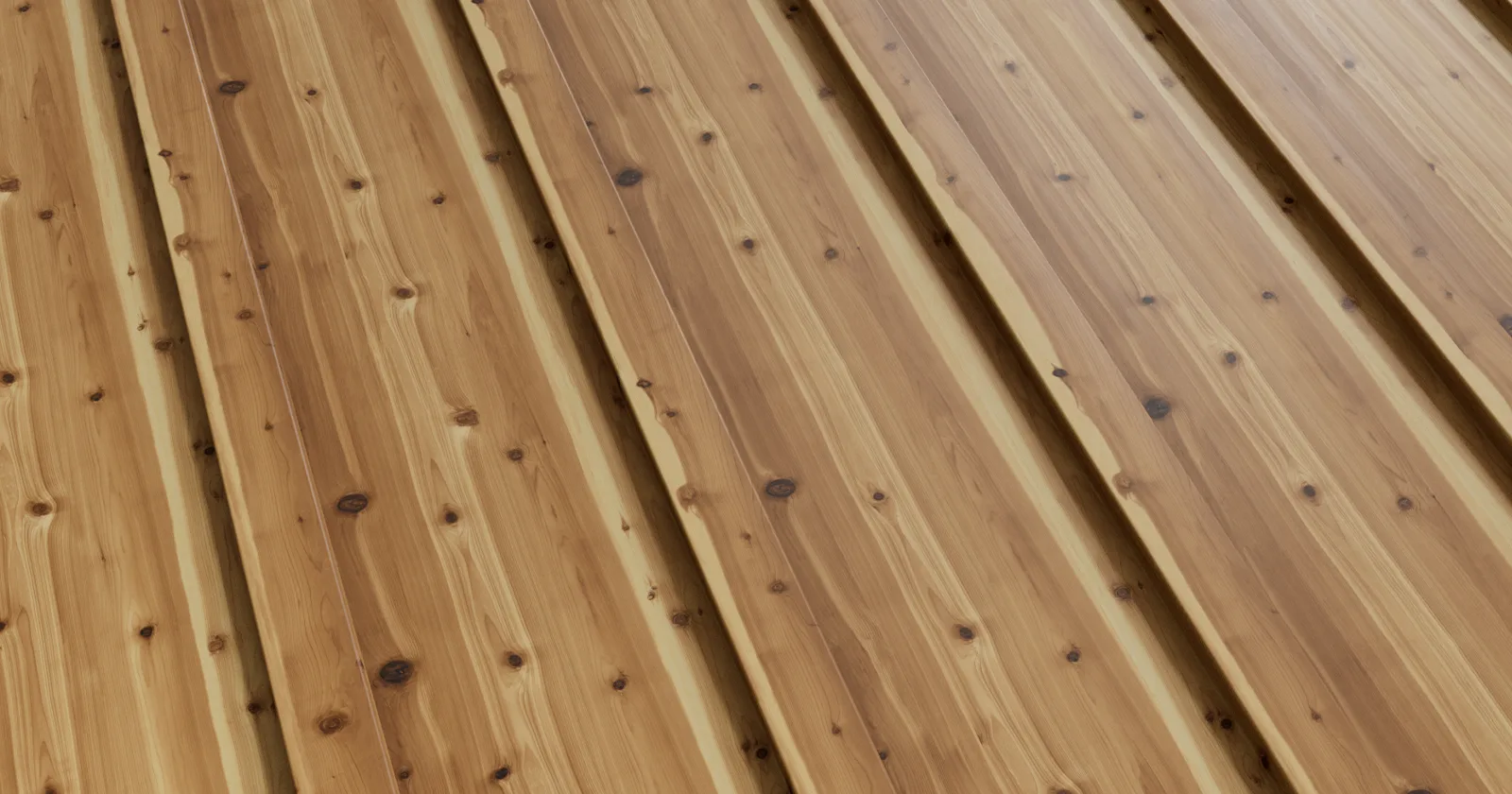
We offer 44+ solid colors plus a range of wood-look prints, including Smooth Cedar, Barnwood, Burnt Wood Charcoal, Burnt Wood Black, Chippy White, Walnut, Rough Cedar Gray, Pecky Cypress, Primitive Pine Plank, and Gray Wash Barnwood. A Board and Batten panel in a wood-look print reads as painted or stained timber from the street while behaving like steel in the weather. There’s also Cor-Ten weathering steel if you want the rust patina.
Our guide to wood look metal panels covers how those prints hold up and where they suit best.
Vertical or horizontal: how to decide
A few practical rules that hold up most of the time.
Go vertical for modern farmhouse and barndominium exteriors, for post-frame and pole buildings, for tall walls you want to feel taller, and for anywhere shedding water quickly is a priority.
Go horizontal when you’re matching existing lap siding, when you want a long low building to read as wider, or when the neighborhood context calls for a traditional lapped look.
Mix both deliberately. Some of the best-looking buildings we supply use vertical Board and Batten on the gable ends with a horizontal profile or a wainscot below, which breaks up a large wall without looking busy. Our barndominium siding guide has more on combining profiles.
What to sort out before you order
Three things decide whether a vertical siding job looks sharp or looks homemade, and all three are settled before any panel arrives.
Trim package. Corners, base trim, J-channel around openings, and closures at the top and bottom do most of the visual work. A wall of good panels with an afterthought trim package reads as cheap, and it’s the most common place a budget gets trimmed.
Wall flatness. Vertical panels telegraph a wavy wall, and thinner gauge telegraphs it more. If you’re going over existing cladding, check the plane before you commit to a gauge.
Panel length. One of the advantages of vertical siding is running full-height panels with no horizontal seam. That depends on ordering the right length up front, which is worth confirming against real measurements rather than plan dimensions. Standards published by the Metal Construction Association are a good neutral reference on wall panel systems.
Common questions
Is vertical metal siding more expensive than horizontal?
Orientation itself isn’t the cost driver. Profile, gauge, and finish are. A ribbed exposed-fastener panel run vertically is one of the more economical ways to clad a building, while a specialty profile in a wood-look print costs more regardless of direction.
What gauge should I use for siding?
We roll 22, 24, 26, and 29 gauge. 26 gauge is the most popular, and 24 gauge gives the best balance of strength and cost. Walls take less abuse from weather than roofs but more from ladders, equipment, and livestock, so think about what’s going to hit it.
Can I put vertical metal siding over existing siding?
Often, though it depends on what’s underneath, whether the wall is flat, and how you handle furring and trim. Talk to your installer about the specific wall before assuming it’s a straight overlay.
Does it dent?
Any metal can dent, and thinner gauge dents more easily. If you’re cladding a shop wall where equipment moves close to the building, step up a gauge in the areas that take the abuse rather than across the whole structure.
The bottom line
Vertical metal siding is the right call for most modern farmhouse, barndominium, and post-frame projects in this region. It sheds water cleanly, hangs efficiently on girts, and in a wood-look print it delivers the timber look without the maintenance. Board and Batten is the profile to start with, and ribbed panels are the economical option for shops and ag buildings.
If you want to see the profiles and finishes in person before you commit, give us a call or request free samples. Color and texture are much easier to judge in your hand than on a screen.
Get a Quote
Find the Best Panel for Your Next Project
Fill out the form below and our team will get back to you within 24 hours with pricing and availability.
E-mail
sales@metalamerica.com
Phone number
855-638-2587