
First Published: August 14, 2026 Last Update: August 14, 2026
Here’s the short version. A standing seam metal roof hides its fasteners under a raised, locked seam and costs more. A corrugated metal roof screws straight through the face of the panel and costs less. Both are steel, both outlast asphalt by a wide margin, and both come out of the same coil.
The standing seam metal roof vs corrugated metal roof question really comes down to three things: how visible the roof is, how shallow the slope is, and what you’re willing to maintain. Here’s how they compare.
What each system is
Standing seam
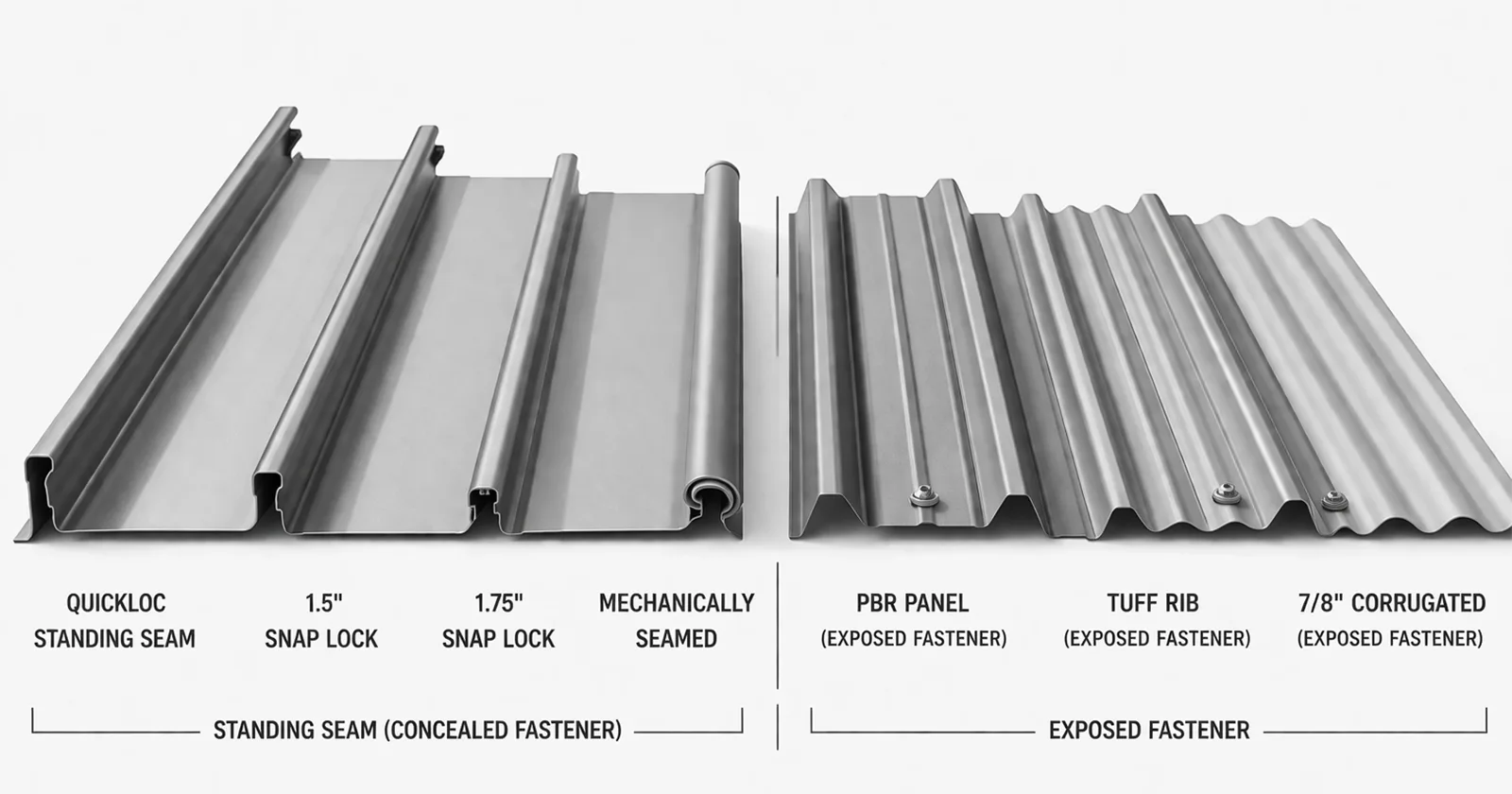
Standing seam is a concealed fastener system. The panel is fastened to the deck with clips or a nailing flange hidden under the seam, then the next panel locks over the top. Nothing penetrates the weather surface. We roll several profiles in this family: QuickLoc, 1.5″ Snap Lock, 1.75″ Snap Lock, and Mechanically Seamed for the low slope work.
Corrugated
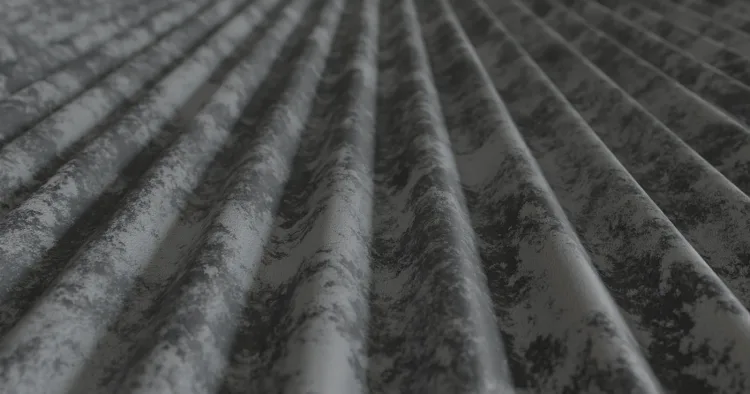
Corrugated is the wavy profile everyone recognizes, and it’s the oldest one still in production. Ours is the 7/8″ Corrugated panel. It’s an exposed fastener system, meaning screws with sealing washers go through the panel face into the purlin or deck below. Simple, fast, and proven.
Side by side
| Standing seam | Corrugated | |
|---|---|---|
| Fastening | Concealed clips or flange | Screws through the panel face |
| Cost | Higher, both panel and labor | Lower on both |
| Low slope | Handles shallower pitches, mechanically seamed goes lowest | Needs more pitch to drain reliably |
| Maintenance | Little to none on the field of the roof | Screw gaskets need checking over the years |
| Look | Clean, modern, crisp shadow lines | Classic, agricultural, industrial |
| Oil canning | More visible on the flat pans | Barely visible, no flat area |
| Install speed | Slower, more skill required | Faster, more forgiving |
Cost, and where the gap comes from
Standing seam costs more than corrugated, and the gap is bigger than the panel price alone suggests. Concealed fastener systems need clips, more trim detail, and a crew that knows the system, so labor climbs alongside material. Corrugated is the value option in the lineup and always has been.
That said, cheap and expensive both get misused as shorthand. Gauge, substrate, and paint system move the price on either profile, and a heavy gauge corrugated panel with a good paint system beats a thin standing seam panel every time. Our breakdown of what really drives metal roofing price goes through the variables.
Slope
This is the one that decides the answer for a lot of buildings. Exposed fastener panels rely on the lap and the sealing washer, so they want a reasonable pitch to shed water quickly. Standing seam handles shallower roofs, and a mechanically seamed panel goes lowest of all, which is why it shows up on commercial work. Check the number for your specific panel before you order, and our guide to the minimum slope for a metal roof covers how to read it.
Maintenance over the long run
A standing seam roof mostly gets left alone. There’s no gasket in the weather surface to age out.
A corrugated roof asks for a look every few years. The neoprene washers under the screw heads are the wear item, and in a climate with hard wet-dry cycling like ours in the Inland Northwest they eventually need attention. It isn’t a flaw, it’s just a maintenance item that standing seam doesn’t have. Using quality fasteners from the start makes a real difference, and our guide to metal roofing fasteners and screws explains what to look for.
Which one belongs on your building
Pick standing seam if the roof is on a house, a barndominium, or anything where people look at it. Also pick it if your pitch is shallow, or if you want a roof you can genuinely forget about.
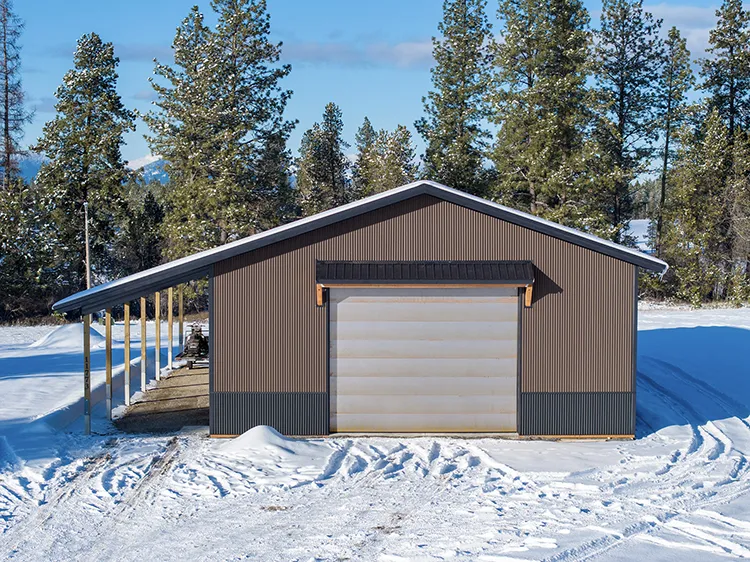
Pick corrugated if it’s a shop, a barn, an equipment shed, or a fence or accent wall. Also pick it if budget is the deciding factor, if you’re installing it yourself, or if the agricultural look is what you’re after. For farm and outbuilding work, see our guide to the best metal roofing panels for pole barns.
Plenty of projects use both. Standing seam on the house, corrugated on the shop behind it, same color family across the property. That’s a common request here.
FAQ
Does one last longer than the other?
The steel and the paint system are the same, so the panel life is comparable. The difference is the exposed fasteners on corrugated, which age faster than the panel does. Maintain those and the gap narrows a lot.
Is corrugated only for barns?
No. It shows up on modern homes, restaurants, and accent walls all the time, especially in Cor-Ten and wood-look finishes. The look reads intentional when it’s used on purpose.
Can I install either one myself?
Corrugated is realistic for an experienced DIYer on a simple roof. Standing seam is not a first-timer project. The clip spacing, thermal movement, and trim details are unforgiving.
What about PBR and Tuff Rib?
Those sit between the two: exposed fastener like corrugated, but with a flatter ribbed profile. If that’s the comparison you want, read PBR panel vs standing seam.
The bottom line
Standing seam buys you a cleaner look, a lower slope tolerance, and a roof with nothing to maintain. Corrugated buys you a lower price, a faster install, and a classic profile that hides waviness well. Neither is the wrong answer, they just suit different buildings. For the full lineup on each side, see our guides to standing seam metal roofing and corrugated metal roofing and siding.
We roll both in Post Falls, Idaho and Spokane Valley, Washington, in 44 plus colors. Give us a call or request free samples if you want to compare the profiles in hand before you commit.
Get a Quote
Find the Best Panel for Your Next Project
Fill out the form below and our team will get back to you within 24 hours with pricing and availability.
E-mail
sales@metalamerica.com
Phone number
855-638-2587