
First Published: August 20, 2026 Last Update: August 20, 2026
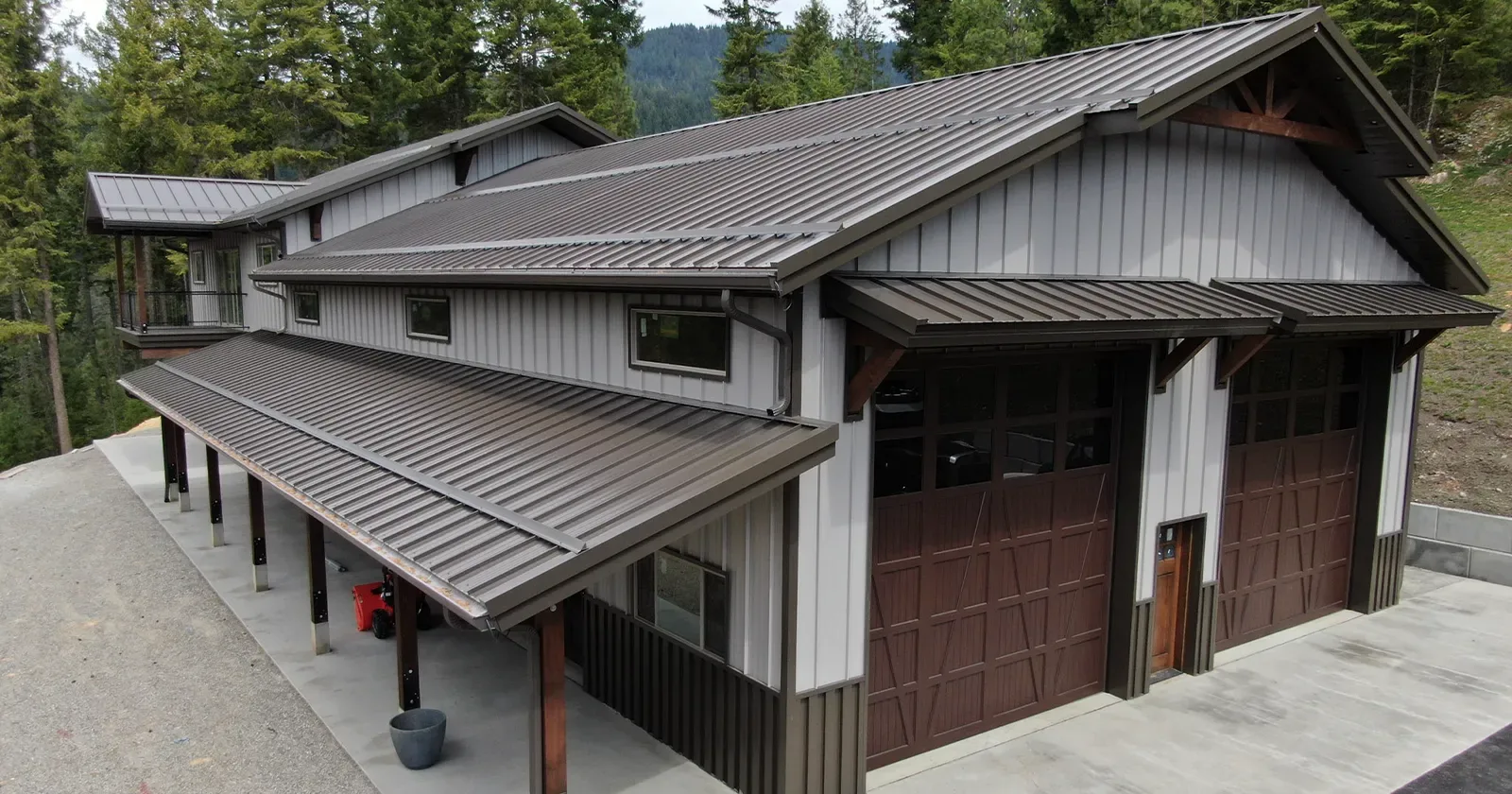
A standing seam metal roof installation lives or dies on details you can’t see once the panels are down. The seams hide the fasteners, which is the whole point of the system, and it also means a mistake made at the eave stays buried for decades.
Here’s the honest version of how the work goes and where crews get into trouble. No sales pitch, just the sequence and the checkpoints. We roll the panels here in Post Falls, so this is written from the supply side of the job, not the install side.
What Makes a Standing Seam Metal Roof Installation Different
On an exposed fastener roof, screws go through the face of the panel and into the framing. It’s fast and it’s honest about what it is. On standing seam, the panel attaches with clips that sit under the seam, then the next panel locks over the top. Nothing punctures the flat of the panel.
That one change drives everything else. The roof has no face penetrations to leak, but it also can’t be forced. Panels have to be cut square, set straight, and left free to move. If you’re still weighing the two systems, our breakdown of standing seam vs exposed fastener metal roofing covers the tradeoffs in more detail.
Start With the Deck and the Underlayment
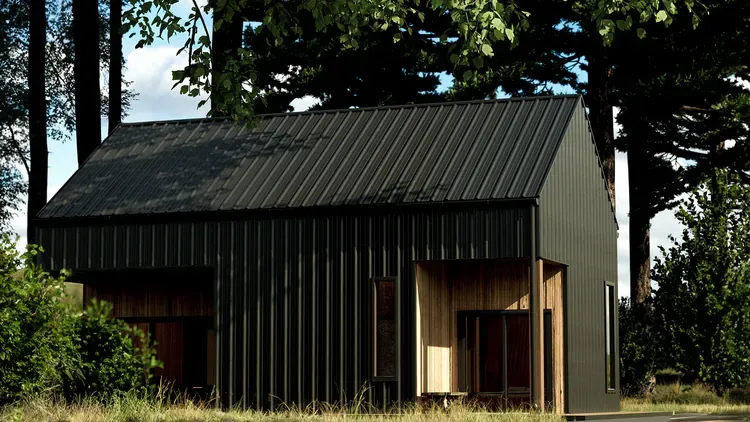
Panels telegraph whatever’s underneath them. A deck with a hump in it will show that hump in the flat of the panel for as long as the roof is up there, and no amount of careful seaming fixes it after the fact. Solid decking gets checked for plane and for fasteners standing proud before anything else happens.
Underlayment goes on next, and it isn’t the place to save money. Metal moves and sheds condensation, and the underlayment is the second line of defense when wind drives rain up under a seam. Our guide to metal roofing underlayment walks through the types and where each one belongs.
Slope matters too. Standing seam handles lower pitches than corrugated does, but there’s still a floor, and mechanically seamed systems go lower than snap lock ones. Check the minimum slope for a metal roof against your plans before you order panels, not after.
Clips, Expansion, and Why Panels Float
Steel expands when it heats and contracts when it cools, and a long panel in full sun moves more than people expect. The clip system exists so the panel can slide while the clip stays put. Fix a panel rigidly at both ends and you get either buckling in summer or a torn fastener hole in winter.
This is the single most common misunderstanding we hear about standing seam. The roof is supposed to move. Clip type, clip spacing, and panel length all get decided together, and they follow the panel manufacturer’s system rather than a general rule of thumb.
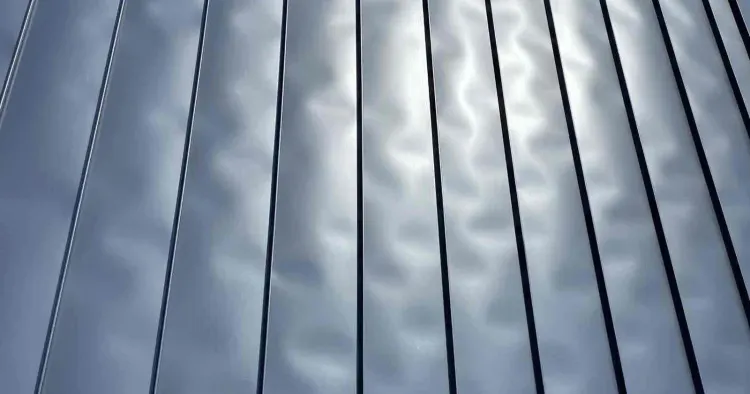
Waviness in the flat of a finished panel, called oil canning, has a lot to do with how the panel was handled and set. It’s cosmetic rather than structural, but it’s worth understanding before install day. We’ve written up what causes oil canning on a metal roof and how to keep it to a minimum.
Snap Lock or Mechanically Seamed
Snap lock panels press together by hand or by foot. The male leg snaps over the female leg and the seam is closed. Our 1.5″ Snap Lock and 1.75″ Snap Lock profiles work this way, as does QuickLoc, and they’re the usual pick for residential and light commercial roofs with normal pitch.
Mechanically seamed panels get folded closed with a seaming machine that runs the length of the seam. It’s slower and it needs equipment, and it’s what you want on low slope work and on big commercial spans where wind uplift and standing water are real concerns. Our standing seam metal roofing overview lists the profiles side by side.
Gauge is a separate decision from profile. Heavier steel resists denting and oil canning better, and 24 gauge tends to be the sweet spot on standing seam. Our metal roofing panel gauge comparison lays out what each one buys you.
Trim and Penetrations Are Where Roofs Leak
Field panels almost never leak. Edges do. Eave trim, rake trim, valleys, ridge, and anything that pokes through the roof are where water finds a way in, and they’re also where a rushed crew saves time.
Penetrations on standing seam need flashing that respects panel movement, which means the boot or curb can’t lock the panel down. Curbs on wider penetrations get set so water diverts around them instead of pooling above. If your building has solar or mechanical equipment coming later, say so before the panels are ordered.
FAQ
Can standing seam go over an existing shingle roof?
Sometimes, and it depends on the condition of the deck, local code, and how many layers are already up there. We cover the conditions in putting a metal roof over shingles.
How long does a standing seam metal roof installation take?
It varies with roof size, pitch, complexity, and crew. A simple gable goes faster than a cut-up roof with dormers and valleys. Ask your installer for a schedule in writing rather than a number over the phone.
Do I need special tools?
Snap lock systems need far less equipment than mechanically seamed ones, which need a seamer. Both need a proper metal brake and shears on site for trim work. This isn’t a job most homeowners should take on themselves.
Can panels be made to length?
Yes. Running panels full length from eave to ridge removes end laps, which removes a leak path. That’s the main reason to order custom lengths rather than stock sheets.
The Bottom Line
A standing seam metal roof installation is a system, not a stack of parts. Deck, underlayment, clips, panel, seam, and trim all have to agree with each other, and the parts that matter most get covered up first. Get the profile and gauge decided early, and give whoever’s installing it panels made to the right length.
Metal America roll-forms standing seam panels and matching trim in Post Falls, Idaho, with a second location in Spokane Valley, and we ship throughout Idaho, Washington, Oregon, and Montana. If you want to talk through profiles or get free samples in hand before you commit, give us a call.
For third-party technical background on metal roof systems, the Metal Construction Association publishes guidance worth reading.
Get a Quote
Find the Best Panel for Your Next Project
Fill out the form below and our team will get back to you within 24 hours with pricing and availability.
E-mail
sales@metalamerica.com
Phone number
855-638-2587