
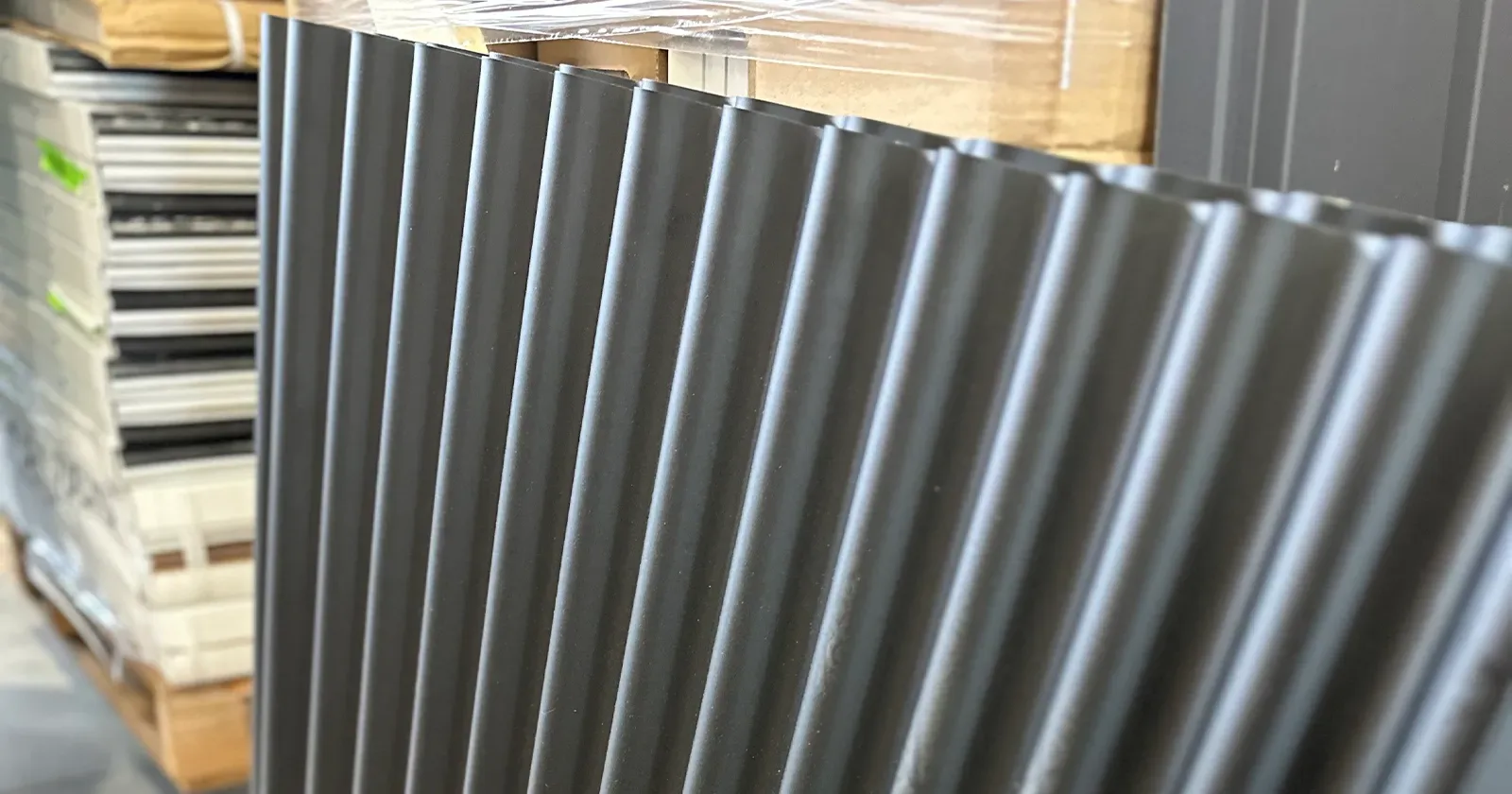
First Published: August 9, 2026 Last Update: August 9, 2026
Corrugated roof panels are one of the easiest metal roofs to install and one of the easiest to get wrong. They’re forgiving about a lot of things, but they’re unforgiving about two: slope and fasteners. Get those right and a corrugated roof will outlast the building it’s on.
This is the roof specific side of the panel. If you’re looking at corrugated for walls or accents instead, our corrugated siding guide covers that.
Slope: the first thing to check
Corrugated roof panels are an exposed fastener product with lapped side seams. Water crosses those laps by gravity and capillary action, so pitch is what keeps it moving. Too shallow, and water lingers at a lap long enough to work sideways under it, especially when wind drives it uphill.
Every profile has a published minimum pitch, and exposed fastener panels need more of it than a mechanically seamed system does. Check your roof against the number before you buy anything. Our guide on the minimum slope for a metal roof walks through how to measure yours and what your options are if it’s marginal.
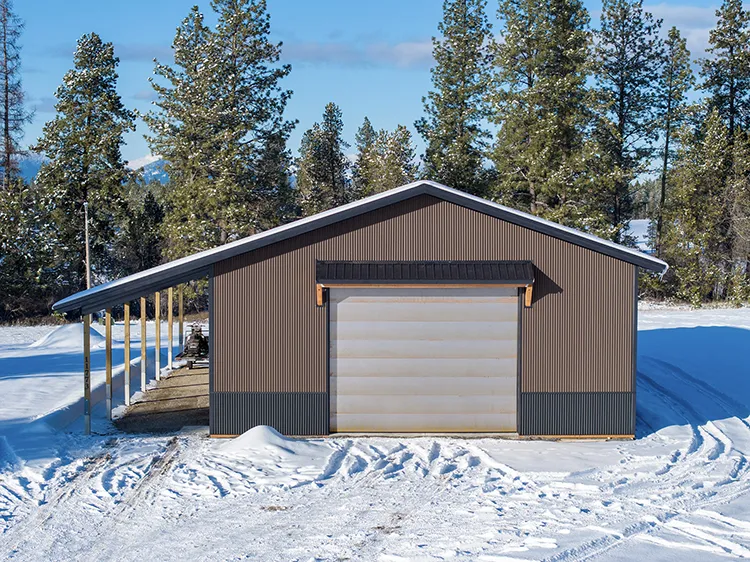
Fasteners do the waterproofing
On a corrugated roof, every screw is a hole you’re deliberately putting in the weather surface. The rubber washer under the head is the seal, so it’s the part that decides whether the roof leaks in year fifteen.
- Drive them straight and stop. Overdriving crushes the washer and squeezes it out. Underdriving leaves a gap. Both leak.
- Match the screw to the framing. Wood purlins and steel framing take different fasteners.
- Get painted heads. A matching head keeps the roof from looking like a dot to dot.
- Plan on a recheck. Washers age. Walking the roof every few years and snugging what’s loose is the whole maintenance program.
There’s more detail in our guide to metal roofing screws and fasteners.
What goes under corrugated roof panels
The panel isn’t the whole roof. Underlayment is your backup layer, and on a metal roof it also handles condensation, which is a bigger deal than most people expect in a heated shop. Synthetic and self adhered options both work, and the right pick depends on slope, deck type, and climate. Our underlayment guide compares them.
Over open purlins instead of solid decking, corrugated spans just fine, but you’ll want to think about condensation control and about where you’re stepping during install.
Trim and closures aren’t optional
Panels cover the field. Everything that leaks is at an edge. Ridge cap, rake trim, eave trim, valley, and pipe flashings all need to be ordered with the panels so the color comes off the same paint run.
Closures matter more on corrugated than on a ribbed panel, because the wave profile leaves a row of open half circles at the ridge and eave. Foam or metal closure strips fill those. Skip them and you’ve built a very good entrance for wind driven rain, birds, and wasps. See our metal roof trim and ridge cap guide for the full parts list.
Gauge and finish for a roof
For a roof rather than a wall, gauge carries more weight because the panel spans between supports and holds snow. We roll 22, 24, 26, and 29 gauge. Twenty six is the popular default for shops and barns, and 24 is the better call for longer runs or real snow load. Twenty nine is light duty, and it’s worth being honest that a roof is the last place to economize on thickness.
Finish wise, a painted panel over a Galvalume substrate is the standard. We run a Sherwin-Williams WeatherXL SMP finish in more than 44 solid colors with a 40 year paint warranty. The Metal Construction Association publishes useful neutral material on panel and coating performance if you want to read further.
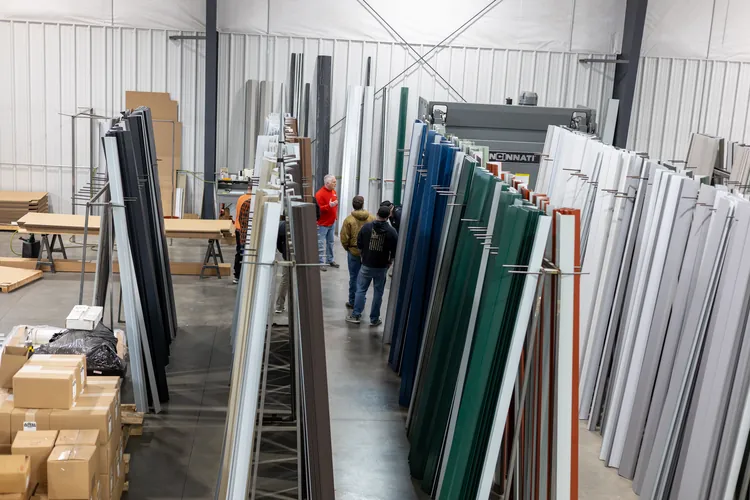
Ordering: measure coverage, not sheet width
This is the single most common ordering mistake. Corrugated roof panels lap at the side seam, so the width you actually cover is less than the width of the sheet. Calculate your quantity from coverage width, then add for waste on hips and valleys.
We cut to length, so on most buildings a single panel runs eave to ridge with no horizontal lap at all. That’s worth taking advantage of, because an end lap is a leak path you don’t have to create. Our custom panel ordering guide covers what to send us so the cut list comes back right.
FAQ
Can corrugated roof panels go on a low slope roof?
Below the profile’s minimum pitch, no. That’s when to look at a mechanically seamed system instead, which is built for shallow roofs.
Can you install corrugated roof panels over shingles?
Often yes, over purlins or furring, subject to your local code and the condition of the deck. It saves tear off, but it also hides whatever’s wrong underneath, so look first.
How far apart should the screws be?
Follow the fastening pattern for the profile you bought rather than a rule of thumb. Pattern and spacing change with wind load, framing, and whether you’re on a roof or a wall.
Do corrugated roof panels rust?
A painted panel on a Galvalume substrate resists rust well. Cut edges, scratches, and trapped debris are where it starts, so touch up damage and keep valleys clear.
The bottom line
Corrugated roof panels are the value choice in metal roofing, and they earn it. Confirm your slope clears the minimum, buy the right fasteners and drive them properly, order closures and trim with the panels, and figure quantity off coverage width. Do that and the rest is straightforward.
We roll form in Post Falls, Idaho and Spokane Valley, Washington, and ship across Idaho, Washington, Oregon, and Montana. Send us your dimensions and we’ll put together a quote, or ask for free samples if you want to see the finishes first.
Get a Quote
Find the Best Panel for Your Next Project
Fill out the form below and our team will get back to you within 24 hours with pricing and availability.
E-mail
sales@metalamerica.com
Phone number
855-638-2587