
First Published: August 8, 2026 Last Update: August 8, 2026
Corrugated metal is the wavy steel panel you’ve seen on barns, shops, and lately on some pretty sharp modern homes. It’s the oldest profile in the business and it’s still one of the most useful, because it’s quick to hang, it’s forgiving on an imperfect frame, and it looks right on almost any building. No sales pitch here, just what corrugated metal is, where it works, and what to check before you order.
What corrugated metal is
Corrugated metal starts as a flat coil of steel. A roll former runs that coil through a series of shaped rollers that press repeating rounded waves into it. Those waves are what make a thin sheet stiff. Flatten one out and it’s floppy. Put the corrugation in and it’ll span between purlins and carry snow.
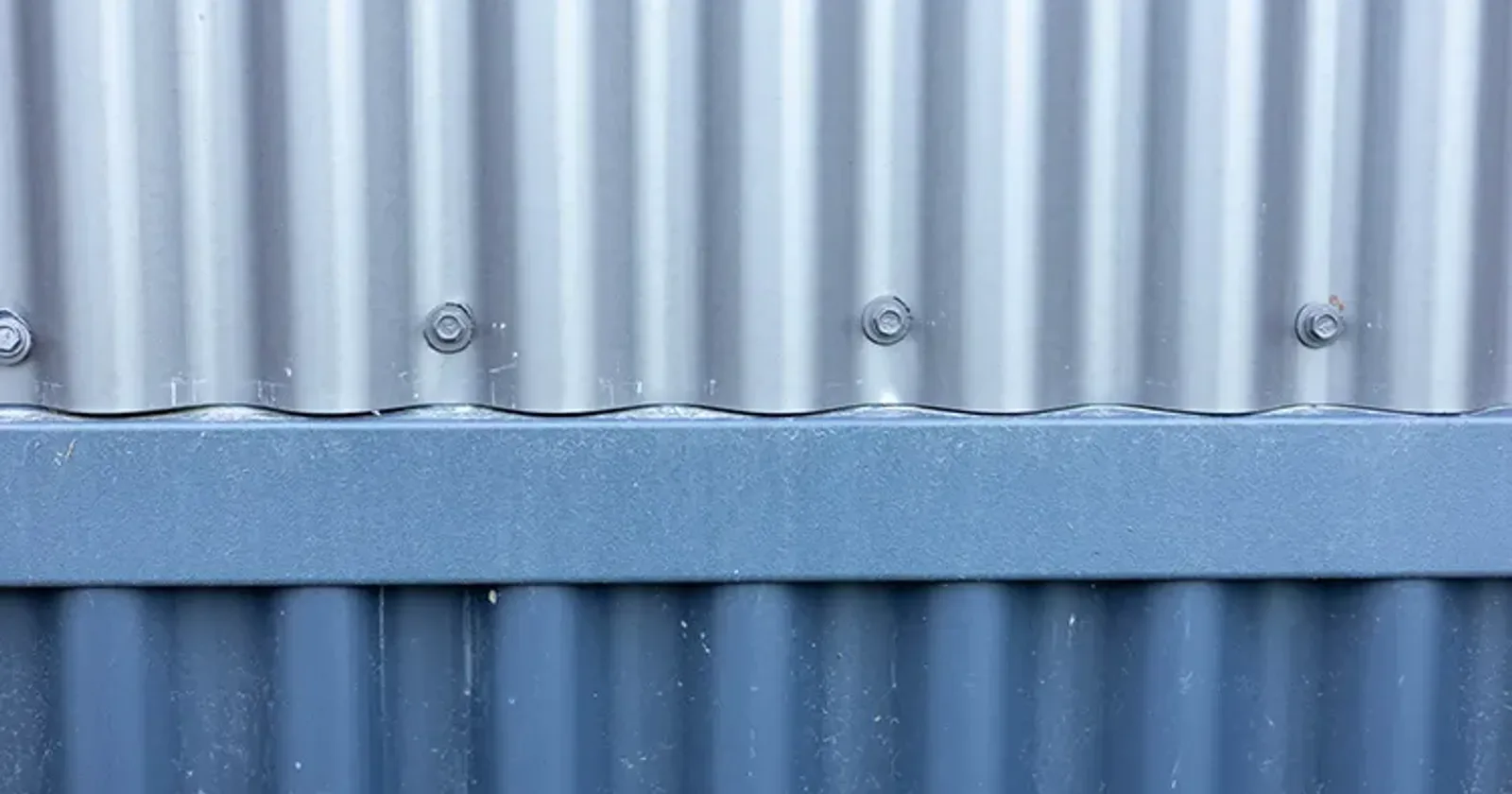
It’s an exposed fastener panel, which means the screws go through the face of the panel and into the framing behind it. You can see them. That’s not a defect, it’s the design, and it’s why corrugated goes up fast and costs less than a concealed fastener system. Our version is the 7/8 inch corrugated panel, named for the height of the rib.
Where corrugated metal works best
Roofing
Corrugated is a workhorse roof panel for shops, pole barns, equipment sheds, and outbuildings. It’s also fine on a house if you like the look and the roof has enough pitch. What it doesn’t love is a very low slope, where water sits and works its way sideways under a lap.
Siding and walls
Run vertically, corrugated sheds water fast and reads as agricultural or industrial. Run horizontally, the same panel reads modern. It’s a common wainscot too, wrapping the bottom few feet of a wall where equipment and livestock do the most damage. There’s more on wall applications in our guide to corrugated metal siding.
Interior and accent work
Ceilings, feature walls, bar fronts, and island wraps all show up constantly. For that kind of work the panel is decorative, so gauge matters less and finish matters more.
Gauge: how thick should corrugated metal be?
Steel thickness is measured in gauge, and the number runs backwards. A lower number is thicker steel.
| Gauge | Typical use |
|---|---|
| 29 | Light duty. Sheds, interior accents, budget outbuildings. |
| 26 | The most popular choice. Shops, barns, most residential roofs. |
| 24 | The best balance of strength and cost. Long runs, higher snow load, commercial. |
| 22 | Heavy duty, where the panel takes real abuse. |
If you’re stuck between two, go thicker. The steel is a small part of the finished job and it’s the part you can’t upgrade later. Our full metal roofing gauge comparison walks through each one.
Finishes and colors
Most corrugated metal ships painted. We run a Sherwin-Williams WeatherXL SMP finish across more than 44 solid colors, and the paint carries a 40 year warranty. There are also wood look prints if you want the panel to read as cedar or barnwood instead of steel.
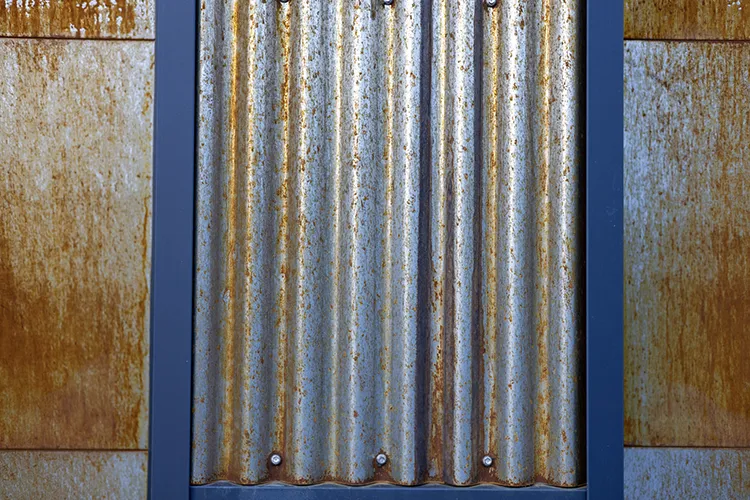
Bare Galvalume is the other common option, and it’s the honest choice when you want the silver mill look. If you’re after a rust finish, that’s Cor-Ten weathering steel, which forms a stable oxide layer instead of just corroding.
Corrugated metal vs ribbed panels
People use these terms loosely, so here’s the difference. Corrugated has rounded, continuous waves. Ribbed panels like Tuff Rib and PBR have flat pans with squared off ribs standing up at intervals. Ribbed panels are usually stiffer for the same gauge and give you a flatter field, while corrugated gives you that classic wavy shadow line. Neither one is better across the board, they just look and behave differently. We put them side by side in corrugated vs ribbed metal panels.
What to check before you order
- Coverage, not total width. Panels overlap, so the width you can actually use is less than the width of the sheet. Always figure your quantity off coverage.
- Panel length. We cut to length, so a single sheet can run eave to ridge on most buildings. Fewer laps means fewer places to leak.
- Trim. Ridge cap, rake, eave, corners, and closures aren’t optional. Order them with the panels so the colors match from the same run.
- Fasteners. Get screws with the right washer and a matching painted head.
- Substrate. Galvalume under the paint holds up better than plain galvanized in wet climates, which matters everywhere from the coast to the Idaho panhandle.
The Metal Construction Association is a good neutral source if you want to read further on panel performance.
FAQ
Is corrugated metal good for a roof?
Yes, on a roof with adequate slope. It’s one of the most common roof panels in the country for shops, barns, and outbuildings, and it’s perfectly at home on a house.
How long does corrugated metal last?
A painted steel panel installed correctly will typically outlast asphalt shingles by a wide margin. The variables are gauge, substrate, finish, and whether the fasteners get checked. Exposed fastener panels need their screws looked at periodically, since the rubber washers are the part that ages first.
Can you walk on corrugated metal?
Carefully, and on the flats over a purlin rather than in the middle of a span. Thicker gauge helps. If you’re not sure where the framing is, don’t guess.
Does corrugated metal rust?
Painted panels over a Galvalume substrate resist rust well. Cut edges and scratches are where trouble starts, so touch up damage and keep the panel clear of standing debris.
The bottom line
Corrugated metal is the value pick in metal panels. It goes up fast, it costs less than a standing seam system, and it suits everything from a hay shed to a modern farmhouse. Pick 26 gauge if you’re unsure, order your trim at the same time, and don’t skimp on fasteners.
We roll form panels in Post Falls, Idaho and Spokane Valley, Washington, and we ship across Idaho, Washington, Oregon, and Montana. If you want to see the finishes in person, stop by or give us a call and we’ll get you free samples.
Get a Quote
Find the Best Panel for Your Next Project
Fill out the form below and our team will get back to you within 24 hours with pricing and availability.
E-mail
sales@metalamerica.com
Phone number
855-638-2587