
First Published: May 12, 2026 Last Update: September 8, 2026
Metal roofing installation is not complicated, but it is detail-dependent. The contractors who do it well consistently follow a disciplined sequence: proper substrate prep, correct underlayment selection, disciplined panel layout, appropriate fastening for the panel type, and trim installed in the right order. The ones who get callbacks skip steps or make assumptions that don’t hold up after the first heavy rain season.
This guide covers the full installation process for both exposed fastener and standing seam metal roofing panels, with attention to the details that matter most on real job sites. It is written for roofing contractors and general contractors who are installing metal panels or managing crews doing so.
We have a less technical guide on installing roofing panels, which you can read here. And a separate article dealing with snow guards for metal roofs.
Note from author: We are currently working on an improved version of this article that includes detailed photos. Once we have captures the appropriate imagery, we will update this page. Check back if you need photo guidance.
– Jacob D
Before You Start: Substrate and Structural Requirements
Roof Deck Condition
Metal panels can be installed over solid sheathing or open framing, depending on the panel type and application. Exposed fastener panels like Tuff Rib and PBR are commonly installed over open purlins on agricultural and commercial structures. Standing seam residential applications typically go over solid OSB or plywood sheathing.
If installing over an existing roof deck, check for soft spots, rot, and delamination before any panels go on. A solid, consistent substrate is not optional. Panel fasteners driven into compromised sheathing will back out, and re-flashing and re-fastening after the job is complete is expensive and time-consuming for everyone.
Minimum Slope Requirements
Slope requirements vary by panel type and must be confirmed before ordering panels.
- Exposed fastener panels (Tuff Rib, PBR, Corrugated): typically 1:12 minimum, with better performance at 3:12 or greater
- Snap lock standing seam: typically 3:12 minimum
- Mechanically seamed standing seam: can be used at slopes as low as 1:12 or less depending on the panel profile
Installing panels below their minimum slope rating is one of the most common causes of warranty voidance and leakback problems. Always confirm slope before speccing the panel.
Structural Framing and Purlin Spacing
For exposed fastener panels on open framing, purlin spacing must be within the panel’s rated span. Most residential and light commercial exposed fastener panels are rated for purlin spacings of 24 to 36 inches, but this varies by gauge and panel profile. Heavier gauge panels can span further. Confirm the span rating for the specific panel and gauge before finalizing framing spacing.
Underlayment Selection
Underlayment selection under metal roofing is a topic that gets oversimplified on a lot of job sites. The right choice depends on the application, the climate, and the panel type. Getting it wrong can cause condensation problems, warranty issues, and premature panel corrosion.
Self-Adhering High-Temperature Underlayment
The preferred underlayment for standing seam and high-quality residential exposed fastener applications. Self-adhering membranes provide superior moisture protection, seal around fastener penetrations, and handle the temperature extremes that metal roofing surfaces create. In the Pacific Northwest, where freeze-thaw cycles and heavy rainfall are routine, self-adhering underlayment is the right call on residential and commercial projects.
Synthetic Underlayment
A cost-effective alternative to self-adhering for less demanding applications. Synthetic underlayments are lighter, easier to handle, and faster to install than felt paper. Acceptable for exposed fastener agricultural and utility applications, and for residential applications in less demanding climates. Not recommended as a standalone solution on low-slope or standing seam applications.
Felt Paper
15-pound and 30-pound felt paper is still used on some agricultural and budget-sensitive residential applications. It is the lowest-cost option but also the least durable. Felt paper tears during installation more easily than synthetic, does not handle the heat under metal panels as well, and has a shorter service life. On any project where quality matters, upgrade to synthetic or self-adhering.
Vapor Barriers and Condensation Control
On enclosed buildings, particularly in cold climates like those across Idaho, Washington, and Montana, condensation under metal panels is a real concern. Warm interior air hits the cold underside of the metal and deposits moisture. This can cause corrosion, wood rot, and insulation degradation over time. On enclosed buildings, install a proper vapor barrier on the warm side of the insulation and ensure adequate ventilation between the insulation and the panel. Do not ignore condensation control on agricultural buildings with livestock inside, where interior humidity is high year-round.
Panel Layout: Starting Right
Establish a True Square Starting Point
Rake edge to rake edge, most roofs are not perfectly square. Before installing the first panel, snap a chalk line square to the ridge and use it as your reference for panel alignment. A panel layout that starts slightly out of square will compound the error across the full width of the roof. By the time you reach the far rake, panels will be visibly misaligned with the ridge or eave.
Panel Overhang at the Eave
Most panel manufacturers spec an eave overhang of 1 to 2 inches past the eave trim or fascia to allow water to drip clear of the fascia board. Confirm the overhang spec for the specific panel and trim system being used. Too little overhang drives water back against the fascia. Too much creates a wind-load lever arm on the panel edge.
Direction of Installation
Install panels starting at the end of the roof opposite the prevailing wind direction. On exposed fastener panels with sidelap seams, the sidelap should face away from the wind so water cannot be driven up under the overlap. In the Pacific Northwest, prevailing winds typically come from the southwest, so installation generally starts at the northeast corner and works toward the southwest.
Exposed Fastener Panel Installation
Fastener Placement
Exposed fastener panels are attached through the panel face with hex-head self-drilling screws and neoprene washers. Fastener placement varies by panel profile. On most ribbed panels, fasteners go through the flat between ribs rather than through the rib itself. Check the panel manufacturer’s installation guide for the correct fastener location for the specific profile being installed.
Drive fasteners to compress the washer enough to create a seal, but not so hard that the washer mushrooms out or the panel dimples. Overtightened fasteners are one of the most common installation errors. A compressed but not crushed washer is the target.
Fastener Spacing
Standard fastener spacing along purlins or sheathing is 12 to 24 inches depending on wind zone requirements and panel span. In high-wind areas, tighter fastener patterns may be required by local building code. At rakes and eaves, increase fastener density. These edge zones see the highest wind uplift loads and need more attachment points than field areas.
Panel Sidelap
Exposed fastener panels overlap one rib at each sidelap. Fasten through the sidelap with a fastener at each purlin or sheathing course. The sidelap fastener compresses the two overlapping ribs together and prevents wind-driven water from entering the joint.
Standing Seam Panel Installation
Clip System Installation
Standing seam panels attach to the substrate through concealed clips rather than through the panel face. Clips slide onto the male seam leg of each panel and are fastened to the substrate through a pre-punched hole in the clip foot. The clip allows the panel to move longitudinally as it expands and contracts with temperature changes while keeping it locked laterally.
Clip spacing is typically 12 to 24 inches on center, depending on wind zone and span requirements. Use the manufacturer’s clip spacing chart for the specific panel and application. At eave and ridge zones, tighten clip spacing to address higher uplift loads.
Snap Lock Seaming
On snap lock panels, run each panel into position and snap the female leg of the incoming panel over the male leg of the previous panel. A clean snap lock seam seats fully with hand pressure along the full seam length. If the seam requires mallet assistance across more than a short section, check panel alignment. A panel that is bowing or torquing will fight the seam and may not seat fully.
Mechanical Seaming
On mechanically seamed panels, run the electric seamer from eave to ridge along each seam after the panels are positioned and the clips are fastened. The seamer crimps the panel legs together progressively as it travels up the seam. Run the seamer at a consistent speed and keep it tracking true to the seam. A seamer that wanders creates an uneven crimp that looks poor and may not provide a fully weather-tight joint.
Trim Installation Sequence
Trim installation sequence matters. Installing trim in the wrong order creates situations where later trim pieces cannot be properly lapped over earlier ones, leading to exposed joints and potential leak paths.
Correct Trim Sequence for a Typical Roof
- 1. Eave trim: Install along the full eave before any panels go on
- 2. Rake trim starter: Set at the starting rake before first panel
- 3. Panels: Install field panels working across the roof
- 4. Rake trim cap: Installed over the finished rake edge after panels
- 5. Ridge cap: Last piece installed, lapping over the top of all field panels
- 6. Hip and valley flashing: Installed as panels reach those features
Skylights, pipe boots, and wall flashings should be integrated into the panel installation sequence, not added after panels are complete. Retrofit flashing always underperforms properly sequenced flashing.
Common Installation Mistakes That Lead to Callbacks
| Mistake | Why It Matters |
| Installing below minimum slope | Creates leak paths that worsen over time. Voids warranty. |
| Overtightening exposed fasteners | Mushrooms washer, dimples panel, accelerates seal degradation. |
| Skipping sidelap fasteners | Wind-driven rain enters the sidelap seam. Callbacks after first storm. |
| Wrong underlayment for the application | Condensation problems, premature corrosion, warranty issues. |
| Starting panel layout off square | Panels visibly misaligned at far rake. Cannot be corrected mid-install. |
| Installing trim out of sequence | Exposed joints that cannot be properly lapped. Leak paths at trim transitions. |
| No condensation control on enclosed buildings | Moisture damage to insulation and structure over time. |
| Insufficient fastener density at edges | Wind uplift failures at rakes and eaves in high-wind events. |
Panel Storage and Handling on the Job Site
Metal panels are susceptible to surface damage and moisture trapping if stored improperly before installation. Follow these practices to arrive at installation with undamaged panels.
- Store panels off the ground on a stable, level surface to prevent bowing
- Keep panels covered if rain is expected, especially coil-formed panels where moisture can wick between stacked sheets
- Do not store panels where runoff from other materials can flow across them
- Handle long panels with at least two people to prevent kinking
- Remove protective film within 45 days of installation. Film left on becomes difficult to remove and can bond to the coating in heat
Working With Metal America on Installation Projects
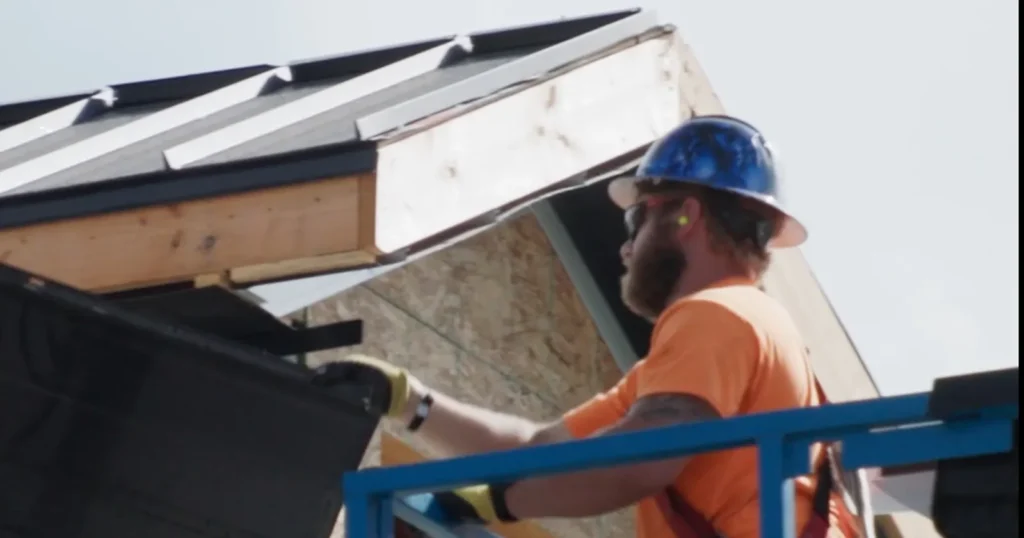
Metal America supplies roofing and siding contractors throughout Idaho, Washington, Oregon, and Montana with custom-length panels, full trim packages, and technical support on panel selection and installation questions. Panels are roll formed in-house at the Post Falls facility, which means consistent quality and the ability to produce project-specific lengths without the delays and minimums that come with sourcing through distribution.
Contractors who want to discuss a specific project, get technical specs for a panel they’re considering, or set up a contractor account can contact us online or call 855-638-2587 for immediate help.
Frequently Asked Questions
Can metal roofing be installed over an existing shingle roof?
Yes, in many cases. Installing over existing shingles can save tear-off labor and disposal costs. The existing shingles must be in stable condition with no significant moisture damage or delamination. A thermal break or vented system may be required on enclosed buildings to manage condensation. Check local building codes, as some jurisdictions limit the number of roofing layers permitted.
How long does metal roof installation take compared to shingles?
On a comparable residential roof, metal panel installation typically takes longer than shingle installation per square foot, primarily due to the handling and sequencing of longer panels and more detailed trim work. However, metal requires no future maintenance visits, so the total labor investment over the life of the roof is lower.
Do metal roofs require special fasteners?
Yes. Exposed fastener metal roofing requires hex head self-drilling screws with neoprene washers rated for outdoor metal applications. Standard wood or drywall screws are not appropriate. Fastener length must be sufficient to penetrate the substrate by at least 3/4 inch after passing through the panel. See Metal America’s supporting article on fasteners for detailed selection guidance
Does Metal America provide installation documentation for contractors?
Yes. Metal America provides panel-specific installation guides and technical data sheets. Contact the team at metalamerica.com to request documentation for the specific panel you’re installing.
Get a Quote
Find the Best Panel for Your Next Project
Fill out the form below and our team will get back to you within 24 hours with pricing and availability.
E-mail
sales@metalamerica.com
Phone number
855-638-2587