
First Published: October 8, 2026 Last Update: October 8, 2026
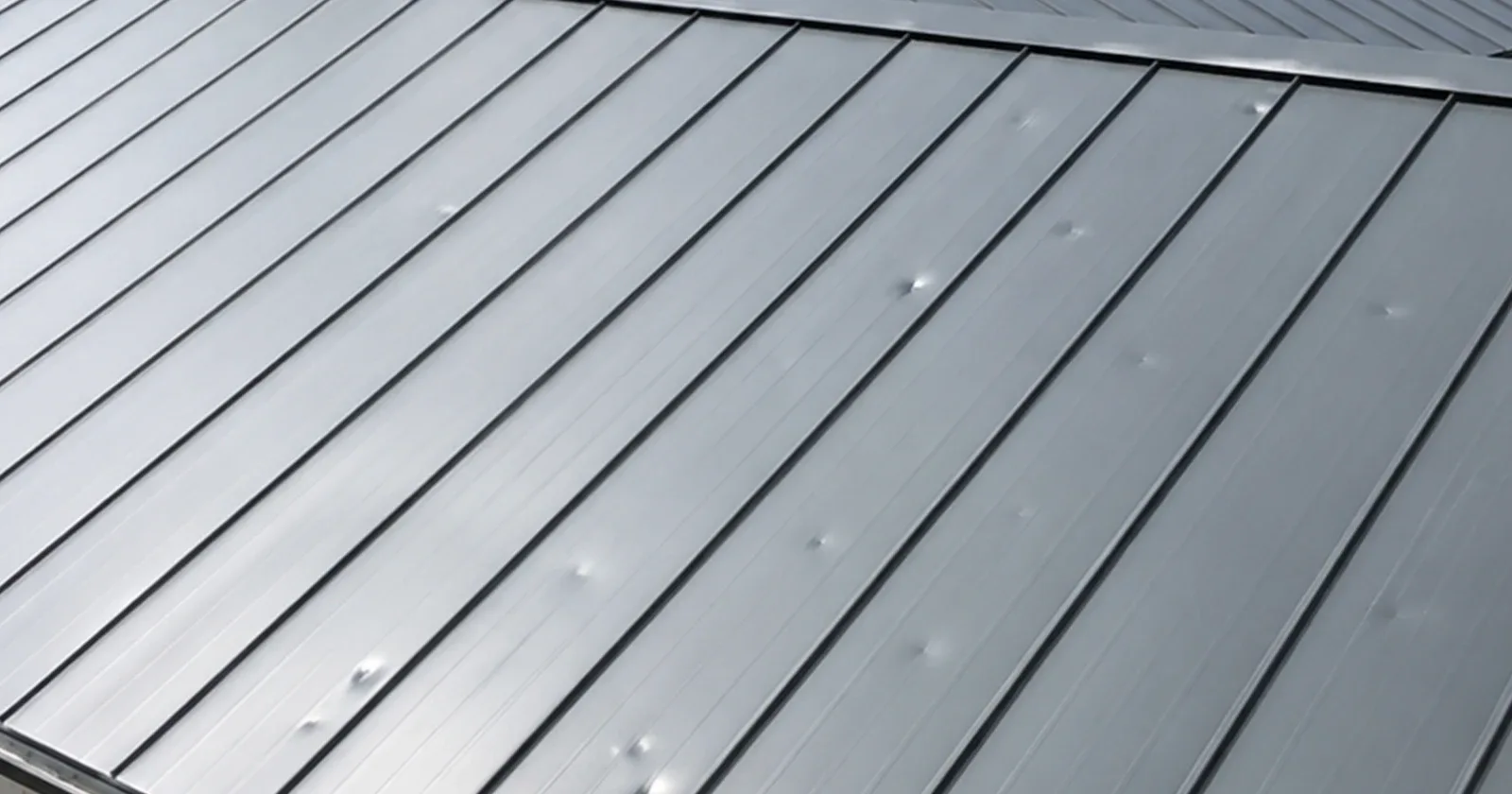
The honest answer about metal roof hail damage: hail almost never puts a hole in a steel roof. What it leaves is denting, and sometimes scuffing on the finish. Your roof keeps doing its job. That’s a very different problem from an asphalt roof, where hail knocks granules loose and starts a countdown to a leak.
So the question that matters isn’t “did it get hit.” It’s whether what you’re looking at is cosmetic or functional. Here’s how to tell, what makes panels dent in the first place, and what to do after a storm. No sales pitch, just the information you need.
What metal roof hail damage looks like
Walk your property after a storm and you’re generally looking for four things:
-
Dents in the flat areas. Round or oval depressions in the wide part of a panel, between the ribs. This is the most common result by a wide margin.
-
Scuffed or chipped paint. Hail can abrade the coating, especially on edges and high points. Bare metal showing through is the version worth acting on.
-
Bent or dented trim. Ridge cap, drip edge, and gutters are thinner and more exposed than field panels, so they take visible hits first.
-
Damaged penetrations. Vents, pipe boots, and skylights are the softest things on the roof and the likeliest place a real leak starts.
Notice that the last two aren’t the panels. On a steel roof, accessories and trim usually tell you more than the field of the roof does.
Cosmetic denting versus functional damage
This distinction decides your repair bill, your insurance claim, and whether you need to do anything at all.
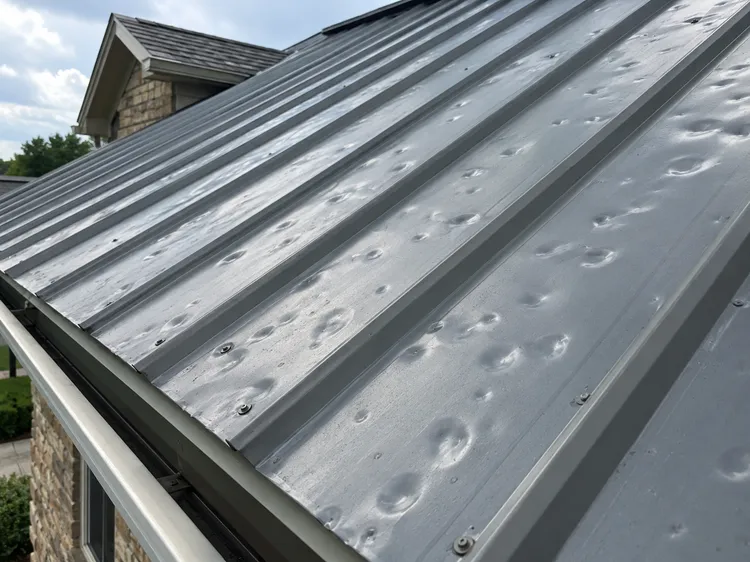
Cosmetic means the panel is dented but the coating is intact, the fasteners and seams are undisturbed, and water still sheds the way it’s supposed to. The roof is uglier and no less watertight. A dented panel with a healthy finish will outlast most of the house.
Functional means something in the water-shedding system got compromised: coating broken through to bare steel, a seam opened or deformed, fasteners backed out or their washers split, trim bent away from its lap, or a penetration cracked. These need attention, and the ones involving bare metal need it before the wet season.
Dents alone, in the middle of a panel, with the paint intact, are cosmetic. It’s worth being clear-eyed about that before you start a claim, because it’s also how your insurer will see it.
What decides whether your panels dent
Four variables do most of the work.
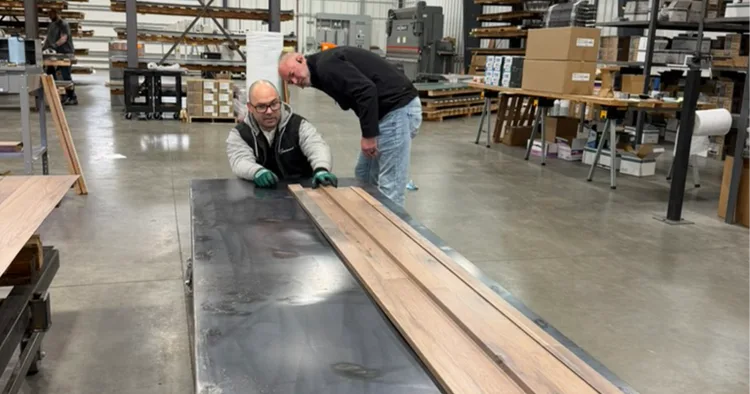
Gauge. The big one. Gauge runs 22, 24, 26, and 29, and the lower the number the thicker the steel. 29ga is the thinnest common option and shows denting most readily. 26ga is the most popular choice. 24ga gives you the best balance of strength and cost, and it’s noticeably more resistant to denting than 29ga. Our breakdown of metal roofing gauge covers where each one makes sense.
Panel profile. Ribs stiffen a panel. Exposed-fastener profiles like PBR, Tuff Rib, and 7/8″ Corrugated put ribs closer together, so there’s less unsupported flat area to dent. Standing seam profiles have wider flat pans between seams, which is also why they’re the profiles most associated with oil canning. Different subject, same underlying physics, and we’ve written it up in oil canning on a metal roof.
What’s under the panel. Steel over solid decking is supported everywhere and resists denting better than steel spanning open purlins, where the unsupported area between supports has room to deflect.
The hail itself. Size, density, and how fast it was moving. Pea-sized hail in still air does nothing to a steel roof. Large stones driven by high wind are a different conversation, and wind-driven hail also hits the walls and trim, not just the roof plane. The National Weather Service logs storm reports by date and location, which is useful documentation when you’re establishing when damage happened.
How to inspect after a storm
Start from the ground with binoculars, and stay off a wet or steep metal roof entirely. Panels get slick, and no dent is worth a fall.
-
Check the soft targets first. Gutters, downspouts, vents, and any exposed flashing. Dents there tell you roughly how hard the storm hit.
-
Look at south and west exposures. Storms have a direction, and damage usually concentrates on the faces that took the wind.
-
Photograph everything, with a date. Wide shots for context, close-ups for detail, something for scale in the frame.
-
Look for bare metal. Any place the coating is broken through is your real priority, because that’s where corrosion starts.
-
Check inside. Attic, ceilings, and the underside of an open shop roof. Staining is the thing that turns a cosmetic question into an urgent one.
Then fold it into your normal routine. Our guide to metal roof maintenance covers what to check seasonally, storm or no storm.
Insurance and metal roof hail damage
Two words decide most metal roof hail claims: cosmetic damage. Many policies now carry a cosmetic damage exclusion or a separate cosmetic endorsement, which specifically excludes dents that don’t affect how the roof functions. It’s common enough on metal roofs that it’s worth reading your declarations page before you call anyone.
If you do file, document the date of the storm, take the photographs described above, and get an assessment that speaks to function rather than appearance: coating integrity, seam condition, fastener condition, penetrations. That’s the language an adjuster is working in. Policies and state rules vary a lot, so treat this as what to look for rather than what your policy says, and confirm the specifics with your agent.
Repair, recoat, or replace
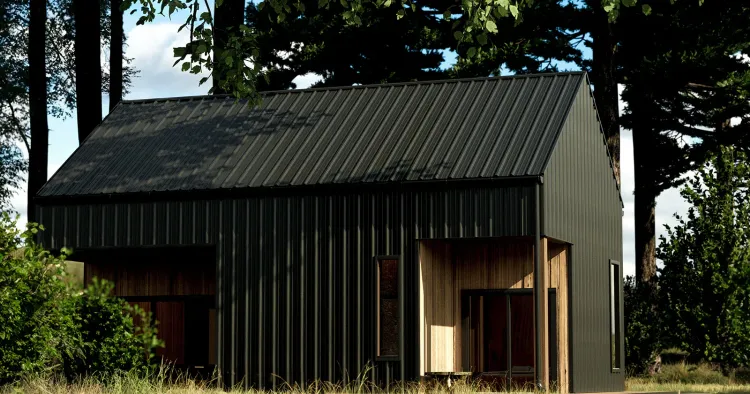
Do nothing. Cosmetic dents with intact coating on an ag building, a shop, or a barn are usually not worth spending on. The roof is fine.
Spot repair. Replace damaged trim, boots, or vents, and touch up coating breaks. This is most storm damage on a steel roof, and it’s a modest job.
Recoat. Where scuffing is widespread but the panels are sound, repainting restores protection and appearance without a tear-off. We’ve covered what’s involved in repainting a metal roof.
Replace. Genuinely uncommon from hail alone. It makes sense when panels are structurally deformed, seams have failed across the roof, or the roof was near end of life anyway. For what that lifespan looks like, see how long metal roofing lasts.
Metal roof hail damage FAQ
Does hail damage a metal roof more than asphalt shingles?
The opposite, in the way that counts. Hail on asphalt dislodges the granules protecting the mat, which shortens the roof’s life even when nothing leaks today. Hail on steel leaves a dent in a panel whose protective coating is usually undisturbed. Metal looks worse and performs better.
Can hail dents cause a leak later?
A dent by itself, no. What causes trouble later is coating damage that exposes bare steel to weather, or a fastener whose washer split on impact. Both are findable in an inspection and both are cheap to fix early, which is the argument for looking after a big storm instead of waiting.
What gauge holds up best against hail?
Thicker is better, so 24ga outperforms 26ga, which outperforms 29ga. There’s also a roofing impact-resistance standard, UL 2218, rated Class 1 through Class 4 with Class 4 the highest, and some insurers offer premium credits for higher-rated assemblies. Ask about ratings for the specific panel and substrate you’re considering, since the rating applies to the assembly and not to steel in general. The Metal Construction Association publishes technical resources on impact performance.
The bottom line
Metal roof hail damage is usually a cosmetic problem wearing a scary name. Dents in the flat of a panel, with the coating intact and the seams and fasteners undisturbed, don’t threaten the roof. Broken coating, damaged trim, split fastener washers, and cracked penetrations do, and those are the things worth finding early.
Inspect from the ground, photograph what you find, read your policy’s cosmetic clause before you file, and fix the coating breaks. If you’re specifying a new roof for hail country in Idaho, Washington, Oregon, or Montana and want a straight answer on gauge and profile, give us a call or request free samples.
Get a Quote
Find the Best Panel for Your Next Project
Fill out the form below and our team will get back to you within 24 hours with pricing and availability.
E-mail
sales@metalamerica.com
Phone number
855-638-2587